Window tint cost by vehicle size comes down to how much glass the car has and how hard that glass is to shape. A coupe costs the least, a full-size SUV or van costs the most, and the film you pick moves the number more than the badge on the trunk. This page ranks vehicle classes by tint workload for 2026 and shows what drives a quote in Southwest Florida.
- Window tint cost by vehicle size rises with glass area: coupe lowest, sedan and crossover mid, full-size SUV, van and truck crew cab highest.
- Film type changes a quote more than vehicle class does, and ceramic sits above standard dyed and carbon film.
- Florida allows 28% light through front side windows on every passenger vehicle in 2026.
- Auto Sound Cape Coral quotes tint per vehicle with no hidden fees. Call or walk in for a number on your exact car.
Why vehicle size sets the price
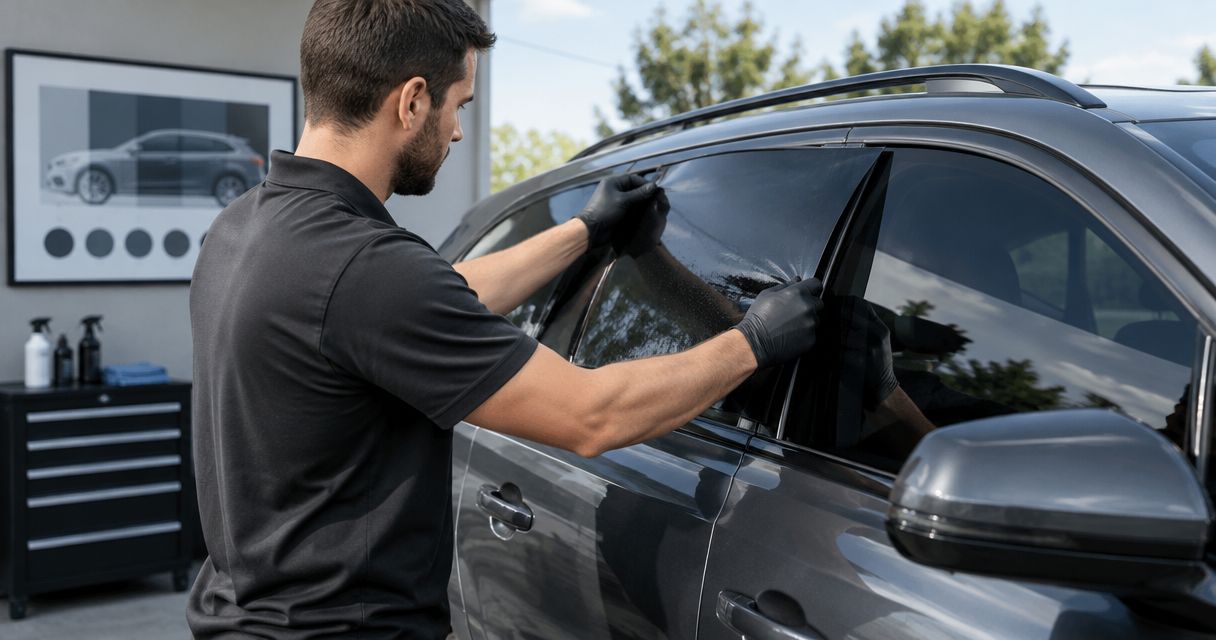
A tint shop charges for three things: film, labor and risk. Vehicle size drives all three. More glass means more film. Bigger and more curved windows mean more time on the heat gun and the squeegee. Rear glass with defrost lines and steep curves takes the longest.
This page does not publish a dollar figure per vehicle class. Tint prices shift with film supply, and a number printed here goes stale. For current Florida pricing, see what car window tinting costs in Florida. For your exact car, ask the shop for a written quote.
The short rule: the more windows and the more curve, the higher the quote.
Window tint cost by vehicle size: the benchmark table
The table ranks each class by tint workload from lowest to highest. It is a relative scale, not a price list. "Window count" is typical for the class; individual models vary.
| Vehicle class | Typical window layout | Film area | Labor difficulty | Relative cost |
|---|---|---|---|---|
| Two-door coupe | 2 doors, 2 quarter glass, 1 rear | Lowest | Medium: long door glass, steep rear | Lowest |
| Compact sedan | 4 doors, 1 rear | Low | Low to medium | Low |
| Mid-size and full-size sedan | 4 doors, 1 rear | Medium | Medium: larger rear curve | Low to mid |
| Crossover and small SUV | 4 doors, rear quarters, 1 hatch | Medium | Medium: hatch glass is curved | Mid |
| Pickup, extended cab | 2 doors, small rear, 1 back glass | Low to medium | Low | Low to mid |
| Pickup, crew cab | 4 doors, 1 back glass | Medium | Medium | Mid |
| Full-size SUV | 4 doors, extra quarters, liftgate | High | High: large curved liftgate | High |
| Minivan and passenger van | Sliders, multiple side panes, rear | Highest | High: many panes, sliding doors | Highest |
Highest and lowest: a minivan or passenger van sits at the top of the scale and a two-door coupe sits at the bottom. A crew-cab truck lands mid-scale, close to a crossover.
Limit of this table: it ranks workload only. It does not capture film brand, existing tint to remove, or a shop's labor rate, and those can swing a quote more than the class does.
What actually moves your quote
Size sets the baseline. These factors change it.
- Film type. Standard dyed film is the entry option. Carbon sits above it. Ceramic costs the most and blocks the most heat. See whether ceramic tint is worth the extra cost before you pick.
- Old tint removal. Stripping failed film adds labor. Purple, bubbled or peeling tint has to come off before new film goes on.
- Number of windows. Front doors only, a sunshade strip, or a full car all price differently.
- Windshield. A clear heat-rejecting film on the windshield is a separate line item from side glass.
- Rear glass complexity. Defrost lines, a heavy curve or a wiper cutout slow the install.
Coupe and sedan: the low end
A coupe has the least glass of any class, but the doors are long and the rear glass is steeply raked. That keeps the coupe from being a bargain per square foot. Even so, it is the cheapest class to tint overall.
A sedan has four doors and one rear window. The flat door glass is easy to work. The rear window is the one real skill test, since it has to be heat-shrunk to the curve without creases.
Verdict: coupe and sedan owners pay the least. Spend the savings on ceramic film.
Crossovers, trucks and SUVs: the middle to high end
Crossovers add rear quarter glass and a hatch. The hatch glass curves in two directions, so it takes more time than a sedan rear window.
Pickups split by cab. An extended cab has less glass than a crew cab. A crew cab matches a crossover for window count but has a flatter back glass.
Full-size SUVs carry the largest liftgate glass and extra quarter panes. That is where labor climbs. Minivans and passenger vans go higher still, because of sliding door glass and the number of separate panes.
Verdict: if you drive a full-size SUV or van, ask for a quote by window group so you can choose what to tint first.
Get a tint quote for your vehicle
Honest, upfront quotes. Walk-ins welcome in Cape Coral.
Florida legal limits change what you can order
Legal limits shape the film you buy, which shapes the price. Florida measures visible light transmission, meaning the percentage of light that passes through the glass and film together.
In 2026 the limits are:
- Front side windows: more than 28% light in, on every passenger vehicle.
- Back side and rear windows on a sedan: more than 15% light in.
- Back side and rear windows on an SUV, van or truck: more than 6% light in, which allows much darker film.
That last rule is why SUVs and vans can run darker rear glass than a sedan. It also means a sedan owner cannot copy the look of a darker SUV. For the stop-and-ticket side of this, read whether tinted windows can get you pulled over in Florida. For shade choice in the heat, see window tint shades for Florida heat.
How to use these benchmarks
- Find your class in the table, then rank your priorities. If your vehicle sits in the high-labor rows, decide which windows matter most for heat and privacy.
- Choose film before you compare quotes. Two shops quoting different film types are not quoting the same job.
- Ask what is included. Confirm whether old tint removal, the windshield strip and rear glass are in the number.
- Check the legal shade for your class. A sedan and an SUV in 2026 do not share the same rear limit.
Where Auto Sound Cape Coral fits
Auto Sound Cape Coral tints cars, trucks, SUVs and vans for drivers in Cape Coral, Fort Myers and nearby Southwest Florida towns. The shop is a local automotive electronics shop, so tint is one of several services done under one roof. Quotes are honest and upfront, with no hidden fees.
Best for: Southwest Florida drivers who want a written quote for a specific vehicle and a film that meets the 2026 Florida limits.
Honest tradeoff: a local shop quote is tied to your exact car and film choice. That means you will not get a single flat number from a web page, including this one. The benefit is that the number you get is the number you pay.
FAQ
Does window tint cost more for an SUV than a sedan?
Yes. An SUV has more glass and a larger curved liftgate, so it takes more film and more labor than a sedan. Full-size SUVs sit near the top of the cost scale.
Which vehicle is cheapest to tint?
A two-door coupe is the cheapest class to tint because it has the least glass. Compact sedans are close behind.
Is a crew cab truck more expensive to tint than an extended cab?
Yes. A crew cab has four doors of glass to tint, while an extended cab has two doors and small rear glass. Expect a mid-scale quote for a crew cab.
Does film type matter more than vehicle size?
Often it does. Ceramic film costs more than dyed or carbon film on the same car, and the film difference can outweigh the gap between a sedan and a crossover.
What tint percentage is legal in Florida in 2026?
Front side windows must allow more than 28% light in. Sedans need more than 15% on back side and rear glass. SUVs and vans need more than 6% on those windows.
Does removing old tint raise the price?
Yes. Stripping bubbled, purple or peeling film adds labor before new film goes on. Ask whether removal is included in the quote.
Can I tint only the front windows?
Yes. You can tint any group of windows. Front-only jobs cost less than a full car, but the front sides still have to meet the 28% limit.
How do I get an exact tint quote in Cape Coral?
Contact Auto Sound Cape Coral with your year, make and model, the windows you want done and the film type. Walk-ins are welcome.
One last thing
The rear window is where tint jobs succeed or fail. A flat door pane forgives a rushed install, but a curved rear glass does not. When you compare two quotes in 2026, ask who does the rear glass and how they shrink the film. A cheaper quote that skips that step ends up as a creased rear window in your first summer.