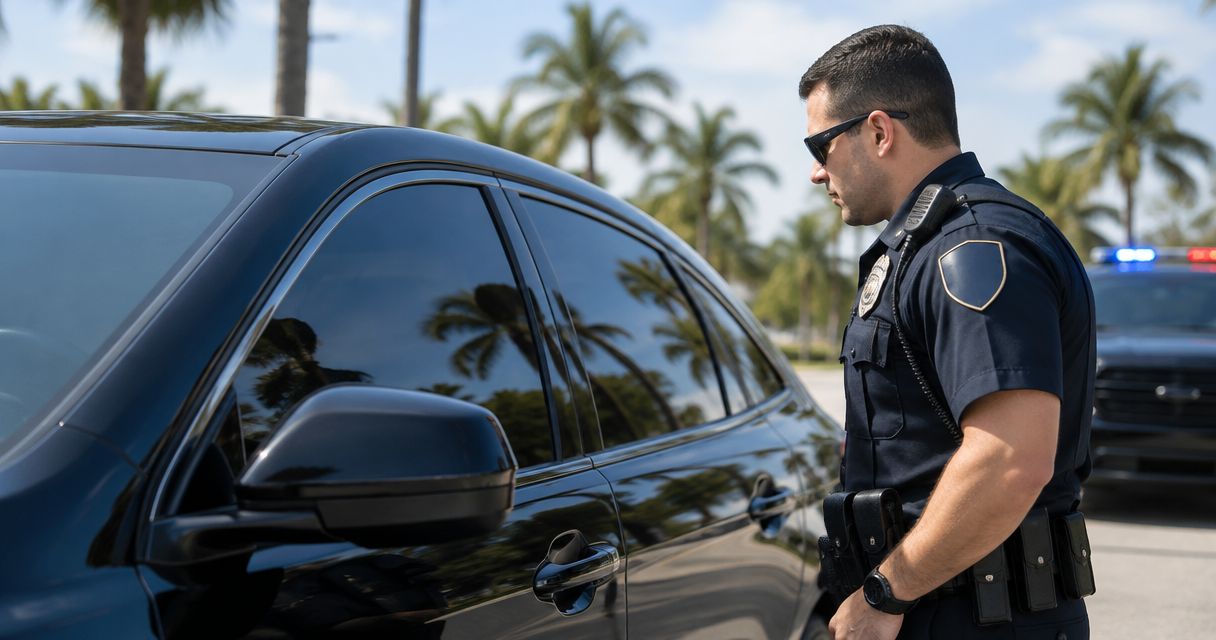
Yes, tinted windows can get you pulled over in Florida in 2026 when an officer has a lawful basis to suspect the tint violates state law. The limit depends on the window and vehicle classification, and compliance involves both light transmission and reflectivity—not just the shade printed on the film box.
- Can tinted windows get you pulled over in Florida? Yes, suspected illegal tint can justify a traffic stop.
- Florida front side windows require at least 28% visible light transmission under the ordinary rules.
- Passenger-car rear windows require at least 15% visible light transmission; qualifying multipurpose vehicles have a different limit.
- Auto Sound Cape Coral provides window tinting for vehicle owners in Cape Coral and Fort Myers.
Why this matters: A film labeled with a legal-looking percentage does not establish that your finished window is legal. The glass already affects how much light passes through, and windshield restrictions differ from side-window restrictions. If you are arranging window tinting with Auto Sound Cape Coral, ask about the finished glass-and-film reading rather than choosing by appearance alone.
Can tinted windows get you pulled over in Florida?
Yes. Suspected unlawful window tint can be the reason for a Florida traffic stop. That does not mean every tinted vehicle violates the law, or that a stop automatically establishes a violation. It means you should not treat tint as something police can address only after stopping you for speeding or another offense.
For your 2026 tint decision, the statutory references are Florida Statutes sections 316.2952 through 316.2954 for windshield, front-side, and rear-window restrictions; section 316.29545 for exemptions; and section 316.2956 for violations. These provisions address different parts of the vehicle, so one percentage does not cover every window.
The ordinary limits below apply without an applicable exemption. VLT means visible light transmission: the percentage of visible light that passes through the finished window.
| Window or vehicle category | Ordinary Florida requirement | What it allows | Main restriction |
|---|---|---|---|
| Front side windows | At least 28% VLT; no more than 25% visible-light reflectance | Tint within the front-window limits | A darker rear-window allowance does not apply here |
| Passenger-car windows behind the driver | At least 15% VLT; no more than 35% visible-light reflectance | Darker rear tint than the front-side minimum | The rear glass still has a light-transmission limit |
| Qualifying multipurpose vehicle windows behind the driver | At least 6% VLT; no more than 35% visible-light reflectance | A lower rear-window VLT than passenger cars | Vehicle classification must qualify |
| Windshield | Nonreflective sunscreening at the top, not below the AS-1 line, under the ordinary rule | A restricted upper strip | Side-window percentages do not authorize full-windshield tint |
Use this table to ask the right questions. Do not use it to assume that a vehicle described casually as a truck or SUV automatically qualifies for every rear-window allowance.
Front side windows: at least 28% VLT
Florida's ordinary front-side-window minimum is 28% visible light transmission, with visible-light reflectance no higher than 25%. These restrictions cover the side windows immediately beside the driver and front passenger.
A lower VLT number means a darker window. A finished front window that transmits 15% of visible light is darker than one that transmits 28%, so the passenger-car rear-window allowance does not make that front window compliant.
The useful installation question is simple: what will the window measure after the film is applied? The film label describes the film, not necessarily the completed glass-and-film combination. Existing glass tint changes the result.
For a 2026 front-window installation, choose based on the finished reading—not the darkest film someone calls legal. You also need to address reflectivity. A window can satisfy a darkness requirement while creating a separate compliance issue through excessive reflectance.
Passenger-car rear windows: at least 15% VLT
Florida's ordinary passenger-car rear-window minimum is 15% visible light transmission, with visible-light reflectance no higher than 35%. These limits apply to the windows behind the driver, including the rear window, subject to the statute's other requirements.
That gives you more room to choose darker rear glass than front-side glass. It does not make the entire car eligible for the rear-window shade, and it does not change the windshield rule.
The trade-off is visibility. Darker glass lets less visible light reach your eyes, which matters when checking behind you in low light. Privacy is a benefit, but you still need to see pedestrians, obstacles, and traffic through the windows you use while driving.
For a passenger car in 2026, separate the front and rear specifications on the installation paperwork. A single description such as dark tint all around leaves too much unclear. Ask which film goes on each window and what finished VLT the installer expects.
Qualifying multipurpose vehicles: at least 6% rear-window VLT
Qualifying multipurpose passenger vehicles have an ordinary rear-window minimum of 6% visible light transmission. Their windows behind the driver remain subject to the 35% visible-light reflectance limit.
The important word is qualifying. Florida law uses a vehicle classification, not simply the owner's preferred description of the vehicle. Confirm that classification before relying on the darker rear-window allowance.
This exception does not extend to the front side windows. Under the ordinary rules, those still require at least 28% VLT. Nor does a rear-window allowance authorize an unrestricted tinted windshield.
Do not order matching dark tint across the whole vehicle because the rear windows qualify for 6% VLT. Ask for a window-by-window plan. That keeps a legitimate rear-window allowance from becoming the reason your front windows need removal and replacement.
Windshield tint: the AS-1 line matters
Florida's ordinary windshield rule permits nonreflective sunscreening along the top of the windshield, provided it does not extend below the AS-1 line. It is not a general permission to apply any chosen VLT across the full windshield.
The AS-1 marking is a reference on the windshield. Have the installer identify it before agreeing to the depth of an upper strip. Do not substitute a generic strip measurement for the marking required by the rule.
For 2026, treat windshield work as a separate decision from your side-window package. A film being clear-looking, ceramic, or advertised for heat control does not by itself establish that its placement is lawful.
An upper strip can address glare from above, but its placement is limited. If your main goal is reducing cabin heat, discuss compliant side- and rear-window choices rather than assuming the answer is full-windshield film.
Why tint compliance varies
Two vehicles can look similarly tinted yet have different compliance issues. These are the factors to check before installation or after buying a used vehicle:
- Window position: Front side windows, rear windows, and the windshield have different restrictions.
- Vehicle classification: Qualifying multipurpose vehicles have a different rear-window minimum from passenger cars.
- Existing glass: Factory glass affects the finished light-transmission reading after film is added.
- Reflectivity: Florida regulates reflected visible light separately from transmitted visible light.
- Exemption status: An applicable exemption changes the analysis, but it requires the proper basis and documentation.
- Film placement: A windshield strip must comply with the placement restriction, not just look narrow.
Neither a shop receipt nor a film's marketing description answers all these questions. Keep the receipt, but ask for the actual window specifications too. The practical goal is to understand what is installed, where it is installed, and how the finished result meets the applicable rule.
How do you check your tint before driving?
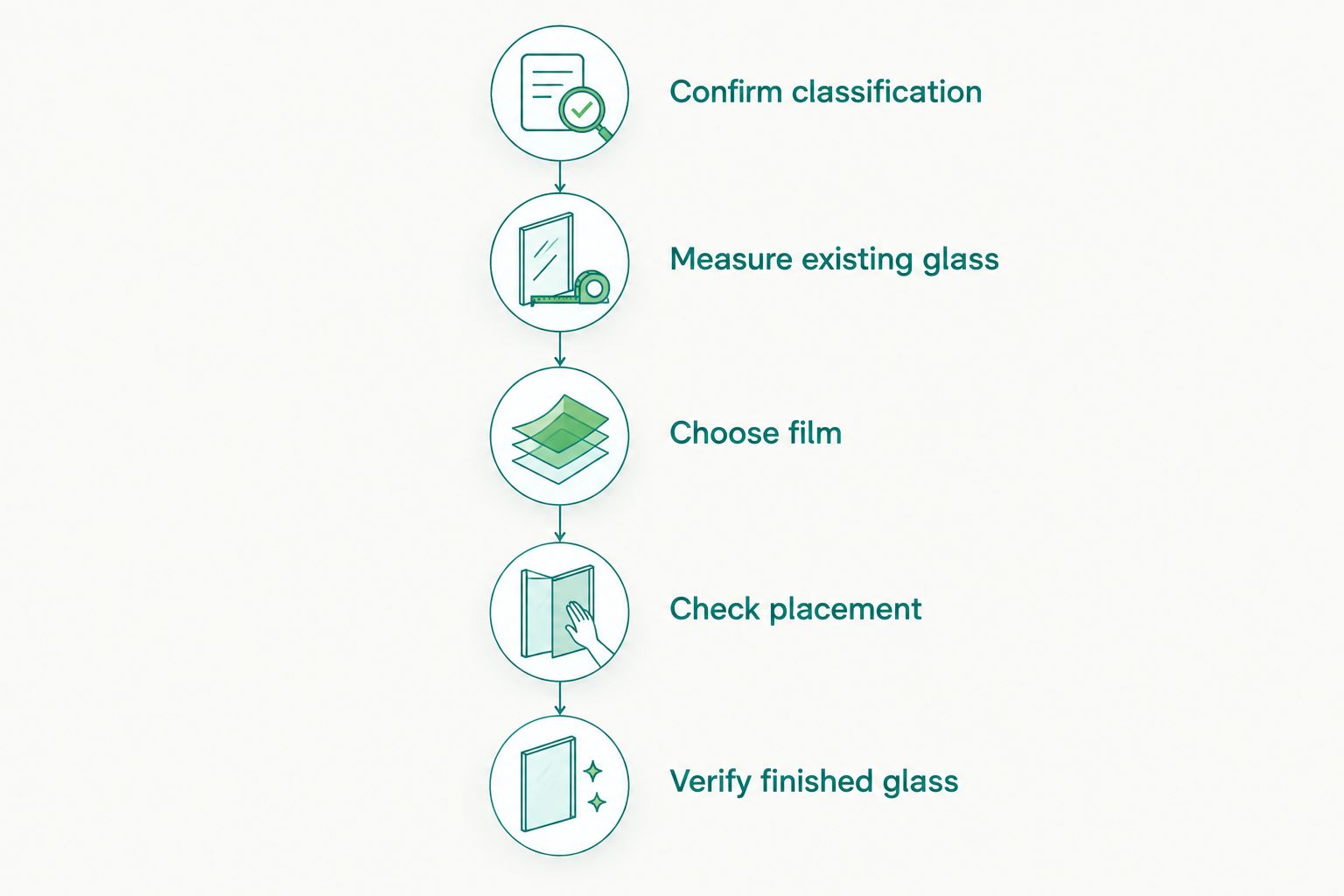
Start with the vehicle, not a shade chart. This sequence helps you avoid buying film first and discovering a compliance problem later.
- Confirm classification. Identify whether the vehicle qualifies for the multipurpose rear-window rule. Do not rely on its appearance alone.
- Measure existing glass. Ask for a VLT reading before adding or replacing film. Used vehicles can already have film that is difficult to identify by eye.
- Choose film. Specify the intended finished VLT for each window and check reflectivity. Keep front, rear, and windshield decisions separate.
- Check placement. Identify the windshield's AS-1 line before installing an upper strip. Do not approve unrestricted windshield coverage under the ordinary rule.
- Verify finished glass. Request a final reading and keep the installation details. A labeled roll of film is not a substitute for checking the completed window.
A tint meter evaluates light transmission through the glass. It does not replace checking the vehicle classification, windshield placement, or the film's reflectivity specifications. Ask about those separately so a good VLT reading does not become your only compliance check.
Auto Sound Cape Coral is a local window-tinting option for vehicle owners in Cape Coral and Fort Myers. When discussing an installation, bring your vehicle details and explain whether you want glare control, privacy, or a change to existing tint. Those goals do not eliminate the legal limits, but they help frame the choice.
Ceramic describes a film type, not a legal exemption. Read the guide to whether ceramic tint is worth the extra cost for the material decision, then check the selected film and finished window against Florida's rules.
Can police pull you over if your tint is legal?
28% VLT is the ordinary front-side minimum, but a compliant reading does not guarantee that you will never be stopped. A stop concerns whether an officer has a lawful basis to investigate suspected unlawful tint; establishing an actual violation is a separate issue.
Keep those questions separate if you receive a citation. Note which window was identified and preserve your installation records and any documented readings. A disagreement about a stop or ticket needs advice specific to its facts, not a promise that legal tint prevents every stop.
Is 15% tint legal on the front windows in Florida?
15% VLT is below Florida's ordinary 28% front-side minimum. The 15% passenger-car allowance applies to windows behind the driver, not the front side windows.
That distinction matters when someone recommends one shade for the entire vehicle. Ask for separate front and rear specifications rather than copying the darkest legal rear-window option onto the front doors.
Does a medical condition automatically allow darker tint?
28% VLT remains the ordinary front-side minimum unless an applicable exemption changes the requirement. A medical condition alone is not the same as holding the required exemption documentation.
Florida Statutes section 316.29545 provides for qualifying medical exemptions through the state's process. Confirm eligibility, obtain the required certificate, and understand its scope before installing tint that relies on the exemption.
What should you do if you receive a tint citation?
Read the citation and identify the alleged problem. Darkness, reflectivity, and windshield placement are different issues, so replacing film without understanding the violation can leave the actual problem unresolved.
Florida's tint violations fall under the statutory noncriminal, nonmoving-violation framework. Follow the citation's instructions and deadlines; do not assume an installation receipt automatically dismisses it or that removing the film resolves every procedural requirement.
Before authorizing corrective work, ask for measurements and a written description of the proposed replacement. If you intend to dispute the citation or the legality of the stop, consult a Florida attorney. An installer can address the glass and film, but cannot decide your legal case.
FAQ
Can tinted windows get you pulled over in Florida in 2026?
Yes, an officer with a lawful basis to suspect unlawful window tint can stop a vehicle in Florida. A stop does not automatically establish a tint violation.
What is the legal tint limit for Florida front windows?
Florida's ordinary front-side-window rule requires at least 28% visible light transmission and no more than 25% visible-light reflectance. Check the finished glass-and-film combination, not just the film label.
Is 5% tint legal on a passenger car in Florida?
A finished window reading of 5% VLT is below the ordinary passenger-car limits of 28% for front side windows and 15% for rear windows. An applicable exemption requires separate analysis and proper documentation.
Can an SUV have darker rear tint in Florida?
A qualifying multipurpose passenger vehicle can have rear windows with at least 6% VLT under Florida's ordinary rule. Confirm the vehicle classification; the front side windows still have the ordinary 28% minimum.
Does ceramic tint make dark windows legal?
No, ceramic tint does not create a legal exemption. Its finished light transmission, reflectivity, and placement must still meet the applicable Florida requirements.
Can I tint my whole windshield in Florida?
Florida's ordinary rule does not authorize unrestricted full-windshield sunscreening. It permits nonreflective sunscreening along the top that does not extend below the AS-1 line, with separate rules for applicable exemptions.
Do Cape Coral and Fort Myers use different tint percentages?
Florida's statutory window-tint limits apply in both Cape Coral and Fort Myers. Do not choose a shade based on an assumption that driving in one city changes the state requirements.
One last thing
Your tint's appearance is not its measurement. Before your next installation in 2026, ask for the finished VLT target on each window, the reflectivity specification, and the windshield placement plan.
Bring those questions to Auto Sound Cape Coral or any installer you are considering. A darker look is easy to request; a clear, window-by-window specification is what helps you make an informed decision.