Yes—ceramic tint is worth the extra cost in 2026 when reducing solar heat matters more to you than simply making the windows darker. Pay for documented heat rejection at the shade you want, not the ceramic label alone. Existing tint removal, the windows covered, and installation quality also belong in the decision.
- Is ceramic tint worth it? Yes for heat-focused buyers; compare documented solar heat rejection at similar shades.
- Ceramic window tint does not need to be dark to reduce solar heat entering through glass.
- Dyed tint suits appearance-focused buyers; ceramic tint suits drivers prioritizing heat rejection.
- Autosoundcapecoral provides local window tinting for vehicle owners in Cape Coral and Fort Myers.
Is ceramic tint worth the extra cost in 2026?
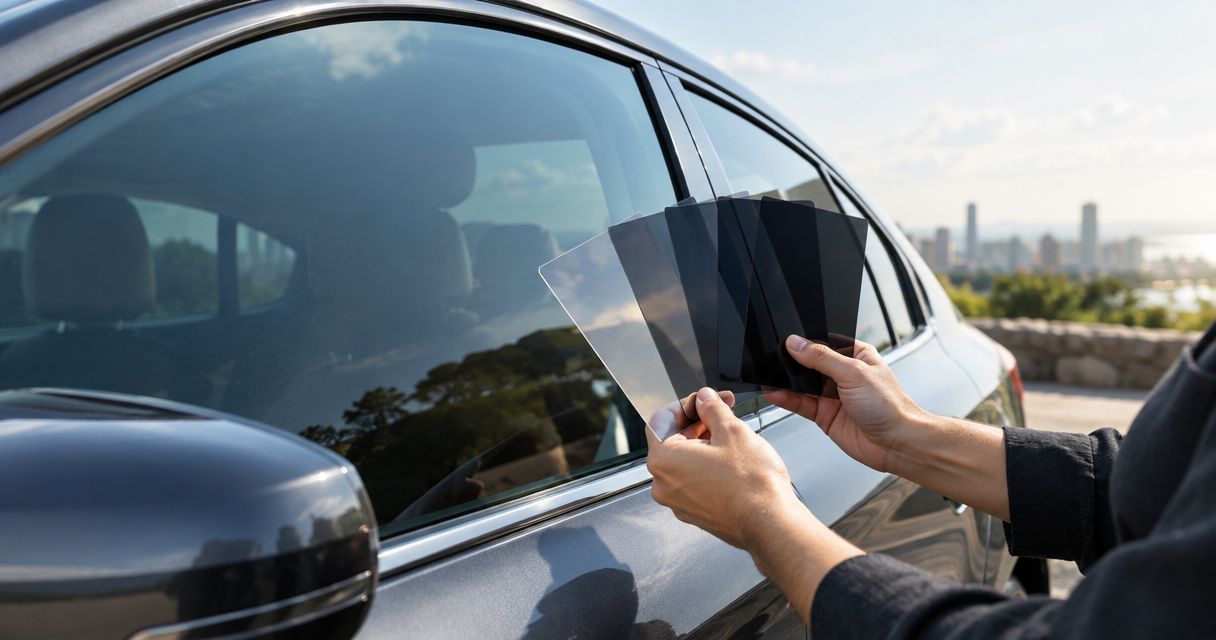
Ceramic tint earns its upgrade when the specific film rejects more solar energy than the alternative at a comparable visible light transmission. That comparison matters more than the material name. A darker-looking sample is not proof of better heat performance.
For the broader decision before choosing a film, read whether window tinting is worth it in Florida. Then compare the actual film lines offered for your vehicle, rather than comparing one shop's darkest sample with another shop's lightest sample.
| Film category | Best for | Main advantage | Main limitation |
|---|---|---|---|
| Dyed tint | Drivers mainly seeking a darker appearance and privacy | Changes the appearance and reduces visible light | The shade alone does not establish strong solar heat rejection |
| Carbon tint | Drivers considering a nonmetallic alternative to dyed film | Offers another material option without a metallic layer | Performance depends on the film line, not the carbon name |
| Ceramic tint | Drivers prioritizing solar heat rejection | Can reduce solar heat without requiring a very dark shade | The upgrade needs support from comparable performance data |
Choose ceramic for a verified heat-rejection advantage. Choose dyed tint when appearance is the main job. Carbon belongs in the comparison when the installer can show where the actual film sits between those choices.
There is no honest category-wide winner for every vehicle. A film with documented performance and a clean installation is a better decision than an impressive label with no useful specification sheet.
Why this matters
Window tint has several separate jobs: controlling visible light, reducing solar heat, limiting ultraviolet transmission, and changing privacy. Those jobs overlap, but they are not interchangeable. You can get a darker window without getting the heat performance you expected.
For your 2026 tint decision, start with the complaint you want to fix. Is direct sunlight uncomfortable through a side window? Do you mainly want privacy? Are you trying to reduce glare without making nighttime visibility harder?
That distinction keeps you from paying for the wrong benefit. It also gives the installer a clear target instead of a vague request for the darkest film available.
Ceramic tint: best for heat-focused drivers
Ceramic automotive films use ceramic-based materials to manage solar energy without relying on a metallic layer. The useful result is heat rejection, not a particular appearance. Different ceramic film lines still have different performance.
The strongest reason to choose ceramic is wanting less solar heat through the glass while keeping a relatively light shade. Darker is not automatically better. Compare the manufacturer's figures for the shades you are actually considering.
The upside: ceramic gives heat-focused buyers an option that does not depend on an extremely dark appearance. The downside: the category name does not tell you how much improvement you are buying, and film cannot replace working air conditioning.
Ceramic also does not make a parked vehicle stay cool indefinitely. Sunlight reaches other parts of the vehicle, and heat continues to build. Think of tint as reducing an incoming heat source, not turning the cabin into a temperature-controlled space.
Dyed tint: best for appearance-focused drivers
Dyed film uses dye to reduce visible light transmission. It suits a driver whose main request is a darker look or more daytime privacy. Those are legitimate reasons to tint a vehicle.
The limitation is treating darkness as a heat specification. A dyed film can look much darker than a light ceramic film without that appearance proving better total solar energy rejection. Compare the specifications before drawing a conclusion.
Choose dyed tint when its documented performance meets your needs and appearance is the priority. Do not dismiss it simply because another category sounds more advanced. Equally, do not expect a dark sample to answer a heat problem by itself.
Privacy also depends on lighting conditions. Tint is not a substitute for keeping valuables out of sight, and a darker cabin view during daylight does not guarantee the same effect after dark.
Carbon tint: best for a documented alternative
Carbon film is another nonmetallic category worth checking when it appears on your installation quote. Its place in the decision depends on the particular product's specifications. The word carbon does not establish a fixed level of performance.
The advantage is having another option to compare against dyed and ceramic films. The limitation is the same label problem: you still need the film line, shade, and comparable heat-rejection figures.
Choose carbon when the actual film meets your heat and visibility requirements. Do not assume every carbon film sits neatly between every dyed and ceramic film. A category ladder is easier to sell than a careful comparison, but it is less useful to you.
Read these specifications before choosing a film
Ask for the manufacturer's specification sheet for the exact film and shade. Keep the test basis consistent when comparing options. A figure without its measurement scope is not enough to make the decision.
Visible light transmission
Visible light transmission, or VLT, describes how much visible light passes through. A lower percentage means a darker result. It does not measure the whole solar heat load.
Your existing glass matters because the installed result combines glass and film. As a simplified example, glass with 70% VLT combined with film having 50% VLT produces approximately 35% VLT: the transmissions multiply. Those are illustrative values, not a recommendation for your vehicle or a legal limit.
This is why a film's package label is not the same as a measurement of your finished window. Ask the installer to assess the glass and explain the intended installed result.
Total solar energy rejected
Total solar energy rejected, or TSER, describes the share of total solar energy rejected under the stated test conditions. It is more useful for a whole-solar-heat comparison than a claim covering only part of the spectrum.
Compare TSER at similar VLT values and on the same stated glass or test basis. Otherwise, differences in darkness or testing can get mixed into the comparison. Ask the installer to explain any mismatch before you choose.
Infrared and ultraviolet figures
Infrared rejection claims need context because the measured wavelength range and test method affect what the figure describes. A narrow-band result is not the same thing as a whole-solar-energy result. Ask what was measured.
Ultraviolet rejection answers a different question. It does not establish heat rejection or guarantee that interior materials will never fade. Visible light, heat, and material characteristics also matter.
Compare tint quotes in this order
Use this sequence for your 2026 installation decision. It separates the film choice from the installation scope, so a short quote does not hide a different job.
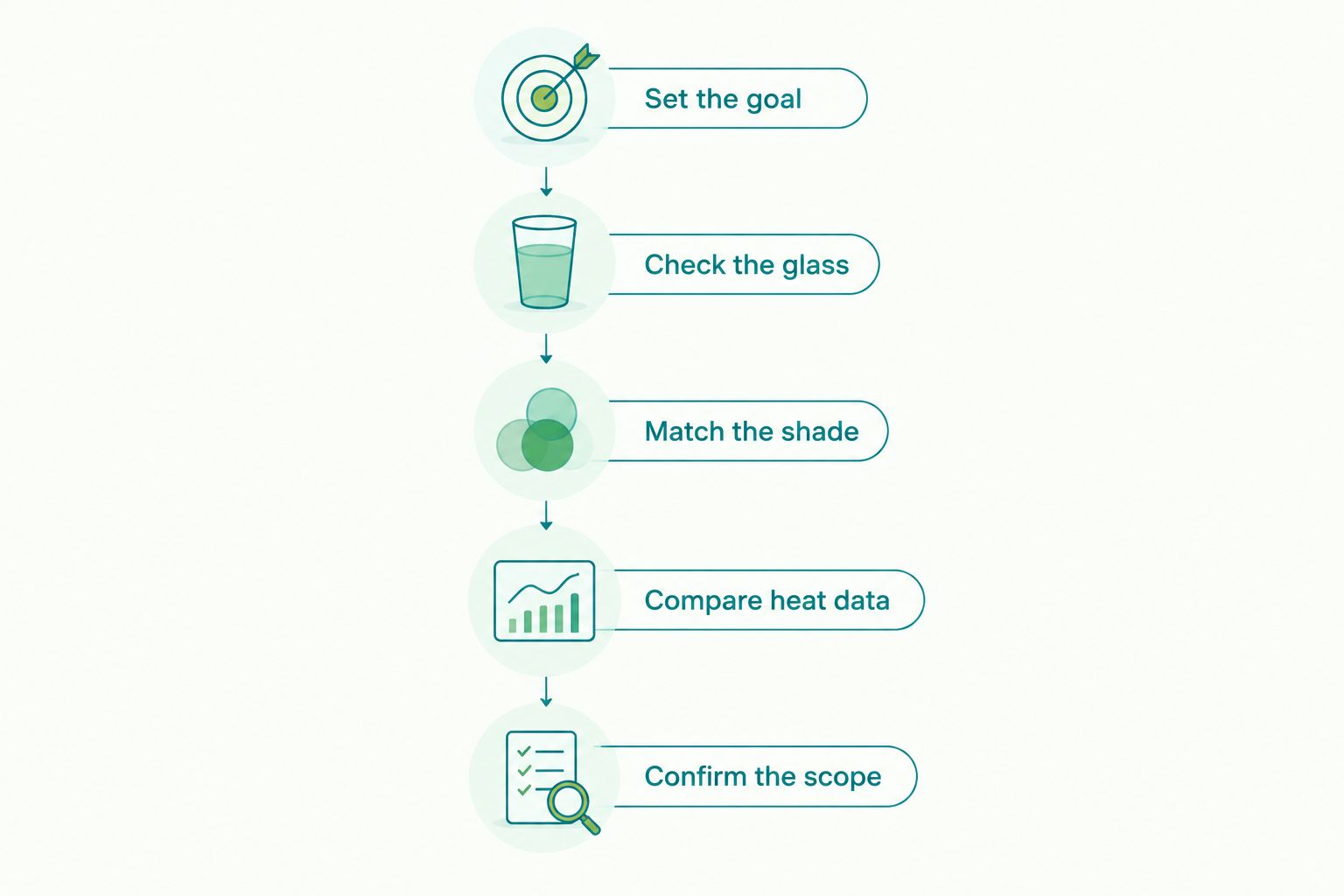
- Set the goal. Name the main problem: solar heat, glare, appearance, or privacy. Decide what you want to improve before discussing shade.
- Check the glass. Identify existing film and factory-darkened glass. Ask how those affect the finished light transmission and the work required.
- Match the shade. Compare films at similar VLT values. Do not treat a darker sample as evidence that its material performs better.
- Compare heat data. Request TSER and the basis for infrared claims. Use the exact film line rather than a category-level sales description.
- Confirm the scope. List the windows included, any removal work, installation details, and written care instructions. Keep those items separate from the film's performance claims.
Bring those questions to the shop before authorizing the work. A useful answer names the film and explains the installed result; it does not just point at a display sample.
Autosoundcapecoral is best for local vehicle owners seeking window tinting in Cape Coral and Fort Myers. The shop also provides automotive electronics installation. For this decision, assess the proposed tint on its film specifications and installation scope rather than assuming a local service listing proves a particular performance level.
Discuss your window tint installation
Ask about film specifications, the windows included, and the finished shade for your vehicle.
Why ceramic tint value varies
The extra expense only makes sense relative to the job you need the film to do. Two vehicle owners can reasonably choose different films without either making a bad decision.
- Your goal: a heat-focused buyer needs a demonstrated solar-energy advantage; an appearance-focused buyer has a different priority.
- The exact film: ceramic is a category, not a single specification. Compare the named film line and shade.
- Your glass: existing film and factory glass affect the finished result. The film label alone is incomplete.
- The coverage: quotes covering different windows are not quotes for the same job. Confirm the scope before comparing.
- Your visibility needs: assess the shade with nighttime driving in mind. Heat reduction should not depend on choosing darkness you dislike.
- The installation: contamination, poor edges, or damaged film can spoil the result regardless of the material category. Ask how the finished work is checked.
For a 2026 purchase, keep the decision tied to documented differences. Do not pay extra solely for a word on the quote, and do not reject an upgrade solely because two samples look alike.
Is lighter ceramic tint better than darker regular tint?
Lighter ceramic tint can reject more solar heat than darker dyed tint, but the exact comparison requires both films' specifications. Appearance alone cannot settle it. Match the test basis and examine TSER rather than guessing from the sample.
If you dislike dark windows, this is the most useful comparison to request. You are choosing heat performance and visibility together, not accepting darkness as the only route to comfort.
Will ceramic tint keep my parked car cool?
Ceramic tint reduces solar heat entering through treated glass; it does not keep a parked car cool indefinitely. It is not air conditioning. A vehicle exposed to sunlight can still become dangerously hot.
Never use tint as a reason to leave a child or pet inside a parked vehicle. That safety decision does not change with the film category or shade.
Should I replace tint that already looks fine?
Replace existing tint for a specific reason, such as damage, poor visibility, or a documented heat-performance improvement. A clean-looking installation is not automatically a good candidate for removal. First identify what is already on the glass.
Ask for a comparison between the existing film and the proposed replacement when its identity is known. If appearance is your only concern and you already like the result, the ceramic label alone is not a reason to redo the job.
FAQ
Is ceramic tint worth it for everyday driving in Florida?
Ceramic tint is worth it when your priority is reducing solar heat and the selected film shows an advantage at a comparable shade. Compare the exact film specifications rather than buying the ceramic label alone.
Is ceramic tint always better than carbon tint?
No, ceramic tint is not automatically better than every carbon film. Compare the actual film lines at similar visible light transmission and on the same test basis.
Does ceramic tint have to be dark to work?
No, ceramic tint does not have to be very dark to reject solar heat. Check the heat-rejection specifications for the lighter shade you want.
Can I choose any tint shade in Florida in 2026?
No, a ceramic film label does not exempt a vehicle from Florida's tint requirements. Confirm the current rules for your vehicle and each window position before installation.
Will ceramic tint replace my car's air conditioning?
No, ceramic tint does not replace air conditioning. It reduces a source of incoming solar heat, while the vehicle's cooling system handles cabin temperature.
What should I ask Autosoundcapecoral before getting window tint?
Ask Autosoundcapecoral which film line and shade are proposed, what the performance sheet measures, and which windows the job includes. Also discuss existing film, the finished light transmission, and care instructions.
Does a high infrared rejection figure prove the best heat protection?
No, an infrared rejection figure alone does not establish the best whole-solar-heat performance. Check the measured wavelength range and compare total solar energy rejected under consistent conditions.
One last thing
Two tint samples can look almost identical and still have different heat-rejection specifications. The reverse is also true: a visibly darker sample does not prove a better heat result. Your eyes judge appearance, not the full solar spectrum.
For your final 2026 decision, ask for the specification sheet and the installation scope together. Pay for a documented improvement that solves your problem—not darkness, a category name, or a heat-lamp demonstration without a clear test basis.