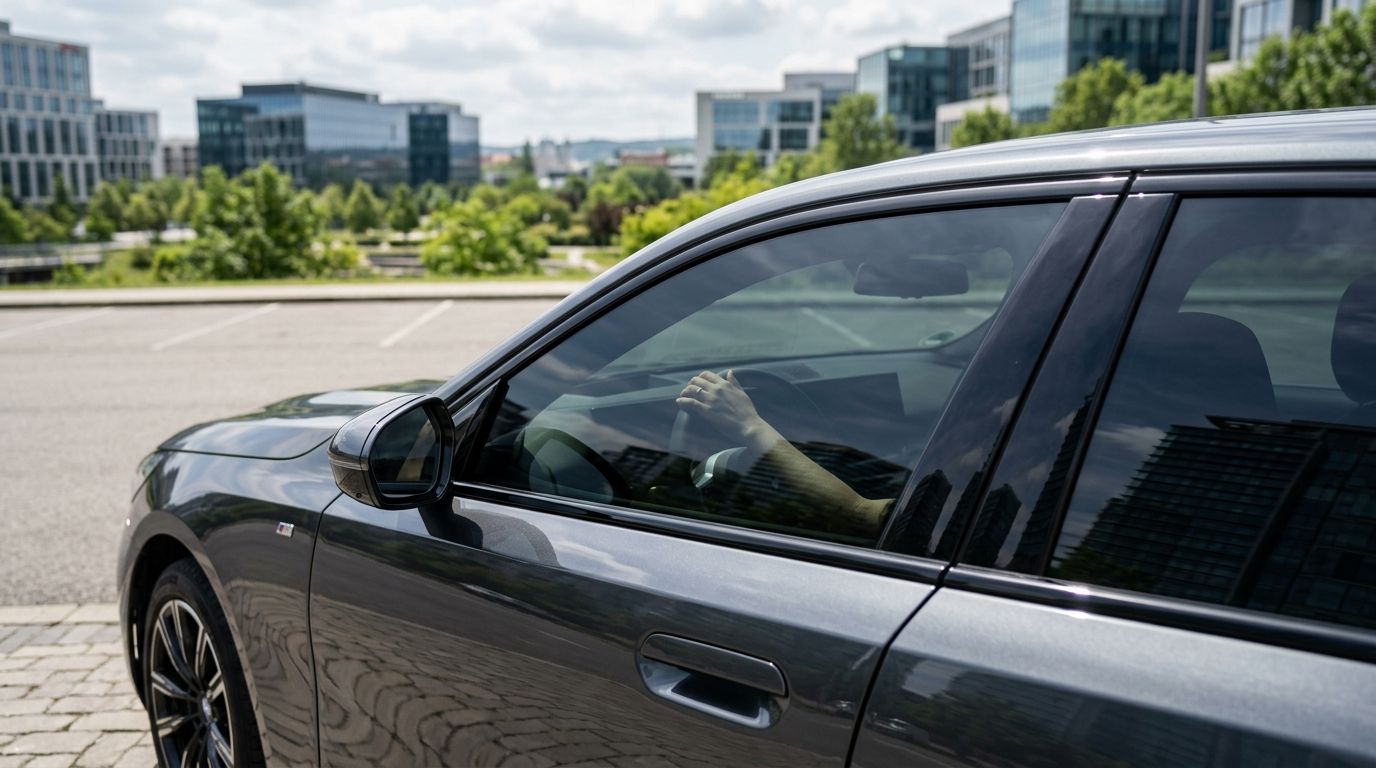
Ceramic window tint blocks infrared heat and UV rays without the metal or dye layers that fade, bubble, or mess with your GPS and key fob signal. Best overall: 3M Color Stable. Best for factory-look clarity: Llumar CTX. Best budget option: SunTek CXP.
- 3M Color Stable is the best ceramic window tint for Southwest Florida heat and UV in 2026 — buy it if you want top infrared rejection.
- Llumar CTX gives the truest factory-look clarity with zero color shift over time.
- SunTek CXP is the best budget ceramic option that still skips the metal layer.
- Solar Gard NR Ultra holds color longest, which matters for classic and collector cars.
- Florida law caps front window tint at 28% VLT, so any ceramic film has to meet that line.
Why this matters
Dyed film fades to purple within a couple years of Cape Coral sun. Metallic film blocks GPS, cell signal, and key fob range — a real problem for anyone with a Tesla key card or a phone-based unlock system. Ceramic tint solves both: it uses nano-ceramic particles instead of metal or dye to block infrared heat, so it holds color and doesn't interfere with any signal your car sends or receives.
Auto Sound Cape Coral installs several ceramic tint lines for drivers across Cape Coral and Fort Myers, and the difference between brands comes down to heat rejection numbers, clarity, and how the film ages under year-round Florida sun. This guide ranks the six ceramic options worth considering in 2026.
What makes the best ceramic window tint
- Infrared heat rejection — how much radiant heat the film blocks, not just visible light
- UV protection — blocking UVA/UVB rays that fade interiors and damage skin through glass
- Optical clarity — no color shift, no purple tint, no distortion at night
- Signal transparency — ceramic particles instead of metal, so GPS, cell signal, and key fobs work normally
- Fade resistance — the film should look the same in year five as it did on install day
- Warranty coverage — manufacturer backing on the film itself, separate from the installer's workmanship
Ceramic window tint options at a glance
| Film | Best for | Standout feature | Key limitation |
|---|---|---|---|
| 3M Color Stable | Overall / Florida heat | Strong infrared rejection | Premium tier, not the cheapest option |
| Llumar CTX | Factory-look clarity | No color shift over time | Fewer visible-light shade options |
| SunTek CXP | Budget ceramic | Ceramic performance at entry price | Heat rejection trails the premium films |
| Solar Gard NR Ultra | Classic / collector cars | Long-term color stability | Slower to source in unusual shade percentages |
| Huper Optik | Maximum heat rejection | High IR blocking rating | Higher-tier cost |
| XPEL Prime XR Plus | High-end vehicles | Multi-layer nano-ceramic build | Overkill for a daily commuter budget |
1. 3M Color Stable: best ceramic window tint for Southwest Florida heat
3M Color Stable is a nano-ceramic film built specifically to block infrared heat without a metal layer, which makes it the default recommendation for Cape Coral and Fort Myers drivers dealing with year-round sun. It holds up under UV exposure without shifting to purple or brown, the classic failure mode of older dyed films.
3M Color Stable pros:
- Strong infrared heat rejection for cabin temperature control
- No metal layer, so GPS, cell signal, and key fobs work normally
- Backed by a well-established manufacturer warranty program
3M Color Stable cons:
- Costs more than budget ceramic lines
- Overkill if you mostly park in a garage or covered lot
Best for: daily drivers parked outside in Southwest Florida heat. Verdict: Buy.
2. Llumar CTX Ceramic: best for factory-look clarity
Llumar CTX is built around optical clarity — it goes on with a near-invisible finish that looks like factory glass rather than an obvious aftermarket film. Drivers who want the tint to disappear visually while still cutting heat gravitate toward this line.
Llumar CTX pros:
- Minimal color shift, even years after install
- Clean, factory-look appearance from outside the vehicle
- No metal layer, so electronics and signals are unaffected
Llumar CTX cons:
- Shade percentage options are narrower than some competitors
- Not the single highest heat-rejection number on this list
Best for: drivers who care more about a clean look than chasing the top heat-rejection spec. Verdict: Buy.
3. SunTek CXP Ceramic: best budget ceramic option
SunTek CXP brings ceramic construction down to a price point that competes with upgraded dyed film, without giving up the no-metal, no-fade advantages. It's the practical pick for drivers who want ceramic performance without paying for the top-tier brand name.
SunTek CXP pros:
- Ceramic tech at a more accessible price than premium lines
- Skips the metal layer, so signal interference isn't a concern
- Reasonable UV protection for daily driving
SunTek CXP cons:
- Heat rejection numbers trail 3M Color Stable and Huper Optik
- Fewer color-stability data points over a long ownership window
Best for: budget-conscious drivers who still want to skip dyed film. Verdict: Buy.
4. Solar Gard NR Ultra: best for classic and collector cars
Solar Gard NR Ultra is built around long-term color stability, which matters more on a car you plan to keep for a decade than on a lease you'll turn in during 2029. Collector car owners lean toward this line specifically because it won't fade or purple while the car sits between shows.
Solar Gard NR Ultra pros:
- Strong resistance to color shift over long ownership periods
- No metal layer to interfere with aftermarket electronics
- Solid UV blocking for interior protection
Solar Gard NR Ultra cons:
- Less common in unusual shade percentages
- Not the fastest turnaround if a specific roll needs to be sourced
Best for: owners keeping a vehicle long-term who prioritize color stability over the top heat number. Verdict: Buy.
5. Huper Optik: best for maximum heat rejection
Huper Optik sits at the top of the heat-rejection conversation among ceramic films, built for drivers who want the biggest measurable drop in cabin temperature. It's a common upgrade pick for trucks and SUVs with large glass surfaces that take on more direct sun.
Huper Optik pros:
- High infrared rejection rating among ceramic films
- No metal layer, so signal and electronics stay unaffected
- Strong fit for large-glass vehicles like trucks and SUVs
Huper Optik cons:
- Sits at the higher end of the ceramic price tier
- The heat-rejection gap over mid-tier ceramic films is smaller than the price gap suggests
Best for: trucks and SUVs with large windows facing direct Florida sun. Verdict: Buy.
6. XPEL Prime XR Plus: best for high-end vehicles
XPEL Prime XR Plus uses a multi-layer nano-ceramic build aimed at drivers who want the newest film technology on a higher-value vehicle. It's the pick for someone who wants the latest construction rather than the best price-to-performance ratio.
XPEL Prime XR Plus pros:
- Multi-layer ceramic construction built for newer performance standards
- No metal layer, full signal transparency
- Fits the expectations of high-end vehicle owners
XPEL Prime XR Plus cons:
- More film than most daily-driver budgets need
- Marginal gains over 3M Color Stable or Huper Optik for typical commuting
Best for: owners of high-end vehicles who want the newest ceramic build available in 2026. Verdict: Buy for the right car, Skip for a budget commuter.
“If a tint blocks infrared heat without a metal layer, it won't kill your GPS or key fob signal.”
How we ranked these
Each film was weighed against the six criteria above: infrared heat rejection, UV protection, optical clarity, signal transparency, fade resistance, and warranty coverage. No film wins every category — 3M Color Stable trades a lower price for the strongest all-around heat performance, while SunTek CXP trades top-tier heat rejection for accessibility. The Solar Gard NR Ultra pick exists specifically for the long-ownership use case, not because it beats the others on raw specs.
For an exact cost breakdown by vehicle type, check how much window tinting costs in Florida before booking an install.
Which ceramic window tint should you choose?
Grab 3M Color Stable if you park outside daily and want the strongest heat rejection available in 2026. Pick Llumar CTX if a clean, factory-look finish matters more than chasing the top heat number. Go with SunTek CXP if budget is the deciding factor and you still want ceramic performance over dyed film. Everyone else on this list — Solar Gard NR Ultra, Huper Optik, XPEL Prime XR Plus — earns its spot for a specific vehicle type, not for beating the top three across the board.
Remember that Florida law caps front window tint at 28% VLT, with the top 5 inches of the windshield allowed a non-reflective strip regardless of brand. Any ceramic film on this list can be cut to meet that line.
FAQ
What is the best ceramic window tint for Florida heat?
3M Color Stable is the best ceramic window tint for Florida heat in 2026 because it delivers strong infrared rejection without a metal layer that interferes with GPS or key fob signals.
Is ceramic tint worth the extra cost over dyed tint?
Yes for most drivers — dyed tint fades to purple within a couple years of Florida sun, while ceramic film holds its color and blocks more infrared heat over the life of the film.
How dark can window tint legally be in Florida?
Florida law requires a minimum of 28% VLT on front side windows, with rear windows and the back windshield allowed any darkness on most sedans. The top 5 inches of the windshield can carry a non-reflective strip.
Does ceramic tint interfere with GPS or cell signal?
No. Ceramic tint uses nano-ceramic particles instead of a metal layer, so GPS, cell signal, and key fob range work the same as with no tint at all.
How long does ceramic window tint last?
Ceramic tint is built to resist fading and color shift far longer than dyed film, which is why brands like Solar Gard NR Ultra are marketed specifically toward long-term ownership.
Can ceramic tint be applied to the windshield in Florida?
Only the top 5 inches of the windshield can legally carry a non-reflective tint strip under Florida law; the rest of the windshield must stay clear on most vehicles.
What's the difference between ceramic and carbon window tint?
Ceramic film uses ceramic particles for heat rejection and tends to outperform carbon film on infrared blocking, while carbon film sits a step above dyed tint but below ceramic on heat performance.
Does Auto Sound Cape Coral install ceramic tint same-day?
Auto Sound Cape Coral offers same-day scheduling for most ceramic tint installs, with exact timing depending on the vehicle and film selected.
One last thing
The biggest mistake drivers make in 2026 isn't picking the wrong brand — it's picking a shade percentage that violates Florida's 28% VLT front window rule and getting flagged at a traffic stop. Confirm the legal limit for your vehicle type before you fall in love with a darker shade.