Car window tinting cost in Florida in 2026 isn't a single number — it moves with the film grade you pick, the size of your vehicle, and how many windows get covered. A two-door coupe with two front windows costs less to tint than a full-size SUV with a rear hatch and six windows, and a ceramic film job costs more than a basic dyed film job on the same car.
Before you call around for quotes, it helps to know what actually drives the price and what Florida law allows on your windows in the first place. Auto Sound Cape Coral installs tinting for drivers across Cape Coral and Fort Myers and quotes jobs after looking at the actual vehicle, not off a generic price sheet.
- How much does car window tinting cost? It depends on film grade, vehicle size, and window count in 2026, not a flat rate.
- Ceramic film costs more upfront than dyed film but blocks more heat and holds up longer.
- Florida caps front side windows at 28% VLT and rear side/back windows at 15% VLT in 2026.
- Windshields only allow a non-reflective strip above the manufacturer's AS-1 line.
- Vehicle-specific quotes beat online price charts because window count and glass curvature vary by model.
Why this matters
Tint shops don't price off a single sticker because no two cars have the same glass. A sedan's front doors are smaller and flatter than an SUV's rear quarter windows, which changes labor time and film waste. Skipping a proper quote and going by a number you saw online is how people end up arguing about the bill after the install.
Florida also enforces specific visible light transmission (VLT) limits under Florida Statute 316.2953, and going darker than legal isn't just a fine risk — it can affect insurance claims after an accident if an officer flags the tint as non-compliant.
How much does car window tinting cost in Florida?
The honest answer is: it depends on the factors below, and the only way to get a real figure is a vehicle-specific quote. Here's what actually shifts the price up or down:
| Factor | Why it changes the price |
|---|---|
| Film type (dyed, carbon, ceramic) | Ceramic film uses more advanced heat-rejecting materials than dyed film, so it costs more per window |
| Vehicle size and window count | A truck or SUV with six or more windows takes more film and more labor than a two-door coupe |
| Removing old tint first | Stripping failed or bubbled tint before a new install adds labor time |
| Warranty coverage | Longer, lifetime-style warranties usually come with higher-grade film |
| Window shape and curvature | Wraparound rear windows and curved hatchbacks take more skill and time to fit cleanly |
Dyed, carbon, and ceramic film: what drives the price difference
The three main film categories aren't priced the same because they aren't built the same, and each one trades off differently on heat rejection, signal interference, and looks.
Dyed film sits at the entry tier. It darkens the glass and cuts glare but does the least for heat rejection compared to the other two options. Verdict: fine for looks-only budgets, weak on heat control.
Carbon film sits in the middle. It blocks more infrared heat than dyed film and doesn't fade the way cheaper dyed film can over years of Florida sun exposure. Verdict: solid middle ground for most daily drivers.
Ceramic film sits at the top. It uses nano-ceramic particles instead of dye or metal, which means it blocks more heat than carbon or dyed film without interfering with phone signal, GPS, or toll transponders the way older metalized films sometimes did. Verdict: best pick if you're keeping the car through a full Southwest Florida summer.
Why tinting cost varies from car to car
- Film grade — dyed, carbon, and ceramic sit at different price tiers because of what they're made from and how much heat they reject
- Vehicle size — more glass surface area means more material and more labor
- Number of windows tinted — a full car costs more than just the two front doors
- Old tint removal — bubbled or peeling film has to come off before new film goes on
- Warranty length — film backed by a longer warranty typically costs more upfront
- Mobile install vs. in-shop install — shop conditions (dust, temperature control) affect how clean the install turns out
Get a tint quote for your car
Auto Sound Cape Coral inspects your vehicle before quoting a price.
Is window tinting legal in Florida in 2026?
Yes — window tinting is legal in Florida in 2026 as long as it stays within the state's VLT limits. Front side windows must let in at least 28% of visible light, and rear side and back windows must let in at least 15%.
What is the darkest legal tint in Florida?
The darkest legal tint in Florida is 15% VLT, and that limit only applies to rear side windows and the back window. Front side windows are capped at a lighter 28% VLT minimum, so you can't run the same dark film across the whole car.
Can you tint a windshield in Florida?
Windshield tint in Florida is restricted to a non-reflective strip above the manufacturer's AS-1 line in 2026 — the rest of the windshield has to stay clear. Full windshield tint below that line isn't compliant, regardless of the film brand.
How long does car window tinting take to install?
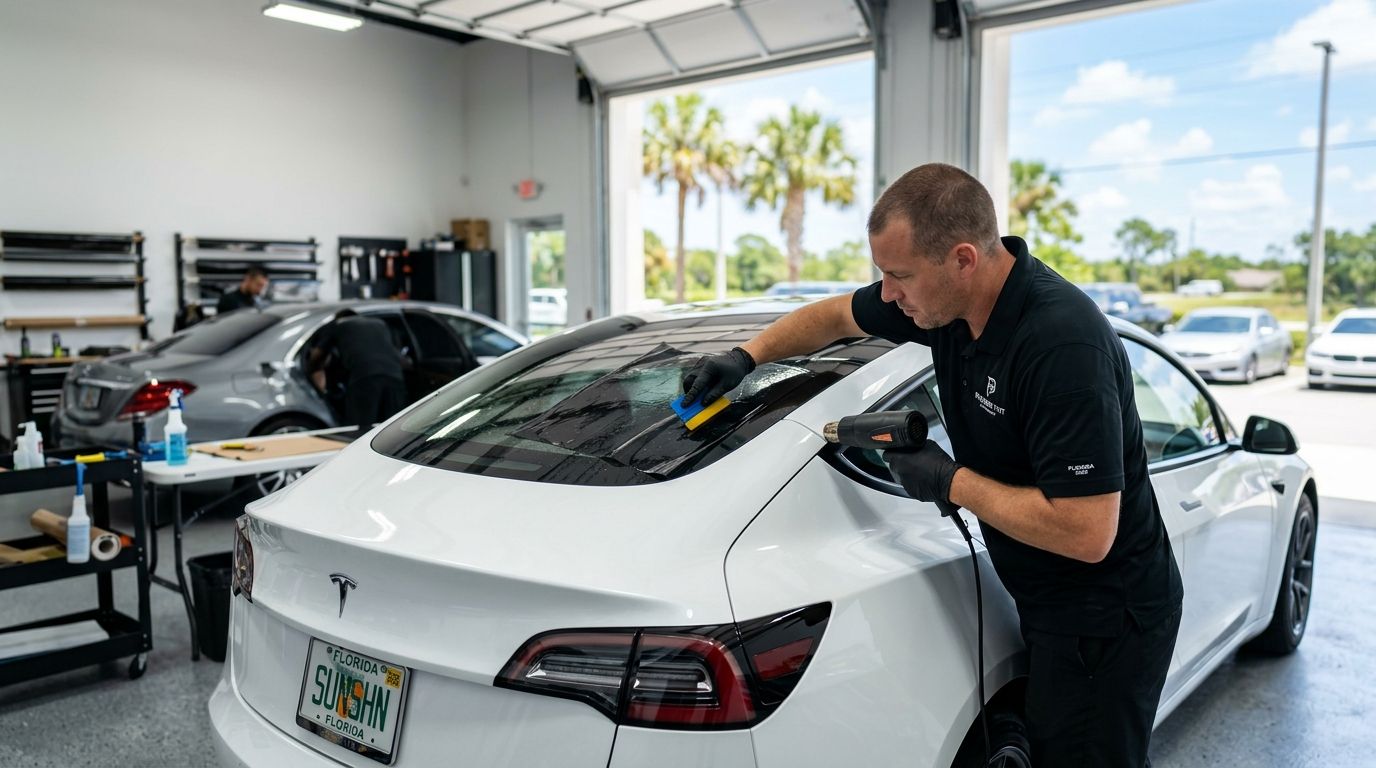
A full vehicle typically takes a few hours in-shop, followed by a cure period before you should roll the windows down. Rushing that cure window is one of the most common reasons tint bubbles or peels early.
FAQ
How much does car window tinting cost?
Cost depends on film grade, vehicle size, and window count rather than one fixed price in 2026. A vehicle-specific quote is the only accurate way to know the number for your car.
Is window tinting legal in Florida?
Yes, window tinting is legal in Florida as long as it meets the state's VLT minimums: 28% on front side windows and 15% on rear side and back windows in 2026.
What is the darkest legal tint in Florida?
15% VLT is the darkest legal tint in Florida, and it only applies to rear side and back windows. Front side windows have to stay at 28% VLT or lighter.
Does ceramic tint cost more than dyed tint?
Yes, ceramic tint generally costs more than dyed tint because it uses nano-ceramic particles that block more heat without interfering with phone or GPS signal. Dyed film is the cheaper entry-level option with less heat rejection.
Can I tint my windshield in Florida?
Only a non-reflective strip above the manufacturer's AS-1 line is allowed on a windshield in Florida in 2026. Tinting the full windshield below that line isn't legal.
Does window tinting actually reduce heat in a car?
Yes, window tinting reduces solar heat and glare inside the cabin, and ceramic films reject more infrared heat than dyed or carbon films. The higher the film grade, the more noticeable the heat reduction on hot Southwest Florida afternoons.
How long does tint installation take?
A full vehicle typically takes a few hours to install, plus a cure period afterward before rolling windows down. Rushing the cure time is a common cause of early bubbling.
Where can I get car window tinting near Cape Coral?
Auto Sound Cape Coral installs window tinting for drivers in Cape Coral, Fort Myers, and surrounding Southwest Florida communities, quoting each job after inspecting the vehicle.
One last thing
Ceramic film doesn't just cost more because it's newer — it's the only mainstream tint category that avoids the signal interference issues older metalized films caused with GPS, toll transponders, and phone reception. If you're keeping a car through multiple Florida summers, that's the detail that matters more than the sticker price on day one.
If you're weighing tint against other upgrades for the same vehicle, it's worth handling both in one visit — Auto Sound Cape Coral also runs remote start, dash cam, and CarPlay installs out of the same Cape Coral shop.