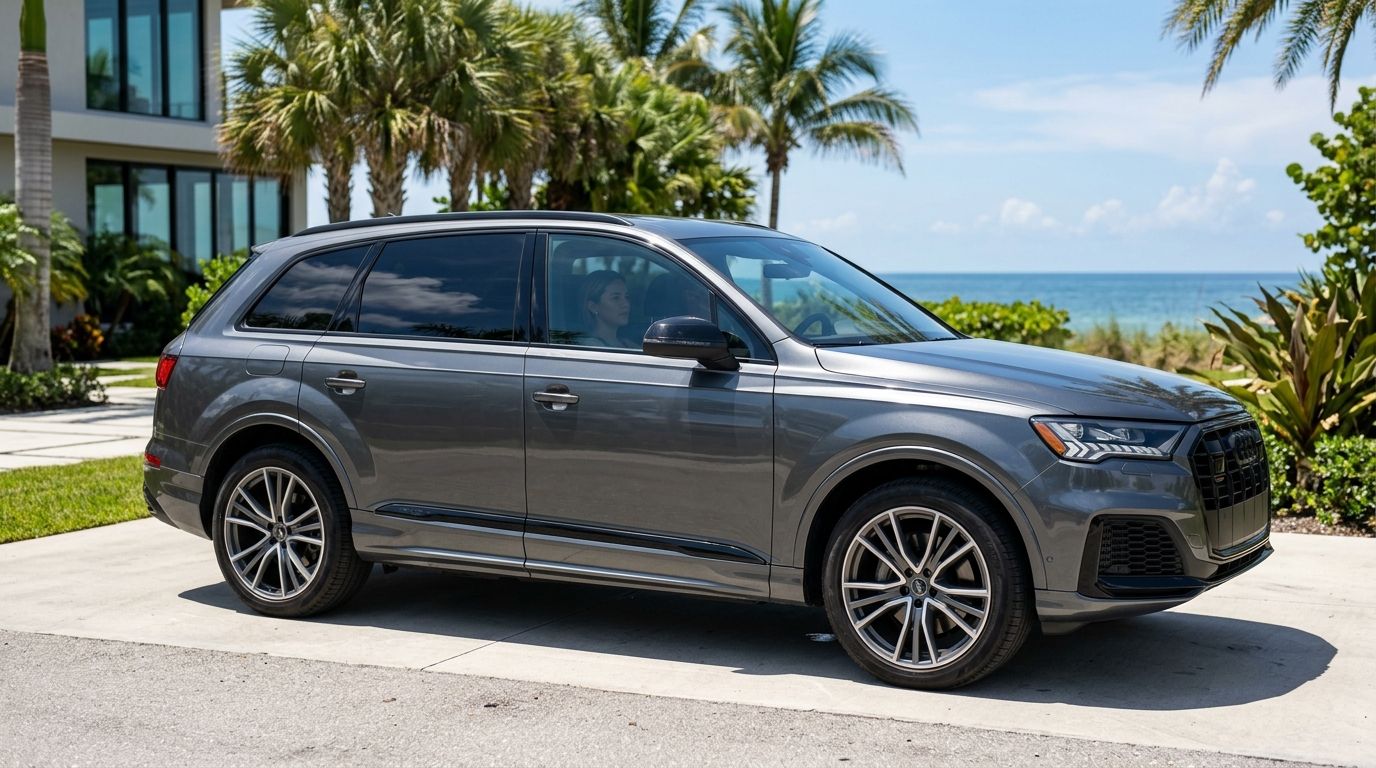
Florida sun turns an untinted dashboard into a griddle by 1 PM, and the right window tint shade cuts that heat load without landing you a fix-it ticket. This guide ranks the five tint options Southwest Florida drivers actually choose in 2026, matched to legal limits, heat rejection, and budget.
- Best overall for Florida heat in 2026: 20% ceramic tint on all windows.
- Best window tint shade for Florida heat on front doors: 28% ceramic, the legal max VLT.
- Best budget pick: 20% carbon film, less IR rejection but real heat drop.
- Best for rear privacy and max heat block: 5% ceramic, legal only on rear and back windows.
- Best premium option: nano-ceramic hybrid film for the highest infrared rejection available.
Why this matters
Florida statute 316.2953 sets hard limits: front side windows must let in at least 28% light, back side windows and the rear window at least 15%. There is no darkness limit on the top 6 inches of the windshield as long as the film is nonreflective. Miss those numbers and you're looking at a citation, not a warranty claim.
Heat is the other half of the decision. A parked car in direct Florida sun can climb past 140F inside within an hour, based on widely cited vehicle-cabin heat studies. Tint shade and film type change how much of that heat actually gets through the glass, and that's a bigger factor than most drivers realize when they walk in asking for the darkest legal tint.
Cost is part of the equation too. If you haven't priced it out yet, the breakdown on car window tinting cost in Florida covers what installers in the region typically charge per window and per full vehicle.
What makes the best window tint for Florida heat
- Infrared (IR) heat rejection percentage — the number that actually predicts cabin temperature drop, separate from visible darkness
- Legal VLT compliance — must clear Florida's 28% front and 15% rear minimums under statute 316.2953
- UV blocking — quality films should hit 99%+ UV rejection regardless of shade
- Glare reduction and night visibility — darker isn't always better once the sun goes down
- Fade and bubble resistance — dye-based film purples and bubbles in Florida heat within a couple of years; ceramic and carbon don't
- Value per window — what you get for the install, not just the sticker shade
Window tint shades for Florida heat: at a glance
| Shade / Type | Best for | Standout feature | Key limitation |
|---|---|---|---|
| 20% Ceramic | Whole-car heat rejection | High IR block without going illegal on front doors | Costs more than dyed or carbon film |
| 28% Ceramic | Front windows, legal compliance | Max heat rejection allowed at the legal front-window limit | Lets in more visible light than drivers expect |
| 5% Ceramic | Rear windows on trucks and SUVs | Darkest legal option, max privacy and heat block on back glass | Illegal on front side windows anywhere in Florida |
| 20% Carbon | Budget-conscious buyers | Real heat drop and no metallic signal interference | Less IR rejection than ceramic at the same shade |
| Nano-Ceramic Hybrid | Highest heat rejection available | Cuts more infrared heat than standard ceramic at the same VLT | Premium film, longer lead time on some installs |
1. 20% Ceramic Tint: best window tint for Florida heat overall
Ceramic film uses ceramic particles instead of metal or dye to block infrared heat, and 20% is the shade most Cape Coral and Fort Myers drivers land on for side and rear windows. It doesn't interfere with GPS, radio, or cell signal the way older metallic films did. It holds its color instead of turning purple after a couple of Florida summers.
20% Ceramic pros:
- Strong IR heat rejection at a shade dark enough to actually feel the difference
- No signal interference for phones, key fobs, or toll transponders
- Resists fading and bubbling far longer than dyed film
20% Ceramic cons:
- Priced above carbon and dyed film for the same shade
- Still needs a lighter shade (28%) up front to stay street-legal on side windows
Best for: drivers who want the biggest heat drop on rear and back windows without paying for the top-tier hybrid film.
Verdict: Buy.
2. 28% Ceramic Tint: best for front windows and legal compliance
Front side windows in Florida can't legally go darker than 28% VLT, so this is the shade that matters most if you're worried about a citation during a routine stop. Ceramic at 28% still blocks a meaningful share of infrared heat even though it looks noticeably lighter than the rear windows on the same car.
28% Ceramic pros:
- Clears Florida's front-window legal minimum with margin
- Ceramic base still cuts heat and UV better than dyed film at the same shade
- Keeps visibility high for nighttime driving
28% Ceramic cons:
- Visibly lighter than the 15-20% shades typically run on rear glass
- Doesn't block as much glare as darker options
Best for: front doors on any vehicle where you're pairing a darker rear shade with a compliant front shade.
Verdict: Buy.
3. 5% Ceramic Tint: best for rear privacy on trucks and SUVs
Five percent VLT is the darkest tint most shops will install, and it's legal in Florida only on back side windows and the rear window, never on front doors. Truck and SUV owners lean on this shade for cargo privacy and the strongest heat block available on the vehicle.
5% Ceramic pros:
- Maximum available heat and glare reduction on rear glass
- Strong privacy for cargo, tools, or gear left in the vehicle
- Ceramic base avoids the purple fade dyed 5% film is known for
5% Ceramic cons:
- Illegal on front side windows in Florida under any circumstance
- Can feel too dark for drivers who rely on rearview mirror visibility at night
Best for: SUVs and trucks where privacy and cargo security matter more than rear visibility.
Verdict: Buy for rear glass only.
4. 20% Carbon Film: best budget option
Carbon film sits between dyed and ceramic film on price and performance. It blocks a real share of heat and UV without the metallic particles that used to trip up older radar detectors and cell signals, but its infrared rejection numbers trail ceramic at the same shade.
20% Carbon pros:
- Noticeably cheaper than ceramic at the same shade
- No signal interference issues
- Matte, non-reflective finish that reads as factory-look from outside
20% Carbon cons:
- Lower IR heat rejection than ceramic at the identical 20% VLT
- Doesn't hold color quite as long under constant Florida sun exposure
Best for: drivers who want a heat and UV upgrade over stock glass without paying ceramic prices.
Verdict: Hold — solid if budget is the deciding factor, otherwise ceramic wins on heat.
5. Nano-Ceramic Hybrid Film: best premium heat rejection
Nano-ceramic hybrid films push infrared rejection higher than standard ceramic at the same VLT shade, using finer ceramic particles for better clarity and heat block. It's the option drivers pick when they've already decided on ceramic and want the highest performance version available.
Nano-Ceramic pros:
- Highest infrared heat rejection of the options on this list
- Excellent optical clarity, no haze at any shade
- Same fade and bubble resistance as standard ceramic, just better numbers
Nano-Ceramic cons:
- Premium film means a higher install cost than standard ceramic
- Marginal real-world heat difference versus standard ceramic for daily driving
Best for: drivers who spend long hours in the car and want every available percentage point of heat rejection.
Verdict: Buy if budget allows; otherwise standard ceramic covers most needs.
“Darker isn't the same as cooler — infrared rejection, not visible light percentage, is what actually drops cabin temperature.”
How this list was ranked
Each option was weighed against the six criteria above: infrared rejection, legal VLT compliance, UV blocking, glare and night visibility, fade resistance, and value per window. Ceramic variants rank highest because they clear every criterion at once. Carbon trades some IR performance for a lower cost. The 5% shade stays restricted to rear glass by law, not by preference.
Get your Florida-legal tint quote
Same-day window tinting for Cape Coral and Fort Myers vehicles.
Which window tint shade should you choose for Florida heat?
For most Cape Coral and Fort Myers drivers in 2026, 20% ceramic on the rear and back glass paired with 28% ceramic on the front doors is the combination that clears Florida law and delivers the biggest heat drop for the money. Truck and SUV owners hauling cargo can push the rear to 5% legally. Budget-first buyers get real relief from 20% carbon, and drivers who want the ceiling on heat rejection should look at nano-ceramic hybrid film. Auto Sound Cape Coral installs all of these shades for window tinting customers across Southwest Florida.
FAQ
What is the best window tint shade for Florida heat?
20% ceramic tint is the best all-around shade for Florida heat in 2026, balancing strong infrared rejection with legal compliance when paired with 28% on front doors. Darker ceramic or nano-ceramic film pushes heat rejection higher but at a premium cost.
What is the darkest legal tint in Florida?
Florida allows 28% VLT minimum on front side windows and 15% VLT minimum on back side and rear windows under statute 316.2953. Rear windows can legally go as dark as 5%, but front doors can never go below 28%.
Is ceramic tint worth it for Florida heat?
Yes, ceramic tint blocks more infrared heat than dyed or metallic film at the same shade, which matters more in Florida than in milder climates. It also resists the purple fading that dyed film shows after a couple of Florida summers.
Can you tint the windshield in Florida?
Only the top 6 inches of the windshield can be tinted in Florida, and the film must be nonreflective. Tinting the rest of the windshield is not legal regardless of shade.
Is carbon tint good for Florida heat?
Carbon tint blocks a real amount of heat and UV and costs less than ceramic, making it a solid budget option. It trails ceramic on infrared rejection at the same shade, so it runs slightly warmer in direct sun.
Does dark window tint affect visibility at night?
Yes, shades at or below 15% VLT reduce night visibility more than 20-28% shades, which is why most drivers keep front windows lighter than rear glass. It is also why Florida law requires front doors to stay at 28% minimum.
How long does ceramic window tint last?
Quality ceramic tint holds its color and clarity for years longer than dyed film, which tends to fade or bubble under constant Florida sun exposure. Carbon film falls between the two in longevity.
Does window tint really lower cabin temperature?
Yes, ceramic and carbon films reduce interior heat buildup by blocking infrared radiation before it passes through the glass. The effect is most noticeable on vehicles parked in direct Florida sun for hours at a time.
One last thing
The front-window shade trips up more Florida drivers than the rear ever does. A car tinted uniformly at 15% or 20% all around looks consistent but fails on the front doors, since 28% is the hard floor there in 2026. Match the shade to the window, not the other way around.