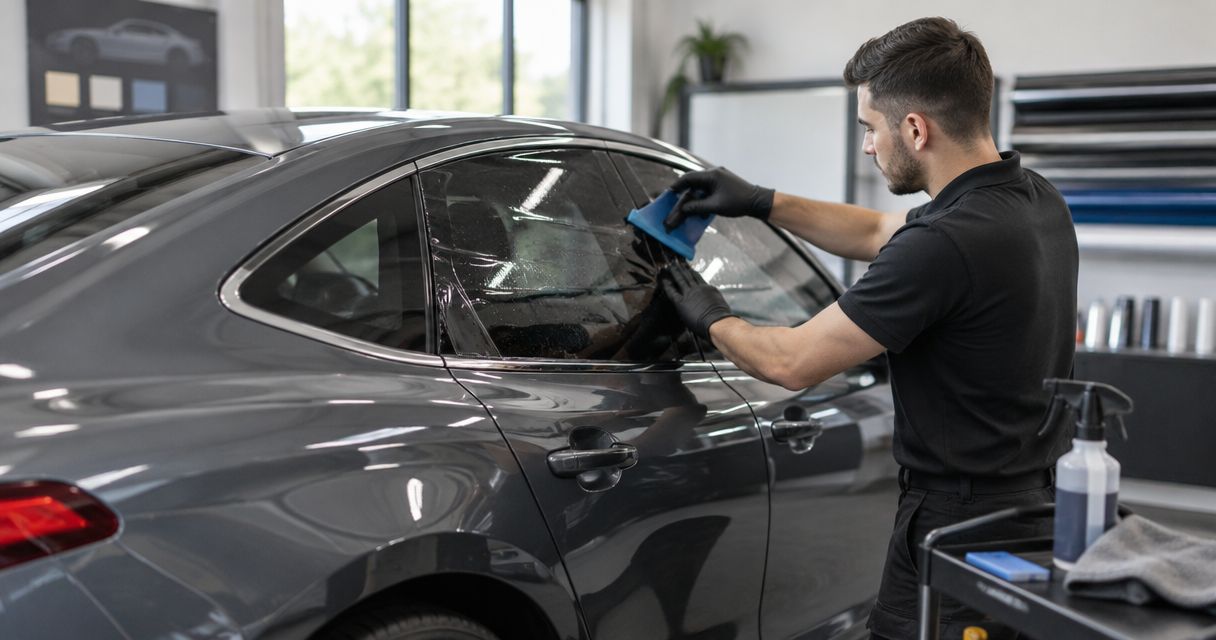
There is no single installation time for tinting an entire car: the appointment depends on which windows you include, whether old film needs removal, and the work required to fit the new film. Confirm a pickup time for your specific vehicle, and treat installation time and film-curing time as separate schedules.
- How long does it take to tint a car? Confirm vehicle-specific installation time, not a generic full-car estimate.
- Auto Sound Cape Coral provides local window tinting for vehicle owners in Cape Coral and Fort Myers.
- Old-film removal adds preparation work before new window tint can be installed.
- Pickup does not mean fully cured film; follow the installer’s window-use and cleaning instructions.
For a local appointment, Auto Sound Cape Coral provides automotive window tinting. Give the shop your vehicle details and requested windows before arranging transportation or setting a pickup deadline.
How long does it take to tint an entire car?
A useful timing estimate covers your actual windows, not just the phrase full-car tint. Two vehicles booked for that service can involve different amounts of glass, different access, and different preparation. Ask what the quoted appointment includes before comparing it with another estimate.
Use this breakdown when booking window tinting in 2026:
| Appointment scope | Best for | What the work includes | Scheduling limitation |
|---|---|---|---|
| Selected windows | Drivers addressing specific untreated windows | Preparing and applying film to the agreed glass | Does not necessarily cover the entire vehicle |
| Full-car application | Drivers wanting film across an agreed set of windows | Preparing, fitting, applying, and checking film on each included window | Full-car coverage needs a written definition |
| Removal and replacement | Drivers replacing existing aftermarket film | Removing old film and adhesive before installing new film | Preparation adds work beyond a fresh application |
| Added windshield or roof glass | Drivers requesting additional coverage where appropriate | Separate preparation and fitting for the additional glass | Do not assume these areas are included |
The practical answer is the shop's confirmed completion window after reviewing that scope. Ask whether it means the vehicle will be ready for collection or whether it describes hands-on installation only. Those are different commitments.
A shorter appointment is not automatically a better installation. Proper glass preparation, clean film placement, and a final check belong in the job; skipping them is not a useful way to save time.
Why this matters
Your car can be ready to drive before the tint has finished curing. Installation puts the film on the glass; curing allows remaining application moisture to clear and the adhesive bond to develop. Treating those stages as the same thing creates avoidable confusion at pickup.
For your 2026 appointment, plan around both the collection time and the restrictions that follow it. You need to know when you can collect the vehicle, when you can operate tinted windows, and when you can clean the inside glass.
That matters if you use the car for school runs, work appointments, deliveries, or regular parking-gate access. Tell the installer about those needs before booking rather than discovering an inconvenient restriction after the film is fitted.
Fresh tint on untreated glass
A fresh application avoids the separate task of removing existing aftermarket film. It still requires glass preparation, accurate fitting, application, and inspection. Untreated glass does not mean preparation-free glass.
The installer needs access to the inside surfaces and window edges. Remove personal items that block that access, and ask whether anything else needs attention before arrival. Do not take trim apart yourself unless the shop specifically requests it.
Best for: drivers adding film to windows that do not already have aftermarket tint. The advantage is a simpler starting point; the limitation is that vehicle layout and requested coverage still determine the work.
Also distinguish dark factory glass from applied film. Dark-looking glass does not, by itself, tell you whether there is an existing film layer to remove. Have the installer check rather than booking removal based on appearance alone.
Removing old tint and installing new film
Replacement tint involves preparation that a fresh application does not. Existing film must come off, and adhesive left behind must be addressed before the replacement film goes on. New film should not be treated as a shortcut for hiding a failing layer.
Peeling, bubbling, or damaged film deserves a description when you book. Photos can help explain the condition, but the installer still needs to assess the glass and existing material before confirming the work.
Best for: drivers replacing deteriorated or unwanted aftermarket film. The benefit is replacing the old layer rather than covering it; the limitation is the additional removal and cleanup work.
Rear-window removal also requires care around defroster elements. Tell the shop if the defroster already has a problem, and ask how its condition will be documented. Read more about removing and replacing old window tint before treating replacement as a standard fresh-install appointment.
Extra glass changes the appointment scope
A full-car booking needs an exact window list. Ask about door windows, fixed side glass, and rear glass separately. If you want windshield or roof-glass work, discuss those areas explicitly rather than assuming they are part of the package.
Additional glass means additional surfaces to prepare and fit. Curvature and access also affect the work involved. Counting doors alone does not describe the tinting job.
Best for: drivers who want a clearly defined coverage plan before booking. The advantage is fewer misunderstandings at drop-off; the limitation is that each additional area needs its own suitability and legal check.
For a Florida appointment in 2026, ask the installer to confirm that the proposed coverage and film comply with applicable rules. Installation time is not a reason to skip that conversation. Decide the scope before the work starts.
Why car-tint installation time varies
These factors explain why a generic timing promise is less useful than a vehicle-specific appointment:
- Window coverage: More included glass means more surfaces to prepare, fit, apply, and inspect.
- Existing film: Removal and adhesive cleanup add preparation before the new application.
- Glass shape: Curved glass requires fitting work that differs from a simple, flatter surface.
- Access: Window edges, rear glass, and interior obstructions affect how the installer reaches the working area.
- Glass condition: Residue and contamination need attention before film application.
- Appointment scheduling: Drop-off, installation start, and collection are separate points in the shop's schedule.
The last factor is easy to overlook. An early drop-off does not necessarily mean the technician starts immediately. Ask what the booking time represents and whether you should wait nearby or arrange another ride.
When comparing appointments, compare the same coverage and preparation. A fresh application to selected windows is not the same job as removing old film and tinting all agreed glass. A time estimate without that context tells you very little.
How to get a useful pickup estimate
Give the shop enough information to define the job before asking for a completion time. The better question is: when will this vehicle, with this coverage and this preparation, be ready to collect?
- Identify vehicle. Provide the make, model, and body style. Explain any relevant changes to the glass or interior.
- Confirm coverage. Name the windows you want tinted. Ask which areas the full-car description includes and excludes.
- Disclose old film. Mention existing tint, peeling edges, bubbles, or previous removal attempts. Send photos if requested.
- Confirm pickup. State your deadline and ask whether it fits the appointment. Clarify whether the estimate includes removal and inspection.
- Get aftercare. Ask about window operation, cleaning, and what to do if you notice an issue after collection.
These steps separate the installation decision from the transportation decision. You can agree on the work first, then decide whether waiting or dropping off makes sense. Do not book a tight pickup deadline around an estimate for a different vehicle.
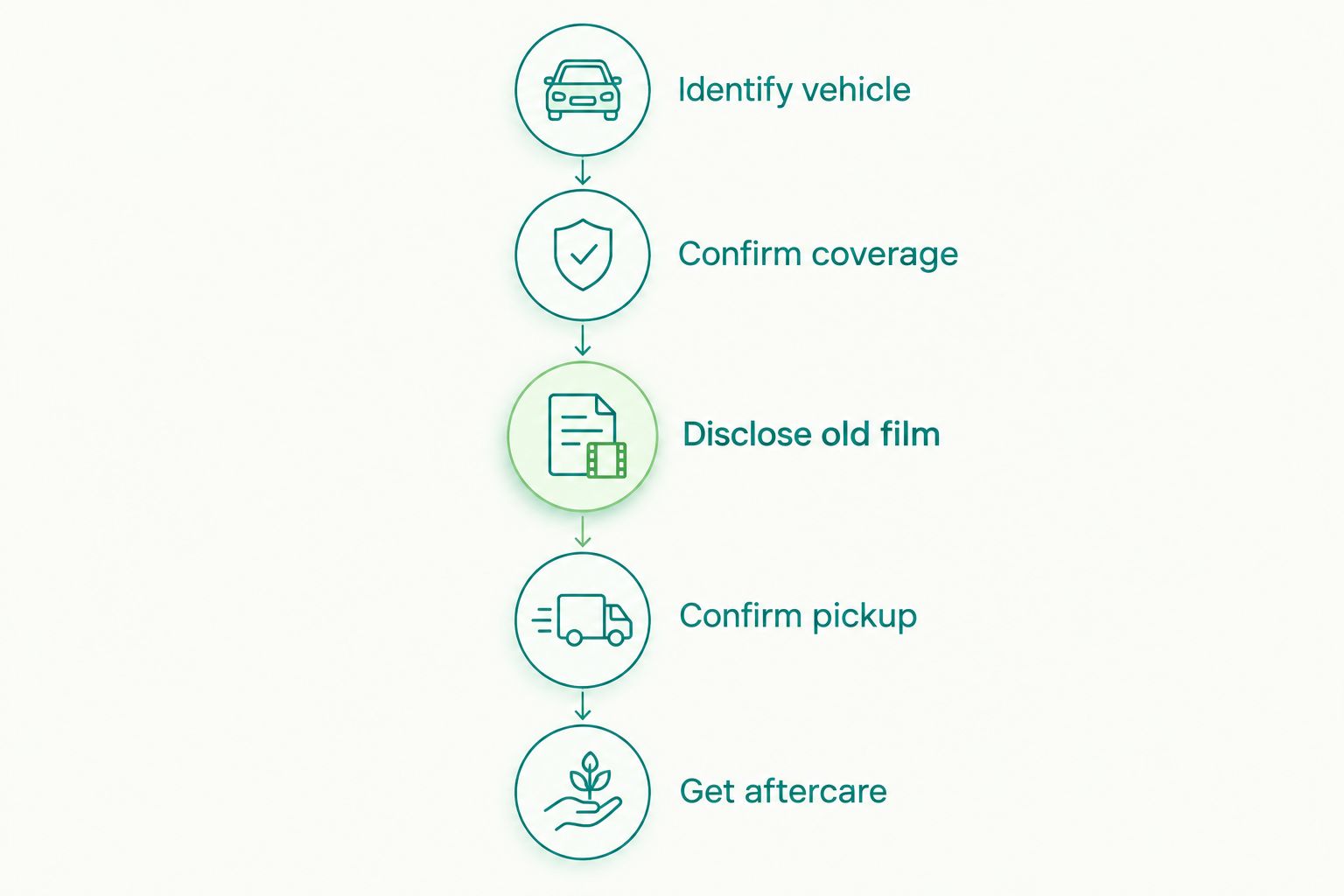
Keep the agreed window list and pickup expectations together in your booking confirmation. If the scope changes after inspection, ask for an updated completion estimate before authorizing the additional work.
Can I drive my car immediately after tinting?
Driving and operating newly tinted windows are different questions. Collect the vehicle when the installer releases it, then follow the specific instructions for the film and glass involved. Do not assume permission to drive means permission to lower every window.
Ask about your actual routine. If you regularly lower a window at a parking gate or drive-through, arrange another way to handle that stop during the instructed restriction period. Get the instructions before leaving the shop.
Also check that you understand any visibility concerns before driving away. Raise questions about the finished work at pickup rather than trying to diagnose or adjust the film yourself later.
Does tint curing take longer than installation?
Tint curing continues after the film is installed. Application moisture must clear, and the film needs the conditions specified by its manufacturer and installer. Pickup is therefore not the same milestone as complete curing.
Weather, moisture, and the film system affect that process. Do not substitute a generic online waiting period for the instructions supplied with your installation. Your 2026 appointment should end with clear guidance on when to use the windows and clean the glass.
If you notice haze or moisture after installation, ask the shop what is expected and what needs inspection. Do not press, puncture, or peel a suspicious area. Those actions can damage the film and make the original issue harder to assess.
Should I wait at the shop or leave the car?
Choose based on the confirmed appointment, not an assumed installation speed. Waiting makes sense only when the shop confirms that the work fits your available time and that waiting is practical. Dropping off gives you a separate transportation plan but requires a clear collection arrangement.
Auto Sound Cape Coral is best for Cape Coral and Fort Myers drivers seeking a local window-tinting shop. Its service location is relevant to arranging a drop-off; the appointment still needs a vehicle-specific scope and completion estimate.
If you also want automotive electronics work, mention it before booking. Tinting and another installation are separate tasks, even when the same shop provides both. Ask for a combined pickup estimate rather than assuming the additional service fits inside the tint appointment.
FAQ
How long does it take to tint a car in 2026?
Car-tint installation time depends on the vehicle, included windows, existing film, and appointment scope. Confirm a pickup estimate after the shop reviews those details, and keep curing time separate.
Does full-car tint include the windshield?
Full-car tint does not define an exact window list by itself. Confirm whether windshield, roof glass, fixed side glass, and rear glass are included, and check that the proposed coverage is appropriate and legal.
Does removing old tint add work to the appointment?
Removing old tint adds film-removal and adhesive-cleanup work before the new application. Disclose existing film when booking so the appointment covers replacement rather than only fresh installation.
Can I roll my windows down after getting them tinted?
Follow the installer’s window-operation instructions before lowering newly tinted windows. Permission to collect and drive the car does not mean the film is fully cured.
Should I choose the shop with the fastest tinting estimate?
Choose an appointment that includes the agreed preparation, application, and inspection, not simply the shortest estimate. Compare timing only after confirming that both shops are quoting the same work.
What should I tell Auto Sound Cape Coral before a tint appointment?
Tell Auto Sound Cape Coral your vehicle make, model, body style, requested windows, and whether aftermarket film is already installed. Explain your pickup deadline and ask for vehicle-specific aftercare instructions.
How should I plan my tint appointment in 2026?
Plan your 2026 tint appointment around confirmed coverage, collection time, and aftercare restrictions. Arrange transportation if needed and ask how changes discovered during inspection will affect the schedule.
One last thing
Ask for a pickup time and a window-use instruction, not just an installation estimate. Those answers solve different problems: when you get the car back and how you protect the new film afterward.
Before leaving, confirm who to contact if an edge lifts or an area concerns you. Keep the aftercare instructions with your appointment paperwork. A clear handoff is more useful than a fast-sounding promise.