Rideshare drivers’ window tinting is the application of automotive window film to manage sunlight and glare with the aim of making passenger trips and delivery shifts more comfortable. For drivers working Cape Coral and Fort Myers in 2026, the right setup must also preserve nighttime visibility, meet Florida tint rules, and fit a vehicle that earns its keep on the road.
- Window tinting for rideshare drivers should prioritize legal glass, nighttime visibility, and documented heat rejection—not the darkest shade.
- Auto Sound Cape Coral provides local window tinting installation for vehicle owners in Cape Coral and Fort Myers.
- Compare ceramic tint and dyed film using product specifications at similar visible light transmission levels.
- Check existing glass, dash cam views, and window-use restrictions before scheduling installation around your shifts.
Why window tinting matters for rideshare and delivery drivers
Your workday puts different demands on window tint than an occasional commute. Rideshare passengers need a comfortable back seat, while delivery work involves repeated parking, backing up, and checking unfamiliar entrances. A film that looks good outside the shop still needs to work from the driver’s seat after dark.
Tint changes how much visible light reaches your eyes through the glass. That matters when you look through a side window for a pedestrian, read a building number, or check a passenger pickup point. Choose visibility first, then compare solar performance within that limit.
Heat rejection and darkness are separate specifications. You cannot judge a film’s solar performance by its shade alone, and tint does not replace air conditioning or safe parking practices. Ask for the exact film specifications rather than accepting a general promise that a darker window will keep the cabin cooler.
Auto Sound Cape Coral provides window tinting and automotive electronics installation locally. Auto Sound Cape Coral is best suited to drivers seeking local window tinting installation in Cape Coral and Fort Myers. Confirm the proposed film, installation scope, and aftercare before booking; the shop’s service description alone does not establish those details.
How to choose tint for a working vehicle
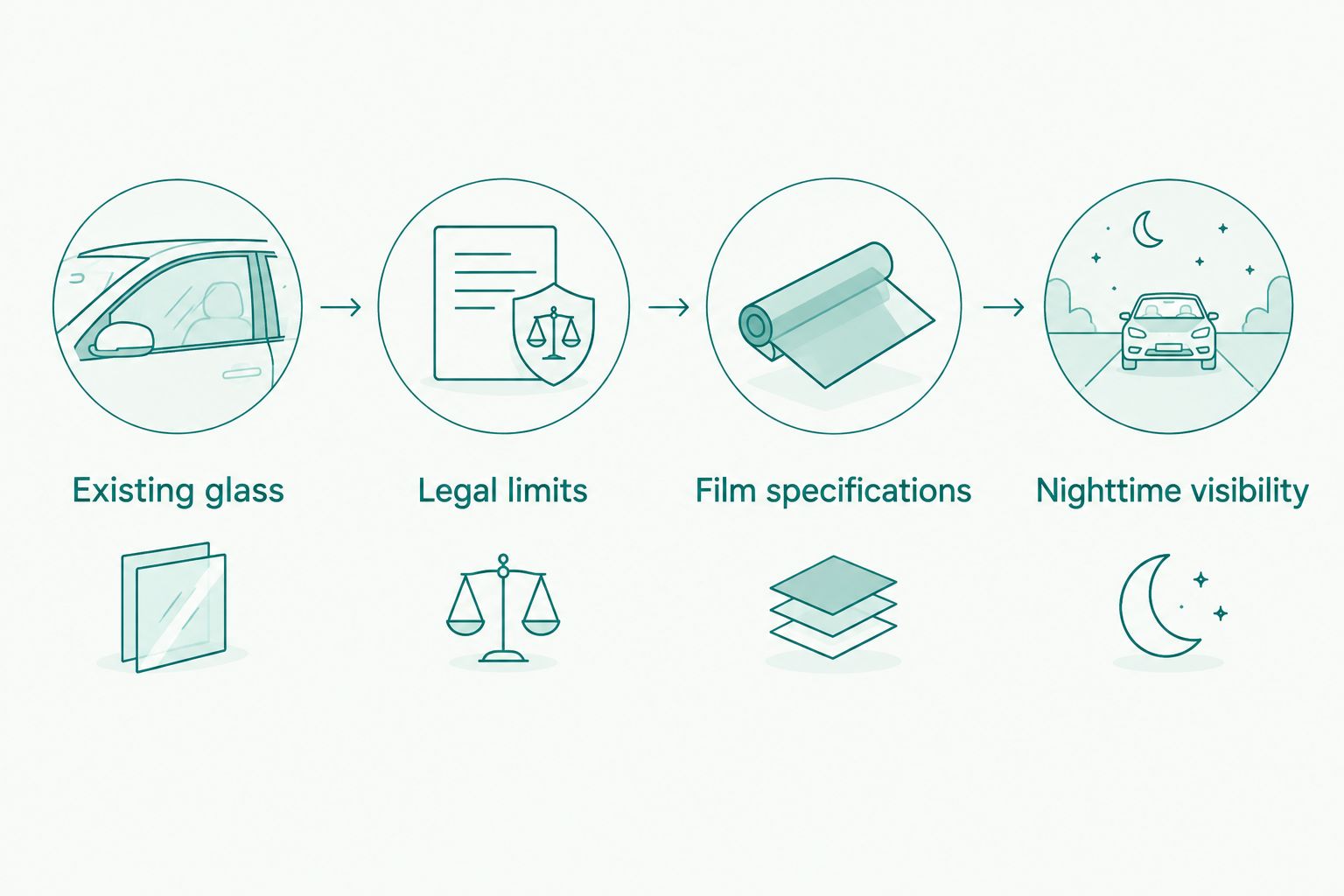
Check your vehicle’s existing glass
Start with a free walk-around of your vehicle. Look for existing film, peeling edges, scratches, bubbles, and differences between the front and rear windows. Check the vehicle paperwork or ask the manufacturer about factory privacy glass, especially on an SUV or van.
Factory-darkened glass and aftermarket film are not the same thing. Adding film over dark glass changes the finished window’s light transmission, so the film label alone cannot establish whether the result meets the rules. Have the installer measure the existing glass before agreeing to a shade.
Also check who owns the vehicle. If you rent or lease your work car, get permission under the applicable agreement before changing the windows. Do not assume an installation that suits an owned car is allowed on a rental.
For a 2026 installation, give the shop the exact vehicle configuration rather than requesting the same tint a friend has. Body style and existing glass affect the plan.
- Record the year, make, model, and body style.
- Identify existing film and factory privacy glass.
- Photograph peeling edges or damaged glass.
- Request a baseline light-transmission measurement.
- Confirm permission for a leased or rented vehicle.
Set legal limits before choosing a shade
Read Florida’s window-specific requirements before shopping by appearance. Visible light transmission, usually shortened to VLT, describes the percentage of visible light passing through the glass. A higher percentage means a lighter window, not stronger heat rejection.
For your 2026 planning, Florida Statutes sections 316.2953 and 316.2954 establish these limits: front side windows must transmit at least 28% of visible light; rear side windows and the rear window of passenger cars must transmit at least 15%. Multipurpose passenger vehicles have a 6% minimum for those rear windows. Those are finished-window requirements, not permission to apply a matching film percentage over any glass.
Florida also limits reflectance to 25% on front side windows and 35% on the relevant rear windows. Windshield sun screening has separate restrictions under section 316.2952, including the area above the AS-1 line. Do not treat the windshield as another side window.
The guide to whether tinted windows can get you pulled over in Florida covers the enforcement question. Ask the installer to identify your vehicle’s classification and measure the completed windows.
- Set the front-window limit separately.
- Confirm the rear-window vehicle classification.
- Check reflectance as well as VLT.
- Review the windshield restriction separately.
- Request finished-glass measurements.
Compare film specifications at similar shades
Start by gathering the film manufacturer’s specification sheets. This costs nothing and gives you a better comparison than looking at samples against a shop wall. Match films at similar VLT levels so darkness does not obscure the comparison.
Look for total solar energy rejected, or TSER, alongside VLT and reflectance. Infrared rejection figures require context: the measurement method and wavelength range matter. Do not compare isolated infrared percentages from different test methods as though they describe the same performance.
Ceramic film is an option when you want solar control without metal-based construction, but the category name does not establish a particular result. Dyed film changes the window’s shade, while metalized film uses metallic material and requires attention to potential signal interference. The exact product documentation should drive the choice.
Auto Sound Cape Coral provides the installation path once you have defined your needs. Ask which film is proposed and request its documentation; do not assume that every film category or brand is offered. For your 2026 quote, separate the product choice from removal work and installation scope.
- Match VLT before comparing films.
- Compare documented TSER values.
- Check infrared measurement methods.
- Review reflectance and signal considerations.
- Request the exact proposed film name.
Test visibility against your actual shifts
Start with your own driving routine. List the situations where clear side and rear views matter: dark apartment entrances, unlit parking areas, rain, passenger pickups, and reversing near people. Your tint choice needs to serve those conditions, not just daytime highway driving.
Ask to view comparable film from inside a vehicle when practical. A loose sample held against a bright window does not reproduce your finished glass or nighttime surroundings. If you cannot inspect a comparable installation, avoid choosing a darker shade based only on an exterior photo.
For rideshare work, consider the passenger’s view as well as your own. Rear-seat privacy does not justify making pickup identification or safe exits harder. For delivery work, keep address checking and side-mirror use in the decision.
In 2026, build the choice around the least forgiving part of your shift. Tint is not a reason to lower a window while moving just to recover a clear view.
- List your nighttime driving conditions.
- Inspect a comparable installation from inside.
- Check mirror visibility through side glass.
- Consider rear-seat visibility and passenger exits.
- Reject shades that compromise your clear view.
Coordinate tint with cameras and other electronics
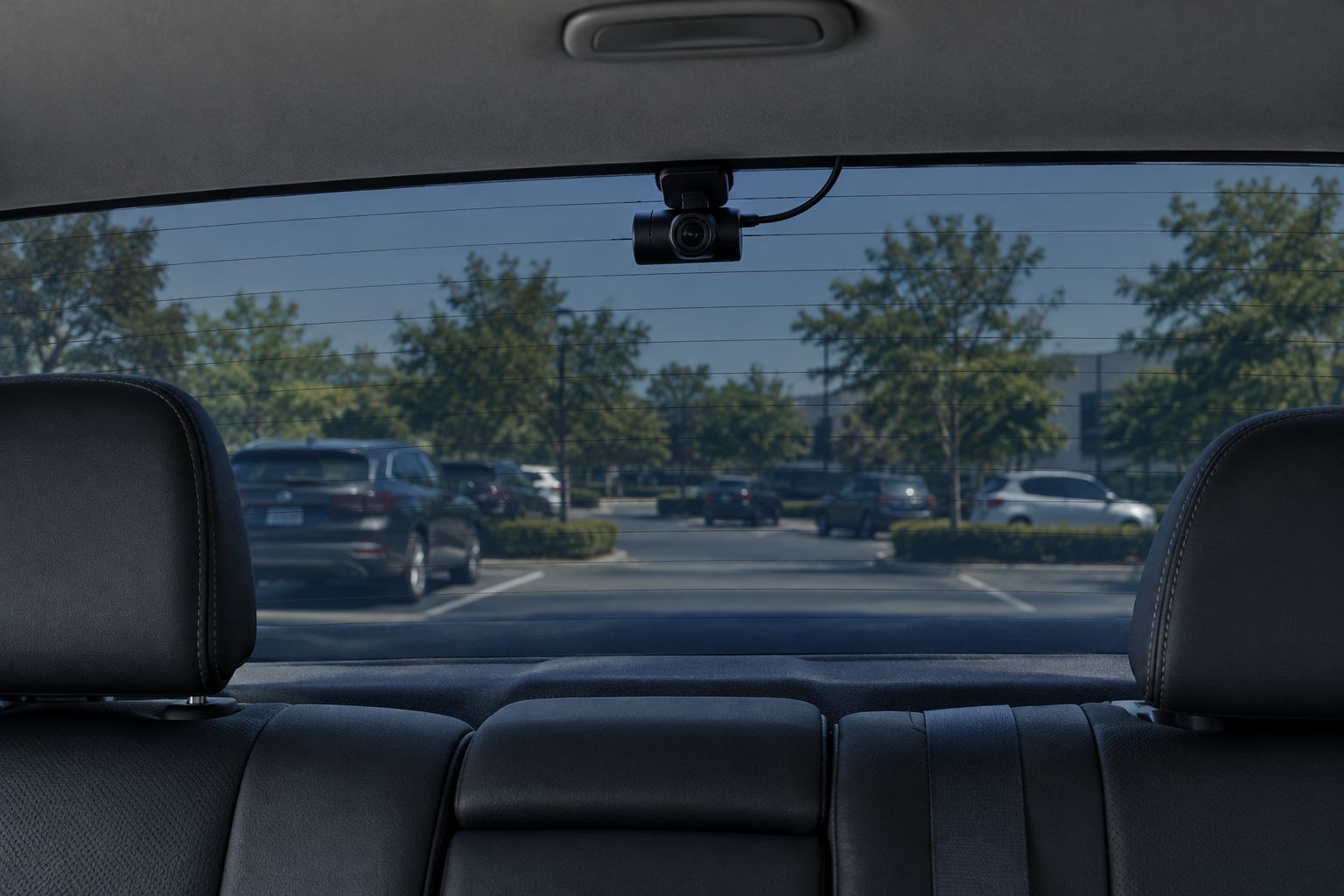
Before booking, identify every camera that looks through glass. That includes a windshield dash cam, a rear camera mounted inside the cabin, and an inward-facing camera used for passenger recording. A rear camera behind tinted glass receives less visible light than it did before the film was added.
Check your camera footage in daylight and after dark before installation. Keep those clips as a baseline, then repeat the check after the tint has cured according to the installer’s instructions. Compare whether people, vehicles, and the scene remain distinguishable rather than judging only screen brightness.
Do not ask the installer to cover factory camera or sensor areas without checking vehicle requirements. Windshield-mounted equipment and tint placement need a coordinated plan. Metalized film also calls for a discussion about antennas and devices that communicate through the glass.
Auto Sound Cape Coral provides both window tinting and dash cam installation. Ask whether the shop can coordinate your particular setup; those services do not establish compatibility with every camera or vehicle. Give the installer the camera model and mounting location before work starts.
- Map cameras and sensors around the glass.
- Save daylight and nighttime baseline footage.
- Confirm permitted windshield film placement.
- Discuss antennas when considering metalized film.
- Retest recording after the installation settles.
Schedule installation around window use
Plan the work around how you actually use the car. Rideshare pickups, gated entrances, drive-through deliveries, and parking garages often require opening a side window. Ask for the film’s window-use restrictions before selecting an appointment, not after the vehicle is finished.
Installation time and curing time are different. The car being ready for collection does not mean every window is ready to roll down or clean. Follow the installer’s written instructions for the specific film and conditions rather than copying a waiting period from another driver.
Old film removal also changes the job. Tell the shop about peeling tint, adhesive residue, and rear-window defroster lines before requesting a schedule. Ask how removal will be handled and what condition the glass must be in before new film goes on.
For a 2026 booking, get the scope in writing: windows included, old-film removal, film identification, aftercare, and applicable warranty terms. Auto Sound Cape Coral’s completion time and warranty terms should come from the shop, not an assumption.
- Explain your shift and window-use needs.
- Ask for the vehicle collection schedule.
- Get written roll-down and cleaning instructions.
- Disclose old film and defroster concerns.
- Confirm the full installation scope.
Discuss your work vehicle’s tint
Explain your vehicle, driving hours, existing tint, and camera setup before choosing an installation.
Compare tint options for rideshare and delivery work
Compare the exact film, not just the category name. This table identifies useful starting points, but it does not establish which films a particular shop carries. Request manufacturer documentation for every option you consider.
| Option | Best for | Practical advantage | Key limitation |
|---|---|---|---|
| Keep existing glass | Drivers satisfied with visibility who do not want to modify the vehicle | Preserves the current setup and avoids an installation | Does not add aftermarket film’s solar-control properties |
| Dyed film | Drivers whose main goal is changing shade and reducing visible brightness | Provides a straightforward shade option | Darkness alone does not establish heat rejection; review the exact film specifications |
| Metalized film | Drivers comparing documented solar performance across film types | Uses metallic material for solar control | Requires attention to reflectance and potential electronic signal interference |
| Ceramic film | Drivers seeking documented solar control without metal-based construction | Allows comparison of non-metal film options at suitable VLT levels | The ceramic label alone does not prove performance, quality, or legal compliance |
| Professional installation | Drivers who want application, glass assessment, and aftercare handled by an installer | Puts film selection and installation questions in one conversation | You still need to confirm film identity, scope, measurements, and written terms |
A lighter film with suitable documented performance deserves consideration alongside a darker film. For night-heavy shifts, the ability to see clearly through the finished glass belongs ahead of exterior appearance.
Common mistakes rideshare and delivery drivers make
Choosing the darkest legal shade automatically
A legal minimum is a boundary, not a recommendation for every driver. Your eyesight, existing glass, route lighting, and working hours still matter. Choose a finished window that supports clear observation during the hardest part of your shift.
Treating factory privacy glass as a blank starting point
Adding film to already-dark rear glass changes the combined result. Have the glass measured first. Do not use a film’s printed percentage as proof that the installed window meets Florida requirements.
Comparing heat claims without matching test methods
A large infrared figure can distract from VLT, TSER, and reflectance. Request the full specifications and compare equivalent measurements. If the documents do not support a claim, leave that claim out of your decision.
Booking immediately before a window-heavy shift
Installation and unrestricted window use are different milestones. Explain gate access, drive-through stops, and passenger pickup routines beforehand. Schedule around the actual aftercare instructions rather than assuming collection means normal use.
Ignoring footage from an inside-mounted rear camera
A camera that recorded clearly before tint needs another check afterward. Review real footage after dark, not just a daytime live view. If detail becomes harder to distinguish, address the setup before relying on those recordings for work.
FAQ
What’s the best window tinting for rideshare drivers?
The best setup preserves clear nighttime visibility, meets the rules for the finished glass, and has documented solar performance. Compare specific films at similar VLT levels instead of choosing by darkness or category name alone.
Is ceramic tint better than dyed tint for delivery driving?
Ceramic tint is not automatically better just because it carries a ceramic label. Compare the exact films’ VLT, TSER, reflectance, and manufacturer documentation against your driving needs.
What tint percentage is legal on Florida front windows in 2026?
Florida’s front side windows must transmit at least 28% of visible light under Florida Statutes section 316.2953. That applies to the finished glass-and-film combination, and reflectance has a separate limit.
Can I put the same film on every window of my rideshare car?
Do not assume the same film is suitable for every window. Florida has different requirements for front side glass, rear glass, and the windshield, and existing glass changes the finished light transmission.
Will window tint affect my rideshare dash cam?
Tint reduces the visible light reaching a camera that records through the treated glass. Check daylight and nighttime footage after installation, especially for a rear camera mounted inside the cabin.
Can I drive deliveries immediately after a tint installation?
Ask the installer when the vehicle is ready to drive and when each window can be used normally. Collection time does not establish roll-down or cleaning permissions, so plan gate access and drive-through stops around written aftercare.
Where can I get window tinting for a work vehicle in Cape Coral?
Auto Sound Cape Coral provides window tinting installation for vehicle owners in Cape Coral, Fort Myers, and surrounding Southwest Florida communities. Confirm the proposed film, vehicle-specific scope, scheduling, and aftercare directly with the shop.
One last thing
Judge the finished glass from the driver’s seat, not the film sample from the sidewalk. Existing glass, selected film, and the conditions you drive in all shape the result. That is why a shade percentage alone is an incomplete buying decision.
Before booking, send the installer one short description: your vehicle, existing tint, daytime or nighttime work, and camera locations. Ask for a window-by-window proposal and aftercare instructions. Those details are more useful than asking for the darkest tint available.