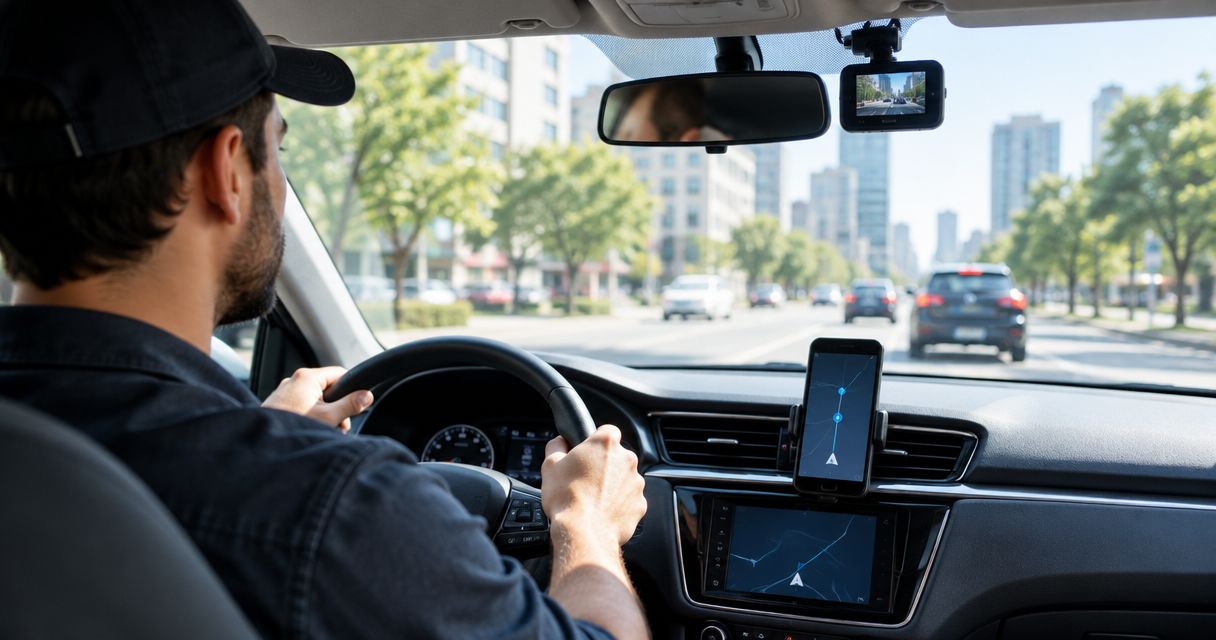
A dash cam for rideshare drivers is a forward- and cabin-facing camera system that records continuous video to protect the driver in passenger disputes, accident claims, and platform deactivation appeals. Delivery drivers need a slightly different setup than a daily commuter: longer parking time in direct sun, more stops in tight lots, and more hours per day with the engine running and the camera recording. A rideshare driver's biggest exposure is a false passenger claim; a delivery driver's biggest exposure is a parking-lot fender bender nobody saw.
- A dual-channel dash cam with GPS tracking is the 2026 standard for rideshare and delivery drivers, not a single forward-facing unit.
- Florida's two-party consent law (F.S. 934.03) requires telling passengers before recording cabin audio.
- Hardwired power beats a cigarette-lighter plug because it keeps the camera running in parking mode without draining the battery.
- 360-degree camera systems earn their higher install cost for drivers working tight apartment lots and shared driveways daily.
Why dash cams matter for rideshare and delivery drivers
Most rideshare and delivery platforms don't require a dash cam, but they accept dash cam footage as evidence once a rider or customer files a complaint. A driver with no footage is stuck relying on a written statement against a stranger's written statement. A driver with a timestamped, dual-channel recording settles the dispute in minutes.
Florida complicates the audio side of this. Florida is a two-party consent state under F.S. 934.03, meaning every party in the vehicle has to know audio is being recorded before you can legally use that audio. Video-only recording doesn't carry the same restriction, which is why plenty of Southwest Florida rideshare drivers run video-only cabin cameras and skip the audio track entirely.
Delivery drivers face a different set of risks. Backing into shared driveways, apartment complex lots, and gated communities all day means more low-speed contact incidents than a typical commuter sees in a year. A camera with wide-angle or 360-degree coverage catches the bumper tap nobody claims responsibility for.
A dual-channel dash cam with a hardwired power kit is the baseline setup for anyone driving rideshare or delivery for a living in 2026 — a single forward-facing camera doesn't cover the disputes that actually get filed.
How to choose and set up a dash cam for rideshare and delivery driving
The steps below go from cheapest and most basic to the setup a full-time driver actually wants running by the end of 2026.
Check your platform's dash cam policy before you buy
Uber, Lyft, DoorDash, and similar platforms rarely ban dash cams outright, but the fine print varies by market and changes without much notice.
- Confirm windshield mounting placement doesn't block the area your state inspection sticker or platform-required signage needs
- Check whether your platform's support team accepts dash cam footage as evidence for a dispute or deactivation appeal
- Remember Florida's two-party consent law applies to audio, not video, so plan your recording setup around that distinction
- Post a small visible notice or mention it verbally if your camera does record cabin audio
Decide between single-channel and dual-channel coverage
A single-channel camera only sees the road. It's cheaper, and it's useless the moment a passenger claims something happened in the back seat.
- Dual-channel systems add a second lens facing the cabin, synced to the same timestamp as the road-facing footage
- Confirm the cabin lens has infrared or low-light capability — most passenger disputes happen on night shifts
- Check that both channels save to the same file structure, not two separate memory cards you'd have to match up manually
- Dash cams ranked by video quality breaks down which current models actually hold detail on both channels at once
Match resolution and frame rate to what you'll need to prove
Resolution numbers on the box don't mean much without frame rate to back them up.
- 1080p is the practical floor for reading a license plate at night from a moving vehicle
- 1440p or 4K holds up better when insurance adjusters zoom into a still frame
- 30fps minimum keeps stop-and-go delivery traffic from turning into a blurry mess on playback
- A wider field of view matters more in parking lots than raw pixel count does
Add GPS tracking if you log mileage or routes for tax records
GPS-tagged footage does double duty for full-time drivers: it's evidence, and it's a mileage log.
- A GPS chip timestamps and geotags every clip, useful when disputing a "wrong address" delivery complaint
- Route history exported from the camera can back up mileage claims at tax time without a separate app
- Confirm the camera's GPS log doesn't require an ongoing subscription just to view trip data
- Dash cams with GPS tracking covers which models log speed and route data without extra fees
Plan for Southwest Florida heat and sun exposure
A dashboard in direct Florida sun during a summer afternoon runs far hotter than most consumer electronics are rated for.
- Plastic housings on budget cameras warp and LCD screens crack after a season of full-sun parking
- Look for a camera actually rated for high-heat continuous operation, not just "wide temperature range" marketing text
- Battery-backed cameras hold up worse than capacitor-backed ones in sustained heat
- Dash cams for Florida drivers covers models built around Southwest Florida's dashboard heat rather than a national average climate
Choose hardwired power over a cigarette-lighter plug
A cigarette-lighter plug is the easiest DIY option and the worst one for a full-time driver.
- Hardwiring taps into fused, always-on power, so the camera keeps recording in parking mode without pulling the battery down to a no-start
- A lighter-plug camera occupies the port a driver needs for a phone charger or a separate GPS unit during a 10-hour shift
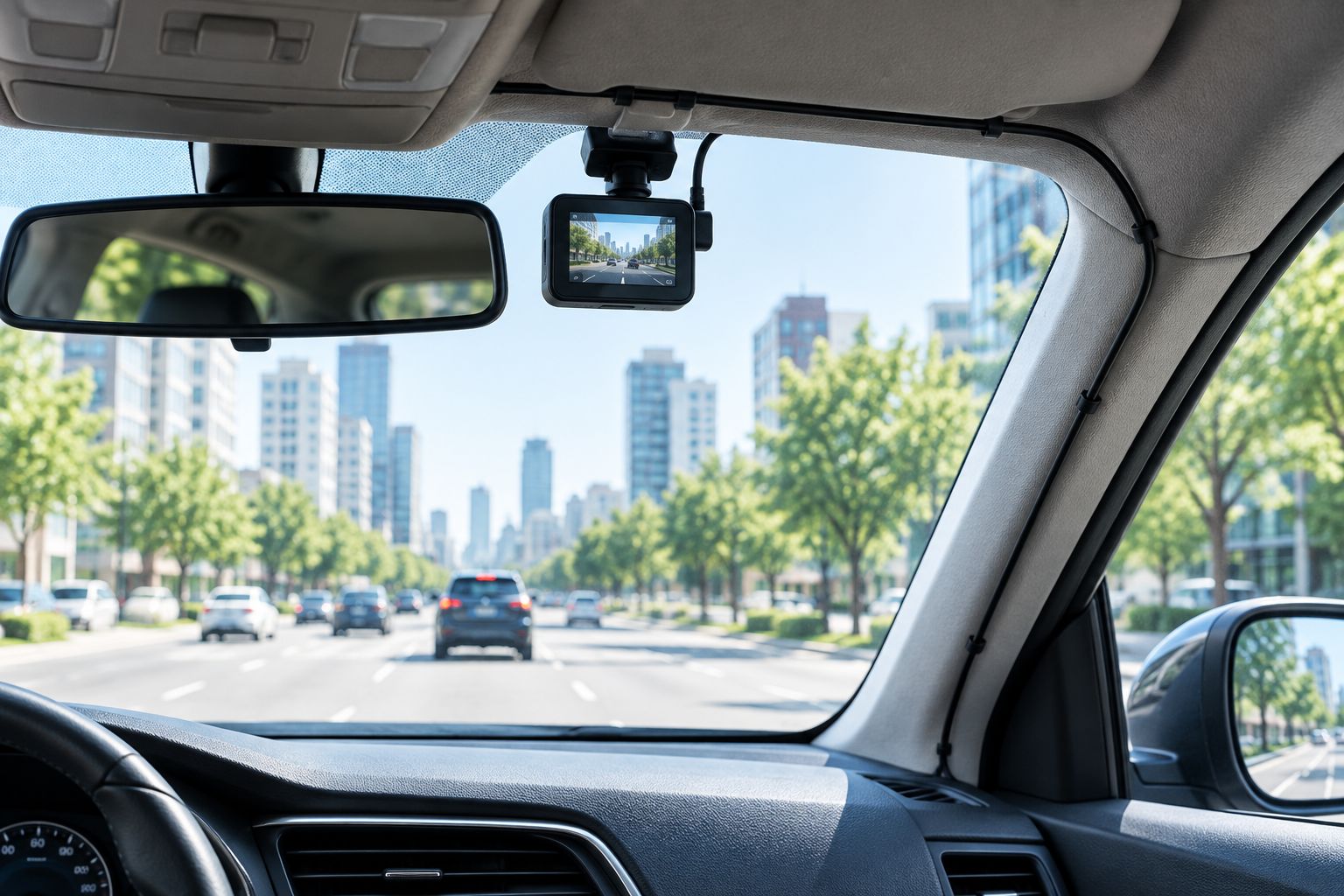
- Hardwiring hides the cable behind the trim for a factory-look finish instead of a cord draped across the windshield
- A low-voltage cutoff on the hardwire kit protects the starting battery if the car sits parked for a few days between shifts
Consider 360-degree coverage for tight lots and shared driveways
Delivery routes mean backing into apartment complexes, gated communities, and shared driveways with blind spots on every side.
- A 360-degree system stitches four camera angles into one continuous view around the vehicle
- Useful when a bumper gets clipped in a lot and no witness saw which vehicle did it
- Wiring is more involved than a standard dual-channel setup, so budget extra install time
- 360-degree camera systems covers which setups actually cover the full vehicle versus just front and rear
Get the camera hidden and hardwired, not just stuck to the glass
A suction-mount camera with a cord running loose across the dash looks unprofessional to a paying passenger rating the ride.
- Auto Sound Cape Coral runs the power lead behind the headliner and A-pillar trim so nothing is visible from the driver's seat
- A professional hardwire connects to a fused, always-on circuit instead of the cigarette lighter
- Same-day installation is available for most dual-channel and GPS-enabled dash cams at the Cape Coral shop
Get your dash cam hardwired right
Same-day dash cam installation for rideshare and delivery vehicles in Cape Coral.
Comparing dash cam options for rideshare and delivery drivers
| Option | Best for | Key limitation |
|---|---|---|
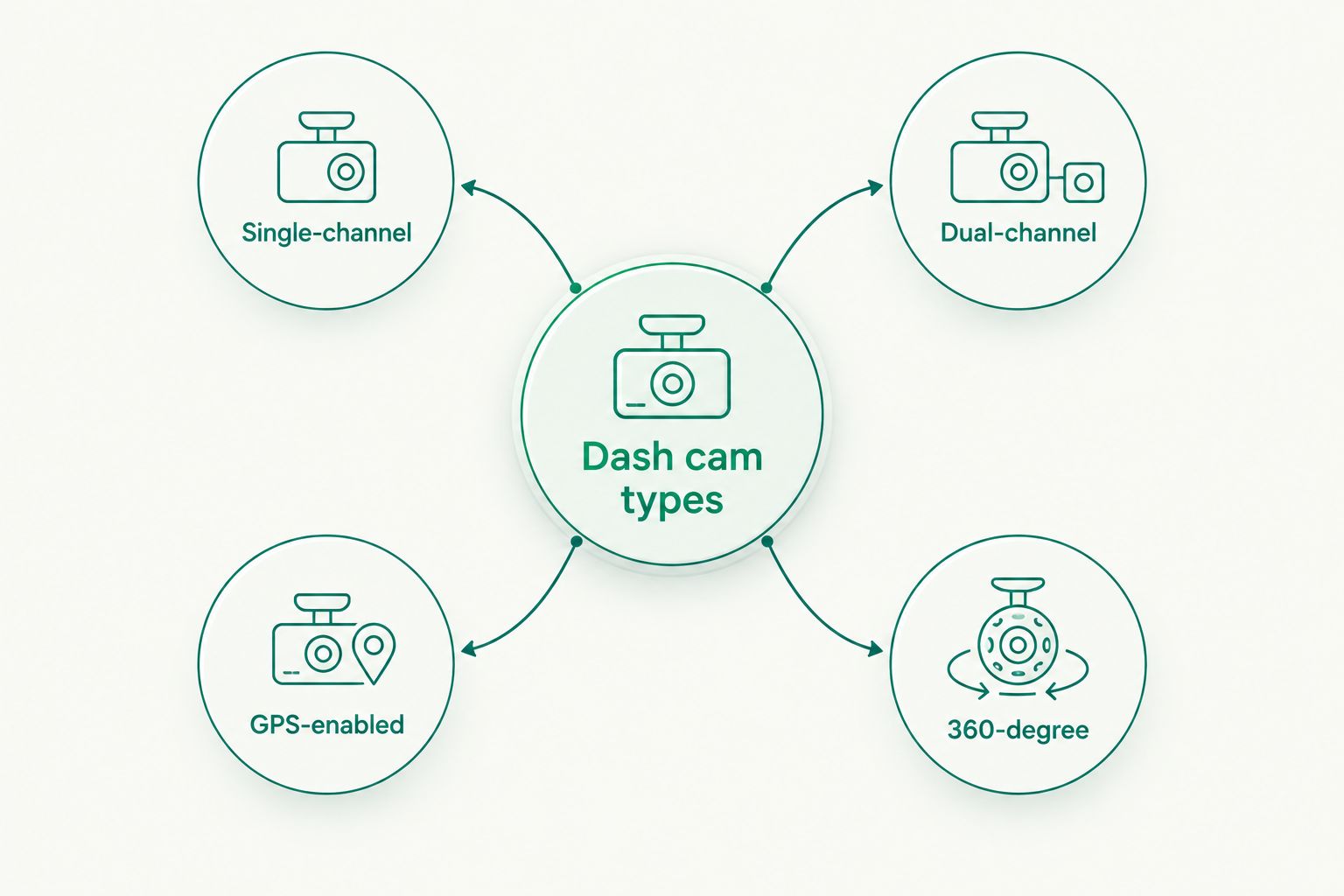
| Single-channel dash cam | Budget-conscious delivery drivers who only need forward-facing proof | Misses passenger-cabin disputes entirely |
| Dual-channel dash cam | Rideshare drivers handling passenger complaints | Two lenses to wire, harder as a DIY install |
| Dash cam with GPS tracking | Delivery drivers logging mileage and routes for tax records | GPS chip adds a slightly larger housing |
| 360-degree camera system | High-volume delivery drivers in tight lots and shared driveways | Highest upfront cost and most complex wiring of the four |
Common mistakes rideshare and delivery drivers make
- Mounting the camera too low — it ends up shooting the dashboard instead of the road, which defeats the point during an actual dispute
- Buying an undersized memory card — high-resolution dual-channel footage can overwrite in under an hour on a small card during a full shift
- Skipping the interior lens to save money — then having no proof at all when a rider files a false claim
- Relying on a cigarette-lighter plug as the only power source — the camera goes dark the moment the accessory circuit cuts at ignition-off
- Ignoring Florida's consent law — recording cabin audio without telling passengers creates legal exposure separate from any traffic incident
A rideshare driver who's had one false complaint dismissed by dash cam footage usually never goes back to a single-channel setup. That's the actual return on the upgrade, not a spec sheet number.
FAQ
What's the best dash cam for rideshare drivers in 2026?
A dual-channel dash cam with GPS tracking and hardwired power is the best setup for full-time rideshare driving in 2026. Single-channel cameras miss the passenger-cabin disputes that actually get filed against drivers.
Do Uber and Lyft require dash cams?
Most rideshare platforms don't require a dash cam, but both accept dash cam footage as evidence once a rider files a complaint. Drivers without footage are stuck with a written statement against another written statement.
Is a dual-channel dash cam better than single-channel for rideshare driving?
Yes, dual-channel is better because it records the cabin as well as the road, which covers the passenger disputes single-channel cameras miss entirely. Rideshare drivers face far more cabin-related complaints than road-only incidents.
How much footage can a dash cam store before it overwrites?
Storage depends on card size and resolution, and a small card can overwrite dual-channel 1440p footage in under an hour during a busy shift. A larger card or a model with loop recording that protects flagged clips avoids losing the footage you actually need.
Does a dash cam drain my car battery when parked?
A cigarette-lighter dash cam can drain a battery if left running in parking mode without a low-voltage cutoff. A properly installed hardwire kit with a cutoff switch protects the starting battery even during multi-day parking.
Can passengers ask a rideshare driver to turn off the dash cam?
Passengers can ask, but the driver decides whether to comply, since it's the driver's vehicle and equipment. Florida's two-party consent law only requires disclosure of audio recording, not permission to record video.
Is GPS tracking necessary for a delivery driver's dash cam?
GPS tracking isn't required, but it's useful for logging mileage for tax records and for disputing wrong-address delivery complaints with timestamped location data. Most models with GPS log this data without a separate subscription.
Should the dash cam be hardwired or plugged into the cigarette lighter?
Hardwired is the better option for full-time drivers because it keeps the camera running in parking mode without draining the battery. A cigarette-lighter plug also blocks a port needed for a phone charger during long shifts.
One last thing
The camera spec sheet matters less than where the cable ends up. A dash cam wired into a fused, always-on circuit with a low-voltage cutoff outlasts a plug-in unit by years, not months, because it never sees the surge and drain cycles a lighter socket puts it through every ignition cycle. Get the hardware right and the resolution number becomes the smaller decision.