Every backup camera system falls into one of five buckets, and picking the wrong one for your truck means a blurry screen at the worst moment or a $200 upgrade you didn't need. Best overall: hardwired single-camera system. Best for trailer towing: wireless backup camera system. Best for factory-look integration: OEM-style CarPlay-integrated backup camera.
- A hardwired single-camera system is the best backup camera for trucks used for daily driving and towing occasionally.
- Wireless backup camera systems solve the trailer-swap problem — no wiring to run to a hitch every time you hook up.
- Multi-camera trailer setups cover blind spots on 5th wheels and longer RVs that a single lens can't reach.
- Federal law (FMVSS No. 111) has required rearview cameras on new vehicles sold after May 2018, but pre-2018 trucks still need an aftermarket install.
- Auto Sound Cape Coral installs and wires all five system types listed here, matched to how you actually use the truck.
Why this matters
A truck bought before May 2018 almost certainly didn't come with a factory backup camera — that's when FMVSS No. 111 made rearview visibility technology mandatory on new vehicles under 10,000 lbs. If your truck is older than that, or you tow a trailer that blocks the factory camera anyway, you're shopping the aftermarket market whether you planned to or not.
The wrong pick shows up two ways: a wired camera that can't survive Florida's rain and heat cycles, or a wireless system that lags half a second right when you're backing toward a boat trailer. Auto Sound Cape Coral installs backup camera systems in Cape Coral and Fort Myers daily, and the system that works for a work truck hauling a trailer every weekend is never the same one that works for a commuter pickup.
What makes the best backup camera system for trucks
- Resolution and night performance — low-light IR or LED-assisted cameras matter more than daytime clarity since most backing-up happens in driveways and garages at dusk or dawn.
- Wired vs. wireless signal reliability — wired feeds don't drop; wireless feeds are convenient but depend on a clean RF path away from trailer wiring and metal beds.
- Weatherproofing — Southwest Florida humidity and afternoon downpours punish any lens or housing that isn't rated for constant wet exposure.
- Monitor integration — mirror-monitor, dash-mounted screen, or feeding into an existing CarPlay/Android Auto head unit changes install time and how natural the camera feels to use.
- Field of view and mounting flexibility — single-lens systems cover directly behind the tailgate; multi-camera setups add side coverage for longer trailers and 5th wheels.
- Install complexity — some systems bolt on in under an hour; others need wiring run the length of the truck bed to a trailer connector.
Backup camera systems at a glance
| System | Best For | Standout Feature | Key Limitation |
|---|---|---|---|
| Hardwired single-camera system | Daily driving pickups | No signal drop, consistent picture | Wiring run needed from tailgate to cab |
| Wireless backup camera system | Trucks that tow occasionally | No hitch wiring to reconnect each hookup | Signal can lag near heavy metal or long trailers |
| Multi-camera trailer/RV system | 5th wheels and long trailers | Side and rear blind-spot coverage | Most complex install, multiple camera runs |
| Mirror-monitor camera system | Older trucks without a factory screen | Drop-in mirror replacement, no dash cutting | Smaller screen than a dedicated monitor |
| OEM-style CarPlay-integrated camera | Trucks with an aftermarket CarPlay head unit | Feed shows on the same screen as navigation and audio | Only works once a compatible head unit is installed |
1. Hardwired single-camera system: best backup camera for trucks used daily
A hardwired single-camera system runs a lens at the tailgate or rear bumper to a dedicated monitor or dash screen, with a physical cable carrying the signal the length of the truck. It's the setup most techs default to because there's no wireless handshake to fail and no interference to troubleshoot later.
Hardwired system pros:
- Picture never drops out or lags, even in a metal-heavy work truck bed
- Works with almost any monitor type, including a rearview mirror replacement
- Lower failure rate over years of daily use since there's no battery or transmitter to die
Hardwired system cons:
- Wiring has to be run and hidden, which adds install time versus a wireless kit
- Not ideal if you swap trailers often and need the camera to travel with the hitch
Hardwired system verdict: Buy. This is the right call for anyone using the truck as a daily driver first and a tow vehicle second.
2. Wireless backup camera system: best backup camera for trucks that tow occasionally
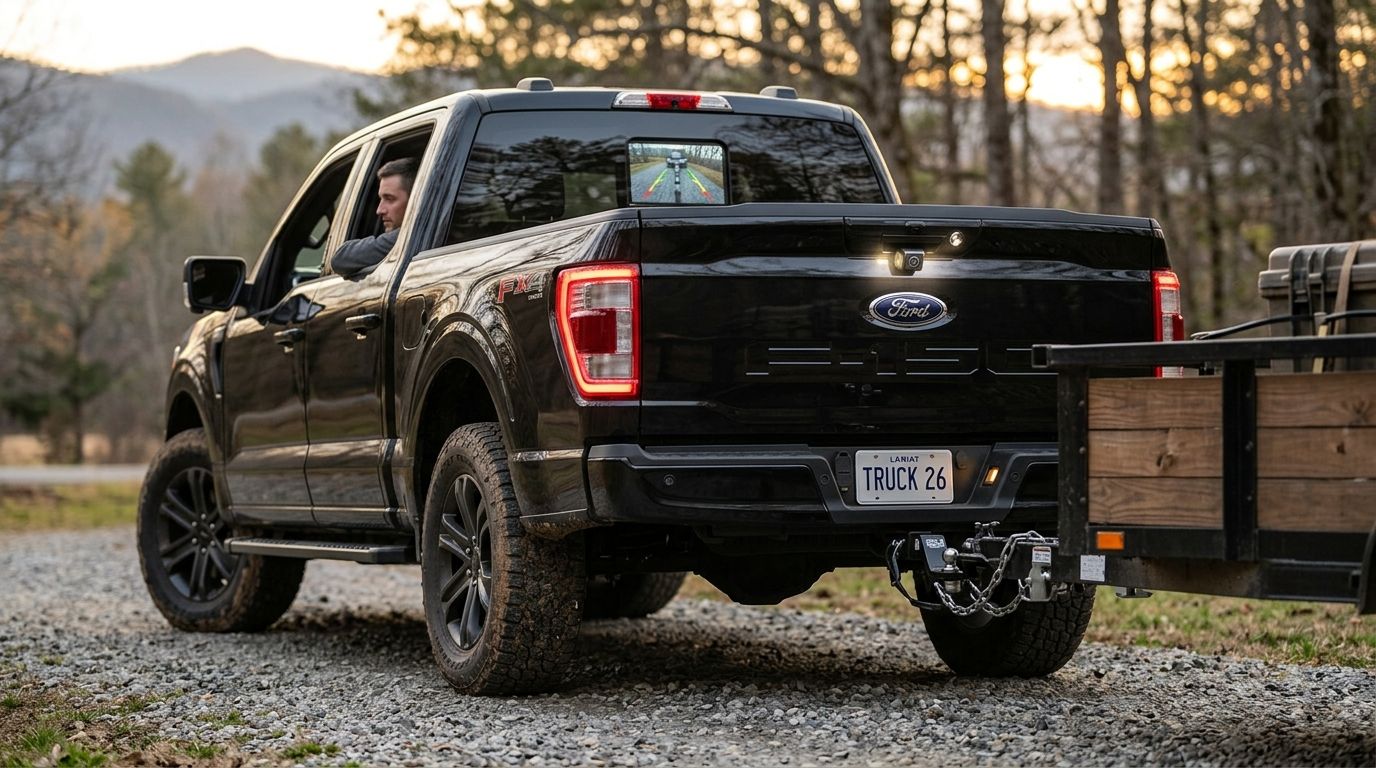
A wireless system mounts a battery or hardwired camera at the trailer or hitch and beams the feed to an in-cab monitor over RF or digital signal, no cable connecting truck to trailer. It's built for people who hook up a boat, utility trailer, or camper on weekends and don't want to run wiring every time.
Wireless system pros:
- No physical connection between truck and trailer to plug in or forget
- Camera can move between vehicles or trailers if it's not permanently mounted
- Faster install since there's no long wire run through the cab
Wireless system cons:
- Signal can lag or stutter near heavy metal, long trailers, or other RF-heavy equipment
- Battery-powered units need charging or battery swaps, which is one more thing to forget
Wireless system verdict: Buy for weekend towing. Hold off if you tow daily for work — a hardwired system will be more consistent under constant use.
3. Multi-camera trailer/RV system: best backup camera for trucks pulling 5th wheels
This setup adds two or more cameras — typically rear plus both sides — feeding a split-screen or switchable monitor. It exists because a single rear lens on a truck towing a 32-foot 5th wheel can't show you what's happening six feet to either side of the trailer.
Multi-camera system pros:
- Covers blind spots a single-lens system physically can't reach on long trailers
- Reduces the guesswork on tight campground or marina backing situations
- Some setups let you toggle between camera views on demand
Multi-camera system cons:
- Most involved install of the five, with multiple camera runs and a switching module
- Overkill for a truck that only tows a small utility trailer
Multi-camera system verdict: Buy if you regularly tow a 5th wheel or long RV. Skip if your trailer is under 20 feet — a single camera covers that fine.
4. Mirror-monitor camera system: best backup camera for trucks without a factory screen
This system replaces the factory rearview mirror with a unit that has a built-in display, switching to camera feed automatically when the truck is in reverse. It's the go-to for older trucks that never had a dash screen to feed a camera into in the first place.
Mirror-monitor system pros:
- Drop-in replacement for the factory mirror, no dash cutting or new screen mount
- Keeps a clean, factory-look interior since there's no added monitor bolted to the dash
- Works on trucks built well before the 2018 camera mandate
Mirror-monitor system cons:
- Screen is smaller than a dedicated dash-mounted monitor
- Picture quality in direct sunlight can be harder to read than a shaded dash screen
Mirror-monitor system verdict: Buy for pre-2018 trucks where you want camera capability without adding hardware to the dash.
5. OEM-style CarPlay-integrated backup camera: best backup camera for trucks with an aftermarket head unit
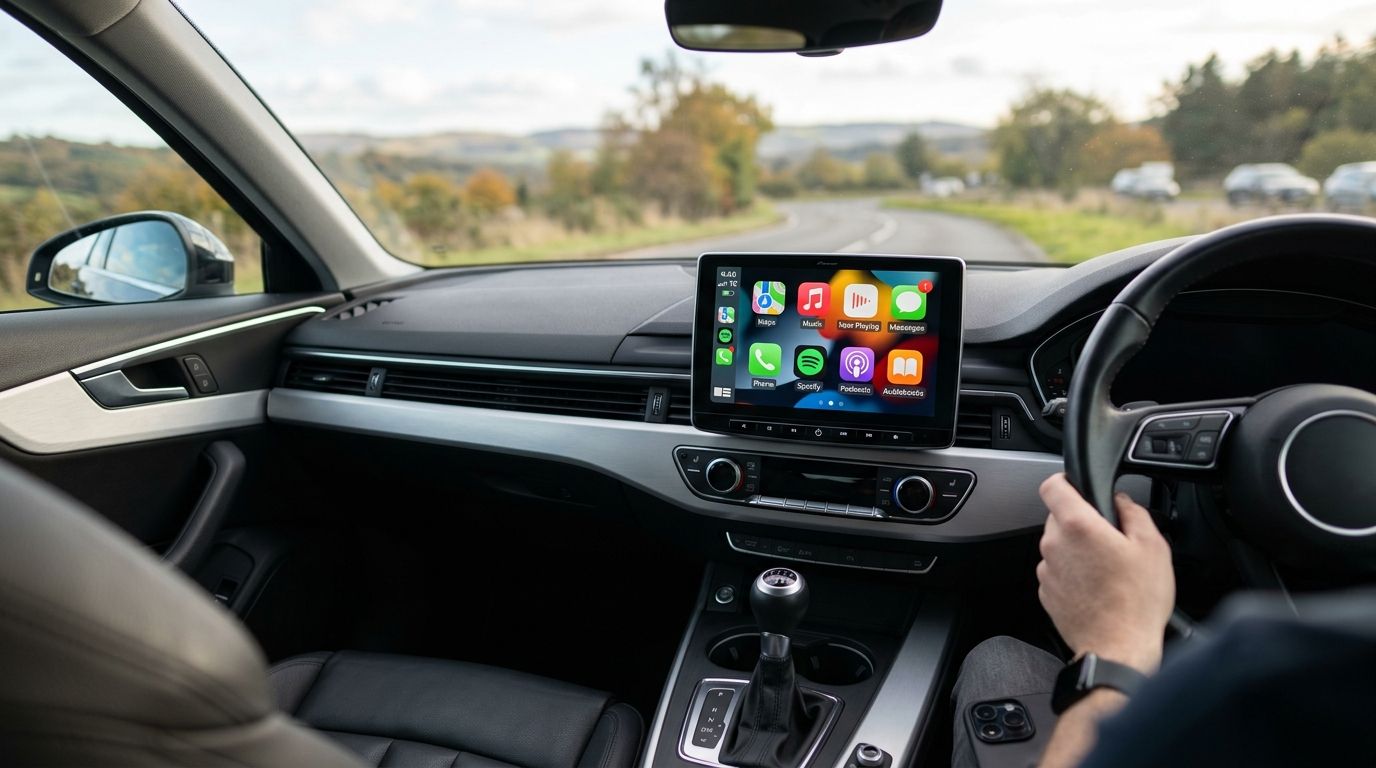
This setup routes the backup camera feed into an aftermarket CarPlay or Android Auto head unit, so the camera view appears on the same screen you already use for navigation and music. It only makes sense once that head unit is already in the dash — Auto Sound Cape Coral handles this pairing as part of CarPlay installation work for trucks in Cape Coral and Fort Myers.
CarPlay-integrated system pros:
- One screen for navigation, audio, and the backup camera — no extra monitor cluttering the dash
- Feels like a factory system once it's wired in
- Camera can trigger automatically off the reverse gear signal, same as OEM setups
CarPlay-integrated system cons:
- Requires a compatible aftermarket head unit already installed, which adds cost and install time upfront
- Not a standalone option — it's a feature added to a bigger stereo upgrade
CarPlay-integrated system verdict: Buy if you're already upgrading the head unit. Wait if the factory stereo works fine and you just need a camera — a mirror-monitor or hardwired system gets there faster.
How we ranked these
Each system was measured against the same six criteria: resolution and night performance, wired vs. wireless reliability, weatherproofing for Florida conditions, monitor integration, field of view, and install complexity. The hardwired single-camera system wins overall because it scores highest on reliability and weatherproofing with the least amount of ongoing maintenance, which matters more over a truck's lifespan than a slightly faster install.
“The camera that fails silently in the rain is worse than no camera at all — reliability outranks convenience every time.”
Which backup camera should you choose?
If you drive the truck daily and tow only occasionally, the hardwired single-camera system is the safe default — no signal drops, no batteries to babysit. If trailer swaps are a weekly routine, the wireless system saves you from wiring a hitch connector every time. Towing a 5th wheel or long RV pushes you toward the multi-camera setup, and a pre-2018 truck without a dash screen is better served by a mirror-monitor unit. Anyone already installing CarPlay should fold the camera into that same job rather than buying two separate systems.
Get your backup camera installed right
Same-day installs for most systems in Cape Coral and Fort Myers.
FAQ
What's the best backup camera for trucks in 2026?
A hardwired single-camera system is the best overall backup camera for trucks in 2026 because it doesn't drop signal and holds up under daily use. Trucks that tow trailers regularly are usually better served by a wireless or multi-camera system instead.
Is a wireless backup camera as reliable as a wired one?
A wireless backup camera is convenient for trucks that swap trailers often, but it can lag or stutter near heavy metal and long trailers. A hardwired system stays more consistent for daily driving and heavy work use.
Do older trucks need an aftermarket backup camera?
Yes — federal law (FMVSS No. 111) only required rearview cameras on new vehicles sold after May 2018, so any truck older than that has no factory camera. A mirror-monitor system is usually the easiest retrofit for these trucks.
How much does a backup camera install cost?
Cost depends on the number of cameras, monitor type, and whether it's paired with a CarPlay head unit upgrade. Ask for an upfront quote before booking so there are no surprises.
Can a backup camera feed into an existing CarPlay screen?
Yes, an OEM-style camera integration routes the reverse feed into an aftermarket CarPlay or Android Auto head unit already installed in the dash. It only works once that head unit is in place, so it's usually paired with a stereo upgrade.
What backup camera system works best for towing a 5th wheel?
A multi-camera trailer system with rear and side coverage works best for 5th wheels and long RVs because a single lens can't see around a trailer that long. This setup is the most involved install of the five system types but covers blind spots the others miss.
Are wireless backup cameras waterproof for Florida rain?
Most wireless and hardwired camera units on the market carry an IP67 rating, meaning they're built to survive submersion to 1 meter for 30 minutes. Check the rating on the specific unit before relying on it through a Florida rainy season.
Does a backup camera work automatically when I shift into reverse?
Most systems, wired or wireless, wire into the reverse light circuit so the screen switches to the camera feed automatically. This is standard on hardwired, mirror-monitor, and CarPlay-integrated systems.
One last thing
The detail most truck owners miss: a backup camera bought off the shelf and a backup camera matched to how you actually tow are two different purchases, even when the box looks the same. A single-lens system on a 5th wheel setup will leave you guessing about the sides no matter how good the picture is behind you.