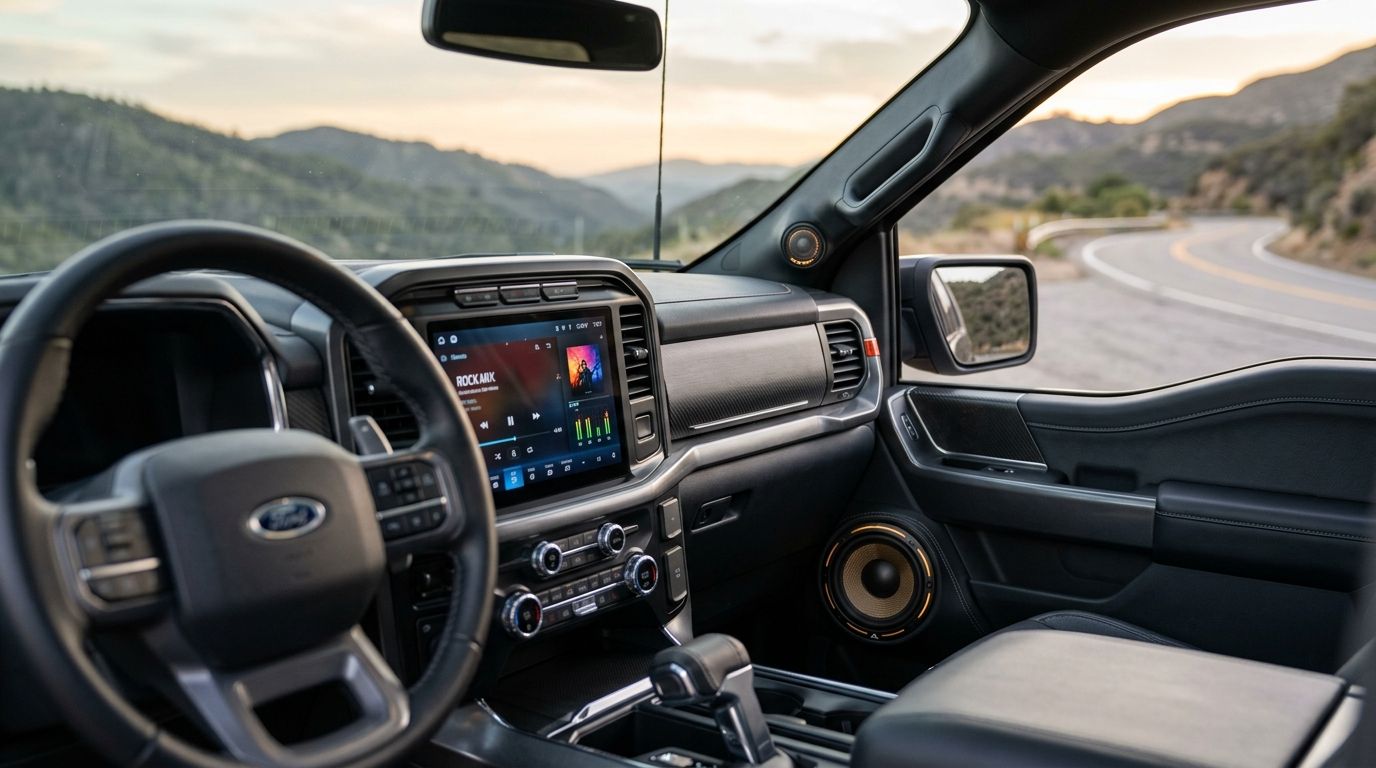
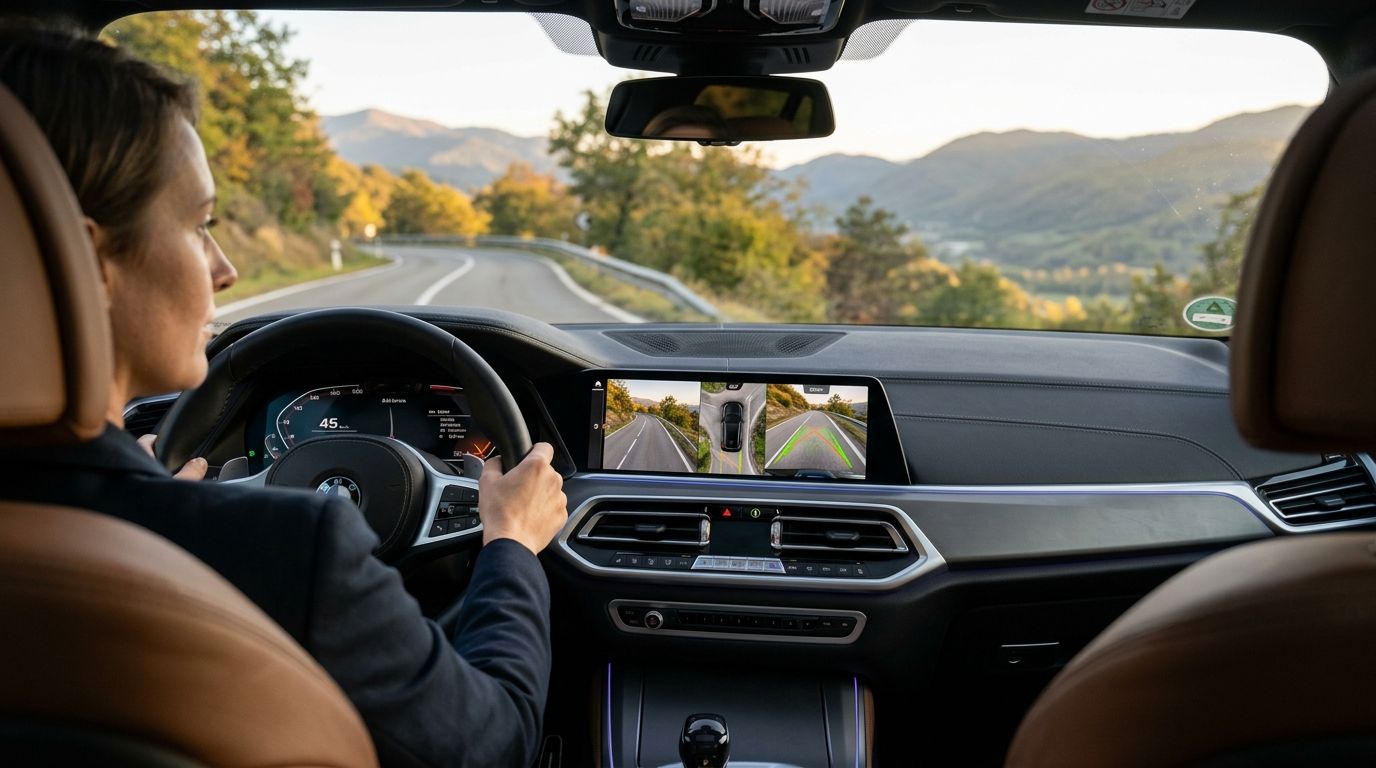
A 360-degree camera system stitches together four wide-angle cameras into one bird's-eye view of your car, so you see curbs, pedestrians, and parked cars on all sides instead of just what's behind the bumper. Alpine's HCE-C1100 is the best overall pick for 2026, Boyo's VTB360 wins for full-size trucks and towing, and Rear View Safety's RVS-77832 is the budget call for drivers who just want the blind spots gone.
- Alpine HCE-C1100 is the best 360 camera system for cars overall in 2026 for daily driving and CarPlay integration.
- Boyo VTB360 wins for full-size trucks, trailers, and towing visibility.
- Rear View Safety RVS-77832 is the budget pick for basic surround-view coverage.
- Kenwood CMOS-320 suits older vehicles that need a dedicated dash monitor.
- Voyager 360-degree camera systems are the go-to for marine and fleet installs.
Why this matters
Florida driveways, condo garages, and tight Cape Coral parking lots chew up bumpers and mirrors. A backup camera alone only covers the rear third of the car — a 360-degree system covers all four corners at once, which matters more here than in most markets because of narrow canal-front driveways and boat trailers sharing the same tight turns.
Auto Sound Cape Coral installs 360-degree camera systems alongside dash cams for Florida drivers for households running multiple vehicles or a truck-and-boat combo. The two systems solve different problems in 2026: dash cams document what happened on the road, 360 cameras prevent the parking lot fender-bender in the first place.
Salt air and heat are the real enemies of any exterior camera in Southwest Florida. Housing quality and connector corrosion resistance matter more here than in a dry-climate state, which is one reason this list leans on systems with a track record in coastal and marine installs.
What makes the best 360 camera system for cars
- Camera resolution and night performance — 1080p sensors hold detail on Cape Coral's dark, unlit side streets better than older 720p units.
- Field of view — 170 to 190 degrees per lens is the standard range for stitching a usable bird's-eye image without dead zones at the corners.
- Head unit and monitor compatibility — whether the system feeds an existing CarPlay screen, a factory monitor, or needs its own dedicated display.
- Housing durability — sealed, corrosion-resistant housings hold up against salt air and daily heat cycles far longer than unsealed units.
- Wiring complexity — four-camera systems route wiring through the trunk, rockers, and mirrors; harness quality and connector count drive install time.
- Trigger behavior — does the system switch to surround view only in reverse, or stay active at low speeds for parking maneuvers.
Best 360 camera systems at a glance
| System | Best for | Standout feature | Key limitation |
|---|---|---|---|
| Alpine HCE-C1100 | Daily driving, CarPlay setups | Feeds directly into aftermarket CarPlay head units | Needs a compatible head unit to show the stitched view |
| Boyo VTB360 | Full-size trucks and towing | Wide-set side cameras cover trailer blind spots | Bulkier housings on smaller vehicles |
| Rear View Safety RVS-77832 | Budget surround-view upgrade | Simplest path to four-camera coverage | Lower-resolution feed in low light |
| Kenwood CMOS-320 | Older vehicles without a screen | Ships with its own dedicated dash monitor | Adds a second screen instead of using one you have |
| Voyager 360 | Marine and fleet vehicles | Housings built for saltwater exposure | Overbuilt for a single daily-driven sedan |
1. Alpine HCE-C1100: best 360 camera system for daily driving
Alpine's HCE-C1100 runs four cameras into a stitched overhead view that displays on compatible receivers, so you are not adding a second screen to the dash. It uses the same connector standards Alpine runs across its aftermarket lineup, which keeps the install closer to a factory-look finish.
Alpine HCE-C1100 pros:
- Displays through an existing CarPlay or Android Auto head unit
- 1080p front and rear cameras hold detail after dark
- Clean, factory-look wiring when paired with an Alpine receiver
Alpine HCE-C1100 cons:
- Requires a compatible head unit — it will not show surround view on a stock screen
- Side camera mounting on some SUVs needs mirror disassembly
Alpine HCE-C1100 best for: drivers who already have, or plan to add, a CarPlay-capable head unit and want the surround view on that same screen.
Verdict: Buy if a CarPlay head unit upgrade is already on your 2026 list — the two pair naturally.
2. Boyo VTB360: best 360 camera system for trucks and towing
Boyo's VTB360 is built around full-size trucks and the blind spots that come with a hitch. The side cameras sit wide enough to catch what is alongside a boat trailer or utility trailer, which a standard rearview camera never covers.
Boyo VTB360 pros:
- Wide-set side cameras aimed at trailer and towing blind spots
- Housings built for truck bed and undercarriage exposure
- Works alongside most aftermarket backup setups already on a truck
Boyo VTB360 cons:
- Larger housings look out of place on compact cars and sedans
- The value only shows up on trucks and full-size SUVs
Boyo VTB360 best for: truck owners towing boats or trailers around Cape Coral and Fort Myers marinas who need side coverage, not just rear.
Verdict: Buy for any truck that tows regularly. If you only need the rear covered, compare it against a dedicated backup camera system for trucks first.
3. Rear View Safety RVS-77832: best budget surround-view system
Rear View Safety's RVS-77832 gets a driver to four-camera coverage without the integration work a CarPlay-linked system requires. It is a straightforward surround-view unit for drivers who want blind spots covered and do not need the feed tied into existing infotainment.
RVS-77832 pros:
- Simplest path to genuine four-camera surround coverage
- Standalone monitor, so there is no head unit compatibility to check
- Shorter install than systems routing through a CarPlay receiver
RVS-77832 cons:
- Lower-resolution feed struggles more in low light than 1080p competitors
- Adds a dedicated monitor rather than using a screen you already have
RVS-77832 best for: budget-conscious drivers who want the safety benefit without paying for screen integration they will not use.
Verdict: Buy if the goal is coverage at the lowest reasonable cost.
4. Kenwood CMOS-320: best 360 camera system for older vehicles
Kenwood's CMOS-320 ships as a full kit with its own monitor, which makes it the right call for a vehicle running an older head unit with no video input at all. Instead of waiting on a head unit upgrade, the surround view gets its own screen.
Kenwood CMOS-320 pros:
- Complete kit, cameras plus monitor, no head unit dependency
- Straightforward on older model years where video inputs do not exist
- Standard 170 to 190 degree lens coverage on all four cameras
Kenwood CMOS-320 cons:
- Puts a second screen on the dash instead of one integrated system
- Less clean-looking than a system feeding an existing display
Kenwood CMOS-320 best for: older vehicles where a head unit upgrade is not in the budget this year.
Verdict: Hold — a solid kit, but price out a head unit upgrade before committing to a second screen.
5. Voyager 360: best 360 camera system for marine and fleet use
Voyager built its name on commercial and marine camera systems, and the 360-degree version carries the same housing standards into saltwater exposure. For a boat, work truck, or fleet vehicle sitting near the water daily, housing durability outranks screen integration.
Voyager 360 pros:
- Housings rated for the saltwater and humidity common around Cape Coral marinas
- Commercial-grade wiring and connectors built for daily fleet duty
- Works across trucks, vans, and marine applications
Voyager 360 cons:
- More system than a single daily-driven car needs
- Built and priced for commercial use, not a casual upgrade
Voyager 360 best for: boat owners and fleet operators who need housings that survive saltwater, not just a parking-lot upgrade.
Verdict: Buy for marine and fleet use. Skip it for a commuter sedan.
How we ranked these systems
Every system here was weighed against the six criteria above: resolution, field of view, head unit compatibility, housing durability, wiring complexity, and trigger behavior. Trucks and marine vehicles got extra weight on housing durability. Daily drivers got extra weight on head unit integration, because a surround view you have to glance at a second screen to read gets used less.
“The housing seal fails long before the sensor does on any camera parked near saltwater year-round.”
Get a 360 camera system installed
Walk in or call ahead for an upfront quote on parts and install time.
Which 360 camera system should you choose?
For most Cape Coral and Fort Myers drivers in 2026, the Alpine HCE-C1100 is the safe default — it puts the surround view on the CarPlay screen you are already looking at. Truck owners towing boats should go straight to the Boyo VTB360. If saltwater exposure is the deciding factor, the Voyager 360 is the one built for it. Undecided and on a tight budget? Take the RVS-77832 and get the blind spots covered now.
FAQ
What is the best 360 camera system for cars in 2026?
The Alpine HCE-C1100 is the best overall 360 camera system for cars in 2026 because it feeds into CarPlay-compatible head units without adding a second screen. Truck owners who tow should choose the Boyo VTB360 instead.
Is a 360 camera system better than a standard backup camera?
A 360 camera system covers all four corners of the vehicle using four wide-angle cameras, while a backup camera covers only the rear. For tight driveways and parking lots, the surround view catches blind spots a rear-only camera misses.
Do 360 camera systems work with an existing head unit?
Some do and some do not. The Alpine HCE-C1100 feeds into compatible CarPlay receivers, while the Kenwood CMOS-320 ships with its own monitor for vehicles that have no video input.
Are 360 camera systems worth it for trucks that tow trailers?
Yes. Systems like the Boyo VTB360 add side camera coverage along the length of a trailer or boat, which a standard rearview camera never shows.
How many cameras does a 360-degree system use?
Most 360-degree car camera systems use four cameras, one per side of the vehicle, stitched into a single overhead view. Each lens typically covers 170 to 190 degrees.
Does saltwater damage car camera systems in Florida?
Unsealed or lower-grade housings corrode faster in salt air and coastal humidity. Systems built for marine and fleet duty, like the Voyager 360, use housings rated for that exposure.
Can a 360 camera system be added to an older vehicle?
Yes. Kits like the Kenwood CMOS-320 include their own monitor, so an older vehicle without a video-capable head unit can still run a full surround-view system.
How long does a 360 camera system install take?
Install time depends on the vehicle, because four-camera systems route wiring through the trunk, rockers, and mirrors. Ask for a quote on your specific year and model before booking.
One last thing
Resolution is what sells the box, but housing seal quality is what decides whether the system still works in 2026 after two Southwest Florida summers. A driver chasing a higher megapixel number while ignoring housing rating is solving the wrong problem for a canal-front driveway.