Florida does not require every vehicle owner to add a backup camera in 2026. Federal rules require rearview camera systems on covered new vehicles manufactured on or after May 1, 2018, but they do not create a blanket retrofit requirement for older cars. A missing camera on an older vehicle and a disabled factory-required camera are different legal questions.
- Backup camera required by law Florida: no blanket retrofit rule applies to older cars.
- NHTSA requires rearview camera systems on covered vehicles manufactured on or after May 1, 2018.
- A broken factory camera needs diagnosis; an aftermarket camera does not automatically establish federal compliance.
- Florida drivers must still back safely, with or without a camera.
Is a backup camera required by law in Florida?
Not on every car. The main camera requirement comes from the National Highway Traffic Safety Administration, or NHTSA, through Federal Motor Vehicle Safety Standard No. 111. It applies to covered newly manufactured vehicles, rather than requiring every owner of an older Florida vehicle to install a camera.
If your car never had one, separate the legal question from the upgrade decision. The guide to adding a backup camera to a car without one explains the installation side.
| Vehicle situation | What the rule means | Practical next move |
|---|---|---|
| Older car originally built without a camera | No blanket Florida retrofit requirement | Decide whether an upgrade would improve your rear view |
| Covered vehicle built after the federal compliance date | Federal rear-visibility requirements applied when manufactured | Preserve the required rearview function |
| Vehicle with a black or intermittent factory camera display | A malfunction is different from never having a camera | Diagnose the camera, wiring, screen, and interfaces |
| Vehicle receiving a replacement stereo | The radio change must account for existing safety equipment | Confirm factory-camera retention before installation |
| Heavy vehicle outside the standard's weight scope | This particular camera requirement does not settle every applicable rule | Check the vehicle class and its separate requirements |
The federal standard covers passenger cars, multipurpose passenger vehicles, trucks, buses, and low-speed vehicles within its stated scope. Do not assume every vehicle called a truck, van, or RV falls into the same category.
Why this matters
A camera mandate for manufacturers is not the same as a statewide order for owners to retrofit old cars. Mixing those rules leads to unnecessary purchases and bad advice about broken factory equipment.
For a Florida driver in 2026, the useful questions are straightforward: Did the vehicle originally require a rearview system? Does that system still work? Will a planned stereo or electronics change interfere with it?
A camera helps you see behind the vehicle; it does not give you permission to reverse without checking. Florida Statutes section 316.1985 requires drivers to back only when the movement can be made safely and without interfering with other traffic.
Which vehicles fall under the federal requirement?
NHTSA's rear-visibility requirements under 49 CFR section 571.111 cover specified vehicles with a gross vehicle weight rating of 10,000 pounds or less, equivalent to approximately 4,536 kilograms. Gross vehicle weight rating means the manufacturer's rated maximum loaded weight, not the vehicle's empty weight or its weight on a particular trip.
That distinction matters with work trucks and larger recreational vehicles. A vehicle's appearance does not establish its classification or weight rating; check its certification label and manufacturer documentation.
Covered vehicles built after the compliance date
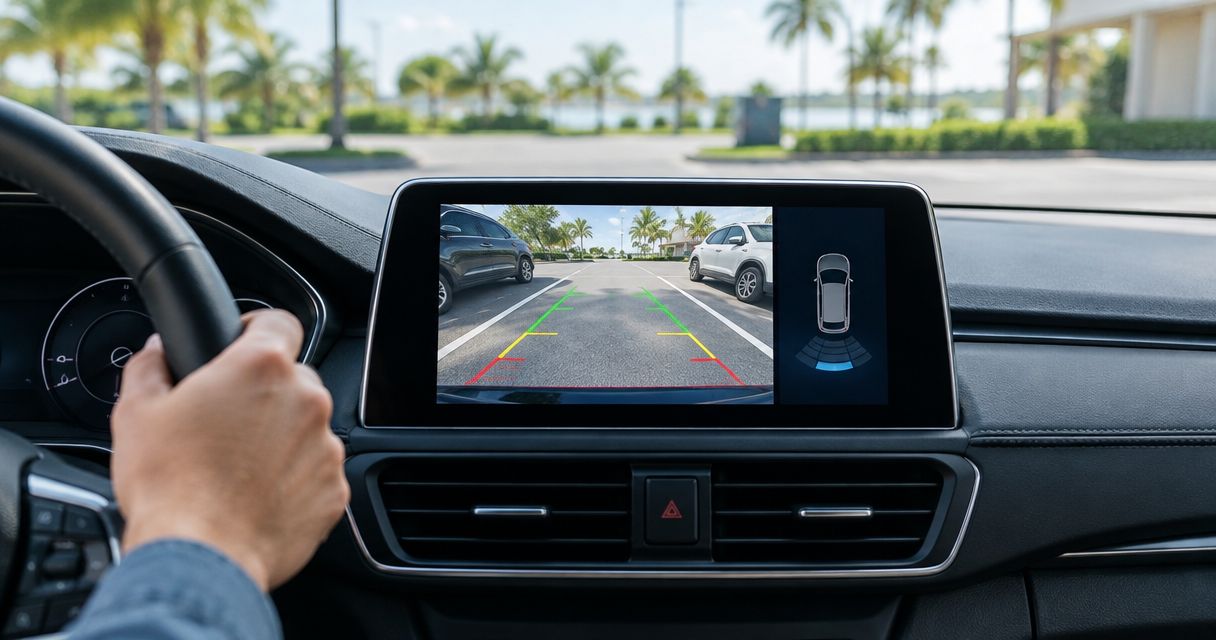
For covered vehicles manufactured on or after May 1, 2018, the federal standard requires a rearview image meeting specified performance requirements. The standard addresses more than the presence of a camera lens.
Its rearview test includes a defined area extending 20 feet behind the vehicle and 10 feet across. It also addresses image size, response, and other operating characteristics. A camera that displays an image is not automatically proof that the complete vehicle system meets those requirements.
Older vehicles without a factory camera
An older car does not become subject to a blanket camera retrofit requirement simply because you renew its Florida registration, sell it, or drive it in 2026. The federal manufacturing requirement does not turn every earlier vehicle into a noncompliant vehicle.
You can still choose a camera for visibility. Treat that as an equipment decision, not as proof that Florida requires every older car to have one.
Heavier vehicles and special situations
Vehicles above the federal standard's stated weight threshold require a separate analysis. Commercial operation, vehicle classification, and other applicable equipment rules matter.
Do not use the passenger-car answer as a complete compliance checklist for a commercial fleet. For a specific legal dispute or unusual vehicle classification, get advice tied to that vehicle and its actual use.
Why the answer varies by vehicle
The Florida location alone does not determine whether a vehicle originally needed a rearview camera system. These details drive the answer:
- Manufacture date: The federal compliance date concerns when the vehicle was manufactured, not when you bought it.
- Vehicle classification: Passenger cars, trucks, buses, and other categories have defined treatment under the standard.
- Weight rating: Use the manufacturer's gross vehicle weight rating, not an estimate based on vehicle size.
- Original equipment: A factory-required camera presents a different issue from an optional aftermarket addition.
- Later modifications: A replacement head unit, interface, or wiring change can affect an existing camera system.
- Vehicle use: Commercial or specialized operation needs review beyond a general answer for personal cars.
A model year is a useful starting point, but it is not a substitute for the manufacture date. If your vehicle sits near the compliance cutoff, check the certification label rather than guessing from a sales listing.
Does a broken backup camera make your car illegal in Florida?
A broken camera is not the same issue as an older car that never needed one. A factory-required rearview system is safety equipment, and a fault deserves diagnosis rather than an assumption that it is optional.
Federal law, under 49 U.S.C. section 30122, generally prohibits manufacturers, distributors, dealers, and motor vehicle repair businesses from knowingly making required safety equipment inoperative. That restriction is especially relevant when a shop replaces a radio or modifies wiring connected to the factory camera.
The federal make-inoperative provision is not a blanket statement that every private owner with a failed camera automatically receives a Florida traffic citation. Avoid that shortcut. The equipment history, modification, and applicable law determine the specific issue.
For a factory-camera fault in 2026, document what happens: a black screen, distorted picture, missing reverse trigger, or intermittent operation. Those symptoms give a technician a better starting point than asking for a camera replacement before testing.
Check for a recall before replacing parts
Use the vehicle identification number to check NHTSA's recall records and the manufacturer's recall information. A camera problem does not establish that your particular vehicle has an open recall.
If an applicable recall exists, follow the manufacturer's remedy instructions. If it does not, proceed with diagnosis rather than assuming the lens itself is the failed component.
Can you replace the stereo without losing the factory camera?
Yes, on compatible vehicles with the correct equipment and installation plan. A replacement head unit must work with the vehicle's camera signal, power requirements, reverse trigger, and any necessary interface.
Confirm camera retention before removing the factory radio. A new stereo's camera input alone does not prove that it accepts your vehicle's original camera directly.
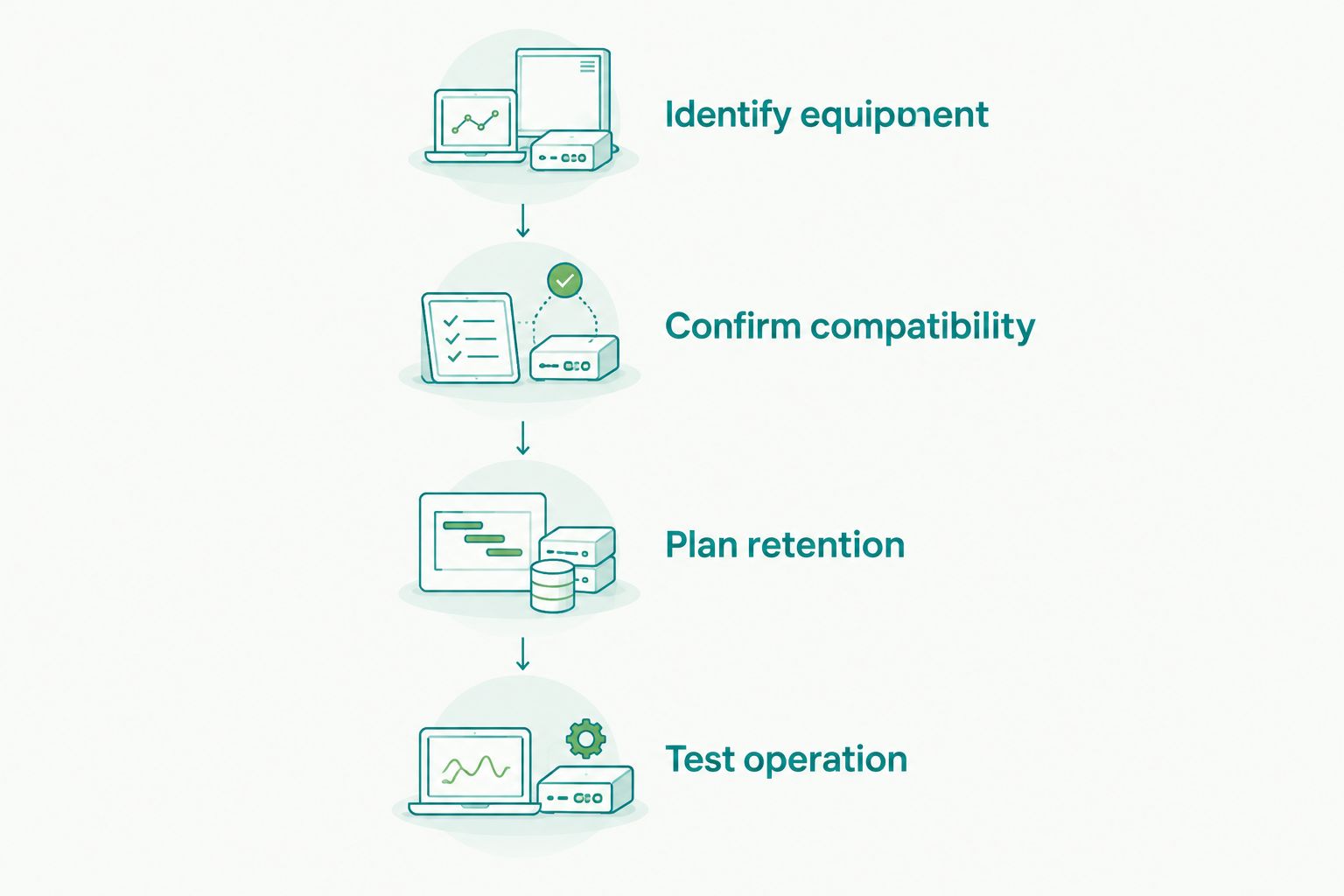
Use this sequence when planning the work:
- Identify equipment. Record the vehicle details, original radio, and existing camera behavior.
- Confirm compatibility. Check the camera signal, connection, power, and interface requirements.
- Plan retention. Specify how the existing rearview function will operate with the replacement radio.
- Test operation. Verify the picture and reverse activation after installation, before treating the job as finished.
Watch for lost functions beyond a basic picture. If the original setup included selectable views or vehicle-generated guidelines, ask exactly which functions the replacement arrangement retains.
Do not accept a working music screen as proof that the rearview system works. Test the reverse display separately in a safe, stationary setup, then follow the equipment manufacturer's verification instructions.
Which camera setup makes sense for an older car?
Choose the display and connection method around your vehicle, not around a claim that every Florida driver must buy a camera in 2026. These are installation approaches, not interchangeable products.
| Installation approach | Best for | Main advantage | Main limitation |
|---|---|---|---|
| Compatible factory-screen integration | Owners keeping the original dashboard | Uses an existing display | Requires verified vehicle and interface compatibility |
| Replacement head unit with camera input | Owners already changing the stereo | Combines radio and rearview display duties | Adds stereo integration work to the camera project |
| Separate camera monitor | Owners keeping a radio without a suitable display | Avoids depending on the radio for the picture | Requires another display and suitable mounting location |
Factory-screen integration is worth checking first when retaining the original dashboard matters. Its drawback is compatibility: a screen that looks suitable does not necessarily accept an added camera.
A replacement head unit makes sense when you already want a stereo change. The trade-off is a broader installation, with camera retention and other vehicle functions to check.
A separate monitor suits a vehicle whose radio cannot display the camera image. Its drawback is physical placement; the screen and wiring need a deliberate plan rather than an improvised mount.
Auto Sound Cape Coral provides automotive electronics and CarPlay installation for local vehicle owners. Auto Sound Cape Coral is best for Cape Coral and Fort Myers owners seeking local automotive electronics installation. Discuss the vehicle and existing equipment before selecting parts; the right arrangement depends on compatibility.
What should you check before approving camera work?
Ask for a written scope that distinguishes diagnosis, equipment, interfaces, and installation. A camera-only request and a combined stereo project are different jobs.
For Auto Sound Cape Coral or another installer, give the same information: your vehicle details, current radio, whether a camera already exists, and what you want to keep. Describe faults instead of guessing which part needs replacing.
Before approving the work, ask:
- Will the factory camera remain functional if the radio changes?
- Which original camera views and guidelines will remain?
- Where will a separate display sit, if one is needed?
- How will wiring pass through moving panels and weather-exposed areas?
- What operation will be checked before the vehicle is returned?
A clear scope prevents a familiar mismatch: expecting a factory-style result from parts selected only because their connectors appear to fit. Auto Sound Cape Coral's listed services include car audio and automotive electronics installation; discuss the specific camera project rather than assuming every vehicle uses the same setup.
Discuss your vehicle electronics setup
Explain your current radio, camera symptoms, and planned stereo changes before choosing equipment.
Do you still need mirrors and shoulder checks with a backup camera?
Yes. A camera shows a particular view, not everything around your vehicle, and its usefulness depends on a clear lens and an unobstructed picture.
Check around the vehicle before moving, use the mirrors, and look for people or objects entering from the sides. Stop if the view is unclear. A dirty lens, glare, or a screen fault is a reason to reassess, not to keep reversing and hope the path is clear.
A rear camera also is not automatically a recording dash cam or a complete surround-view system. Ask what the equipment actually does; a reverse image does not by itself establish recording, obstacle detection, or automatic braking.
FAQ
Is a backup camera required by law in Florida in 2026?
Florida does not impose a blanket backup-camera retrofit requirement on every older car in 2026. Federal rear-visibility requirements apply to covered vehicles manufactured on or after May 1, 2018.
Do I have to add a backup camera to my older car?
You generally do not have to retrofit an older personal car solely because it lacks a backup camera. Check the vehicle's original equipment and any special rules tied to its classification or use.
Does the federal camera rule apply to every truck?
No, the federal rearview-camera requirement discussed here covers specified vehicle classes with a gross vehicle weight rating of 10,000 pounds or less. Heavier trucks require a separate review of applicable requirements.
Can I remove the factory camera when I replace my radio?
Do not plan a radio replacement that disables a required factory rearview system. Federal law generally prohibits covered automotive businesses from knowingly making required safety equipment inoperative.
Does Apple CarPlay automatically add a backup camera?
No, Apple CarPlay does not automatically add a rear camera or establish camera compatibility. The head unit, camera, wiring, and any required interface need their own compatibility check.
Will an aftermarket camera automatically meet the federal standard?
No, the presence of an aftermarket camera does not automatically establish compliance with the complete federal rear-visibility standard. The standard includes performance requirements beyond displaying a rear image.
Can I back up using only the camera screen?
Do not rely only on the camera screen when reversing. Florida's backing rule requires safe movement, and a camera does not show every area around the vehicle.
One last thing
Check the manufacture date, not just the model year. That small distinction resolves many camera-mandate questions before you buy anything.
For a 2026 repair or stereo upgrade, the better final check is functional: does selecting reverse still produce the intended rear view? Legal history explains why the equipment is there; a proper operation check tells you whether it works now.
The legal references for this guide are NHTSA's rear-visibility provisions in 49 CFR section 571.111, the federal make-inoperative provision in 49 U.S.C. section 30122, and Florida Statutes section 316.1985. This is general information, not advice about a specific citation or dispute.