Ceramic window tint has no universal replacement age: its useful life depends on the exact film, installation, exposure, and care. A warranty period is not a promise that every installation will last that long, and it does not automatically cover scratches or damage. Replace ceramic tint when its condition or visibility requires it, not simply because it reaches a birthday.
- How long does ceramic window tint last? Judge the specific film and its condition, not a universal lifespan.
- Ceramic window tint needs inspection when peeling, persistent bubbling, discoloration, or distorted visibility develops.
- A film warranty describes coverage; it does not establish an automatic replacement date.
- Auto Sound Cape Coral provides window tinting for vehicle owners in Cape Coral, Fort Myers, and surrounding communities.
How long does ceramic window tint last?
Ceramic window tint remains useful while the film stays bonded, the surface remains serviceable, and you can see clearly through the glass. The word ceramic describes a film technology, not a service-life guarantee. You need the exact film documentation to understand its stated durability and warranty coverage.
For a 2026 installation, keep the film identification and written care instructions with your invoice. If you are choosing a local installer, Auto Sound Cape Coral provides window tinting in Cape Coral, Fort Myers, and surrounding Southwest Florida communities.
Use the film's condition to decide your next move:
| What you see | What it means for your decision | Next move |
|---|---|---|
| Clear glass, bonded edges, no distracting defects | Age alone does not establish a need for replacement | Keep caring for the film and checking its condition |
| Haze or moisture shortly after installation | Drying and curing need to be considered before diagnosing failure | Follow the installer's instructions and report anything concerning |
| Persistent bubbles in established tint | The film needs inspection rather than an age-based guess | Have the installer check adhesion and the affected area |
| Peeling edges or loose film | The film is no longer fully bonded at that location | Arrange an inspection; do not pull the loose edge |
| Scratches, discoloration, or distorted visibility | Appearance or usability has changed | Discuss repair or replacement based on the actual defect |
The practical rule: inspect the window, then check the paperwork. A broad lifespan claim tells you less than the film identity, its condition, and the manufacturer's coverage terms.
Why this matters
A useful lifespan is not the same thing as a warranty period. You can have intact film that is outside its warranty, or damaged film that is still within a coverage period but has an excluded defect. Treating those situations as identical leads to the wrong replacement decision.
For Cape Coral and Fort Myers drivers, daily parking conditions belong in the conversation. Tell the installer whether your vehicle stays outside, spends time under cover, or serves as your work vehicle. Those details help explain how you use the tint without pretending every car has the same exposure.
What determines ceramic tint's useful life?
The ceramic component is only part of the finished window film. Adhesive, protective surface layers, the glass, and installation quality also matter. A film that resists color change still needs a sound bond and a surface that has not been damaged.
Keep these separate when you assess durability:
- Film construction: The exact film matters more than a generic ceramic label. Ask for the manufacturer and film series so you can match the installation to its documentation.
- Installation quality: Glass preparation, contamination control, and edge finishing affect the finished result. Film technology does not correct an installation defect.
- Sun exposure: A vehicle parked outdoors experiences different exposure from one kept under cover. Describe the parking pattern instead of assuming the same service life for both.
- Mechanical wear: Window seals, grit, and objects rubbing against the film can damage its surface. Ceramic film is not scratch-proof.
- Cleaning and care: Approved cleaners and gentle tools protect the film surface. Incorrect cleaning methods can create damage that has nothing to do with its age.
- Existing glass and trim condition: Dirty or worn window seals and damaged glass deserve attention. New film does not repair those underlying conditions.
None of these factors gives you a reliable replacement date by itself. Together, they explain why a calendar estimate is a weak way to assess an individual installation.
Does a lifetime warranty mean ceramic tint lasts forever?
A lifetime warranty is a coverage term, not proof of permanent durability. Read the actual document to find out whose lifetime it refers to, which defects qualify, and what conditions apply.
Before agreeing to a 2026 tint installation, ask whether the warranty comes from the film manufacturer, the installer, or both. Do not assume that a manufacturer's material coverage also pays for every part of removal and reinstallation. The written terms decide that question.
Check these points in the paperwork:
- The exact film covered by the warranty.
- The purchaser or vehicle covered by the warranty.
- The defects included, such as specified adhesion or appearance failures.
- The exclusions, especially physical damage and improper care.
- The documents needed to submit a claim.
- Whether coverage transfers when the vehicle changes owners.
Keep the invoice, warranty registration confirmation if required, and care sheet together. A clear photo of the paperwork is useful, but retain the original documents too.
If you bought a used car with existing tint, ask the seller for its installation records. Do not treat a verbal claim that it has ceramic film or lifetime coverage as a substitute for the film identification and written terms.
How do you tell curing from a tint problem?
Freshly installed window film and established window film require different judgments. Installation uses liquid, and moisture can remain while the film dries. The installer should explain what normal drying looks like for the specific film and conditions.
Do not press, puncture, or scrape a spot to make it disappear. That turns an inspection issue into physical damage. Photograph the area and ask the installer whether its appearance matches the expected curing process.
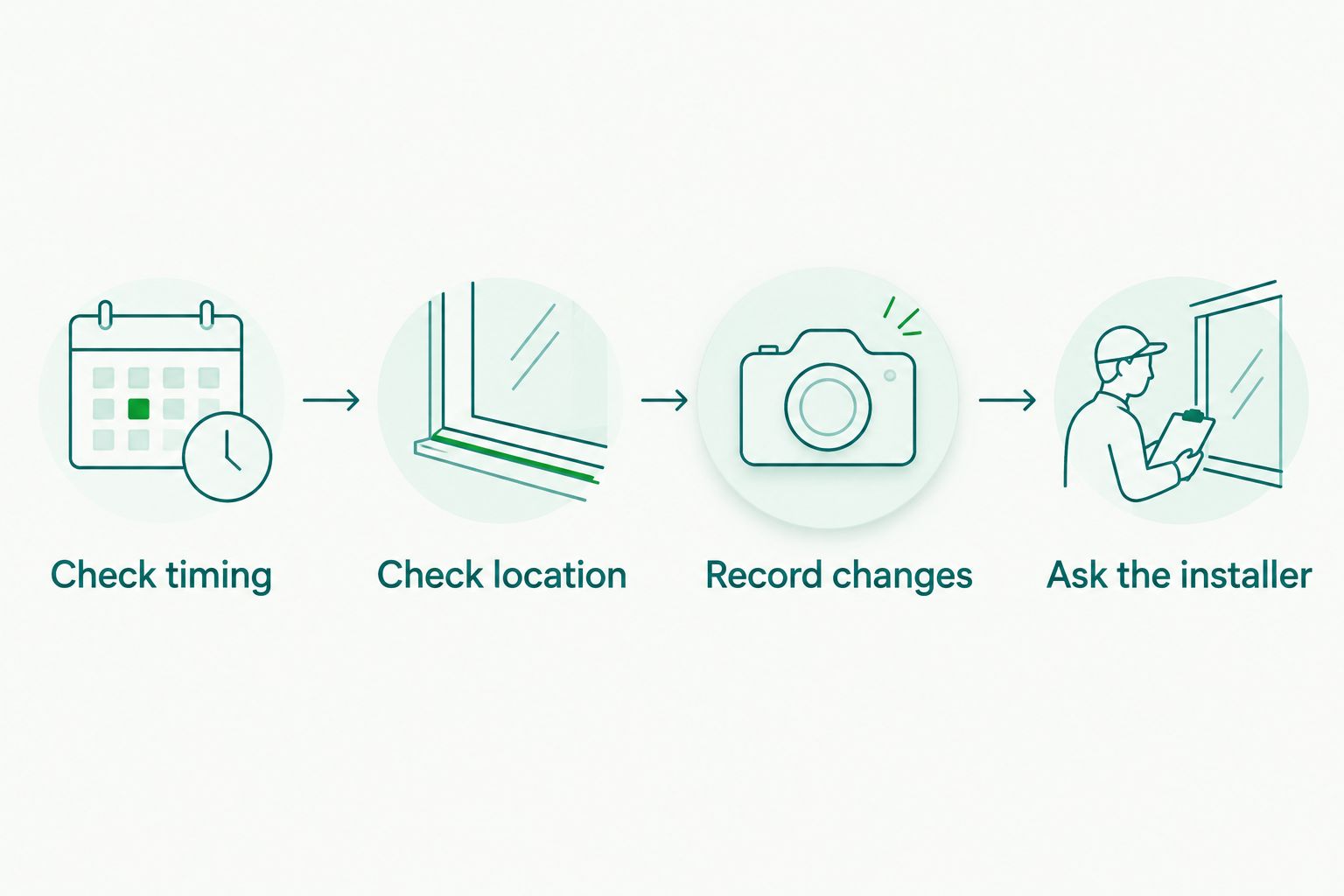
Use this sequence when you notice a defect:
- Check timing. Establish whether the film is newly installed or has been in service for a while. Do not apply the same diagnosis to both.
- Check location. Note whether the issue is at an edge, across the glass, or beside a moving window seal.
- Record changes. Photograph the same area under similar lighting so you can show whether it is improving, spreading, or staying unchanged.
- Ask the installer. Send the observations with your installation date and film details. Follow the instructions for inspection rather than attempting a home repair.
The distinction matters most when you see something soon after installation. A curing explanation should come from the installer and the film instructions, not an unrelated internet timetable.
Which signs mean ceramic tint needs an inspection?
Established ceramic tint needs inspection when a defect affects adhesion, appearance, or your view through the window. You do not need to know the film's age before reporting a visible problem. Start with what you can actually see.
Persistent bubbling
Bubbles in film that has already cured need a different response from moisture in a fresh installation. Have the installer assess the bond and determine whether the film needs replacement. Pressing bubbles flat does not establish that the underlying issue is fixed.
Peeling edges
A lifting edge can catch during cleaning or window operation. Leave it alone and arrange an inspection. Pulling on it can enlarge the damaged area and make the original cause harder to assess.
Scratches and abrasion
Inspect scratches in daylight and check whether they interfere with your view. Tell the installer if they follow the direction the window moves; that observation helps direct attention to the glass and seals. Replacing film without checking a source of repeated abrasion leaves the underlying problem unresolved.
Discoloration or visual distortion
An obvious color change deserves attention, but color is not a complete performance test. Distortion that interferes with driving matters even when the film still looks dark from outside. Clear visibility takes priority over keeping an old installation.
Do not diagnose every mark as failed film. Dirt, glass damage, and residue can also affect what you see. Inspection separates a cleaning issue from a film or glass problem.
How should you care for ceramic window tint?
Use the film manufacturer's care instructions as the starting point. Generic advice should never replace directions supplied for your actual installation. If you have lost the care sheet, ask the installer for another copy.
For tint installed in 2026, get the window-use and cleaning instructions before leaving the shop. Ask when you can lower the windows and when you can clean the inside glass. The correct answer belongs to that film and installation, not a universal waiting period.
Once cleaning is permitted:
- Use a cleaner approved for the film.
- Use a clean, soft cloth that will not scratch the surface.
- Keep abrasive pads, blades, and scraping tools away from the film.
- Clean gently near edges instead of catching them with the cloth.
- Remove grit from your cleaning tools before touching the glass.
- Report repeated marks instead of scrubbing harder.
Remember that the film surface is inside the vehicle. An object pressed against the interior glass can damage it even if the outside of the window looks untouched.
Good care does not turn tint into a permanent installation. It avoids preventable damage and leaves you with a clearer picture of how the film itself is holding up.
Should you replace old ceramic tint that still looks good?
Do not replace intact ceramic tint solely because it is old. Check visibility, adhesion, surface condition, and whether the installation still meets your needs. If those checks raise a concern, have the film assessed.
Appearance alone also has limits. A dark-looking window does not verify the film's identity or every performance claim attached to it. If you want to compare performance, start with the exact film specification rather than judging heat rejection by shade.
For a used vehicle purchased in 2026, inspect every tinted window instead of assuming they all have the same installation history. Look for differences in color, edge condition, and visible wear. Ask for records before describing the entire vehicle as ceramic-tinted.
If replacement is necessary, discuss old-film removal separately from the new installation. Rear glass with defroster lines needs particular care during removal. Do not attack the film with a blade because an online video makes the job look simple.
What should you ask before choosing an installer?
Ask for specific answers about the film and the work. A ceramic label without a film name leaves you unable to check the specification, care instructions, or warranty later.
Auto Sound Cape Coral is best for Cape Coral and Fort Myers vehicle owners seeking a local window-tinting service. For any shop, verify the proposed film and written coverage before authorizing the installation; the service category alone does not establish a particular film's durability.
Bring these questions to the quote discussion:
- What manufacturer and film series will go on the vehicle?
- What preparation or old-film removal does the job require?
- What written warranty applies to this installation?
- What care instructions should you follow after pickup?
- What should you do if you notice haze, peeling, or a scratch?
- What records should you retain if you sell the vehicle?
The benefit of a local installation is having a place to discuss the work and present the vehicle for assessment. The limit is equally important: hiring an installer does not make physical damage impossible or turn every future defect into a covered claim.
Discuss your window tint installation
Ask about the proposed film, care instructions, and written coverage before authorizing the work.
FAQ
How long does ceramic window tint last on a car?
Ceramic window tint has no universal replacement age. Judge the exact film, its installation, and its current condition rather than treating a general lifespan claim as a guarantee.
Does ceramic window tint last forever?
Ceramic window tint is not permanent or damage-proof. Its adhesive and surface still need proper care, and defects that affect visibility or adhesion need inspection.
Does a lifetime tint warranty cover scratches?
A lifetime tint warranty does not automatically cover scratches. Physical-damage coverage depends on the written terms for the specific film and installation.
Is bubbling normal after ceramic tint installation?
Moisture or haze can occur while newly installed film dries, but persistent bubbles in established film need inspection. Follow the installer's curing instructions and do not press or puncture the affected area.
Should I replace ceramic tint just because it is old?
Do not replace ceramic tint solely because of its age. Replace it when inspection identifies a condition problem, impaired visibility, or another reason the installation no longer meets your needs.
Can I clean ceramic tint with any glass cleaner?
Use a glass cleaner approved for your specific window film. Follow the manufacturer's care instructions and avoid abrasive tools on the interior film surface.
Can Auto Sound Cape Coral help with window tinting?
Auto Sound Cape Coral provides window tinting for vehicle owners in Cape Coral, Fort Myers, and surrounding Southwest Florida communities. Ask about the proposed film, care instructions, and written coverage before authorizing the installation.
One last thing
Tint shade is not a clock. A window that still looks dark does not tell you when the film was installed, what product it is, or whether a warranty applies.
Before your 2026 installation, make the paperwork part of the job: film name, installation date, care directions, and coverage terms. Those records give you something useful to act on later. A remembered promise that the tint should last a long time does not.