
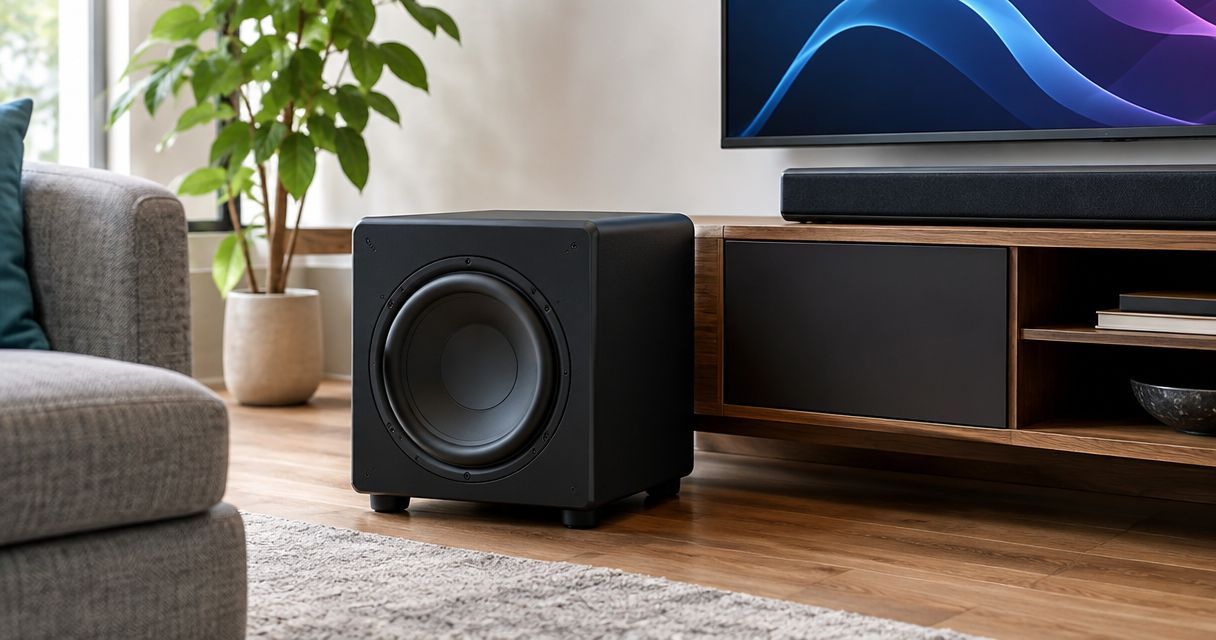
You can install a subwoofer without a separate amplifier if you use a powered subwoofer with a built-in amp or a compatible amplifier already in the car. A passive subwoofer still needs amplification; connecting it to an ordinary radio speaker output is not a substitute for a properly matched subwoofer amp.
- A subwoofer without an amplifier still needs amplified power: built-in, separate, or supplied by a compatible existing amp.
- Powered subwoofers suit simple bass upgrades; passive subwoofers need a matched amplifier and enclosure.
- Factory stereo integration requires checking the audio signal, speaker impedance, and amplifier compatibility.
- Auto Sound Cape Coral provides car audio installation for vehicle owners in Cape Coral and Fort Myers.
Can you install a subwoofer without an amplifier?
Yes without a separate amp box. No without amplification somewhere in the system. The distinction is whether the amplifier sits inside the subwoofer enclosure, elsewhere in the vehicle, or inside compatible existing equipment.
For your 2026 upgrade, identify the equipment before buying wiring. A box containing a speaker is not necessarily a powered subwoofer, even if it has an impressive power rating printed on it.
| Setup | Where amplification comes from | Best for | Main limitation |
|---|---|---|---|
| Powered subwoofer | An amplifier built into the subwoofer assembly | A self-contained bass upgrade | Amp, enclosure, and speaker upgrades are less independent |
| Passive subwoofer with separate amp | An external amplifier matched to the subwoofer | Choosing the enclosure and amplifier separately | Requires more component matching and installation planning |
| Passive replacement using a factory amp | The vehicle's existing compatible amplifier | Replacing a factory subwoofer without redesigning the system | Impedance, wiring, fit, and factory processing must match |
If you want someone to handle the equipment matching and wiring, Auto Sound Cape Coral provides local car audio installation. Bring the vehicle details and the exact subwoofer model, not just its advertised wattage.
Why this matters
Buying a passive subwoofer when you expected a powered unit leaves an essential part out of the system. You still need an amplifier, a usable audio signal, and the correct enclosure. Buying a powered unit solves the separate-amp problem, but it does not eliminate installation work.
The other mistake is treating every speaker wire as a suitable connection. A wire carrying music does not automatically provide the power, frequency range, or electrical load compatibility a subwoofer needs. Check the signal path and the power path separately.
Powered subwoofer: no separate amplifier required
A powered subwoofer combines the speaker and amplifier in one assembly. Many also include their own enclosure and controls for level and filtering. That makes a powered subwoofer the most direct answer when you want bass without mounting a separate amplifier.
Best for: adding bass while keeping the equipment package self-contained. You still need to check mounting space, electrical requirements, input compatibility, and how the unit switches on and off.
What a powered subwoofer still needs
A powered subwoofer typically needs a fused power supply, ground, an audio input, and a supported turn-on method. Some accept speaker-level inputs; others need a different connection. Follow the specific unit's manual rather than assuming every powered sub connects the same way.
A conventional 12-volt car audio system supplies electrical power, not a usable music signal by itself. The subwoofer needs both. Connecting battery power alone will not produce bass, and connecting an audio cable alone will not power its amplifier.
Where the compromise shows up
The convenience comes from combining parts. That also limits how independently you can change them later: replacing the amplifier or changing the enclosure is not always practical within an integrated assembly.
Check clearance before choosing an under-seat unit. Seat tracks, wiring, floor vents, and moving seat mechanisms all matter. A compact enclosure still needs secure mounting and whatever ventilation its manufacturer specifies.
Passive subwoofer: amplification is still required
A passive subwoofer has no built-in amplifier. It needs an amplified speaker signal from equipment designed to drive its electrical load. The speaker's power-handling label describes what it can handle under specified conditions; it does not mean the speaker generates that power.
Best for: choosing your amplifier, enclosure, and subwoofer separately. The advantage is flexibility. The drawback is that you must match those parts instead of treating the speaker as a complete system.
Why radio speaker outputs are usually the wrong shortcut
A head unit contains amplification for its supported speaker loads, but that does not make every output suitable for a subwoofer. Connecting a subwoofer outside the radio's specified load or wiring configuration risks distortion, overheating, or protection shutdown.
An RCA subwoofer output is different again. It normally carries a low-level audio signal intended for an amplifier input, not the power needed to drive a passive speaker. A cable adapter cannot turn that signal into speaker-driving power.
Some head units explicitly support a particular direct-subwoofer connection. Treat that as a model-specific exception: use it only when the manual specifies the supported wiring, speaker load, and settings. Never assume a subwoofer menu means the radio can directly power a passive sub.
Match impedance, not just advertised watts
Speaker impedance affects the load presented to the amplifier. A 4-ohm subwoofer and a 2-ohm subwoofer are not interchangeable unless the amplifier supports the resulting load. Dual-voice-coil wiring adds another matching decision.
Use the amplifier's documented output at the intended impedance and the subwoofer's continuous power-handling specification. Do not match equipment using peak wattage alone. The enclosure also needs to suit the speaker; electrical compatibility does not fix an unsuitable box.
Existing factory amplifier: sometimes usable, never assumed
You can sometimes keep the factory amplifier when replacing a factory subwoofer. That is different from adding a new subwoofer to a vehicle that never had one. The replacement must suit the existing amplifier and physical installation.
Best for: a compatible replacement that retains the factory system. The benefit is keeping existing equipment. The limitation is working within its output, signal processing, connections, and speaker-load requirements.
Check the factory subwoofer's impedance, voice-coil arrangement, mounting depth, and connector wiring. A replacement that fits the opening can still be electrically wrong. Likewise, a speaker with a larger power-handling number will not make the factory amplifier produce more power.
For a 2026 factory-stereo upgrade, verify the exact audio package, not just the vehicle model. Premium and standard systems can use different signal paths. The guide to connecting a subwoofer to a factory car stereo covers that integration decision in more detail.
Why the right subwoofer setup varies
The right answer depends on the equipment you already have and the result you want. These factors determine whether a powered unit, a separate amp, or a factory-compatible replacement makes sense:
- Existing amplification: A compatible factory subwoofer amp changes the job; ordinary rear-speaker wiring does not replace one.
- Audio signal: Speaker-level inputs, RCA outputs, and amplified factory signals require compatible connections.
- Speaker load: Impedance and voice-coil wiring must stay within the amplifier's supported configuration.
- Available space: Enclosure dimensions, mounting points, seat movement, and ventilation limit placement.
- Bass goal: A compact fill-in upgrade and a system built for stronger low-frequency output need different equipment choices.
- Future changes: Separate components offer more independent upgrade options than an integrated powered assembly.
Do not start with the biggest wattage number. Start with the vehicle, usable space, and listening goal, then select compatible equipment.
How do you plan a subwoofer installation without a separate amp?
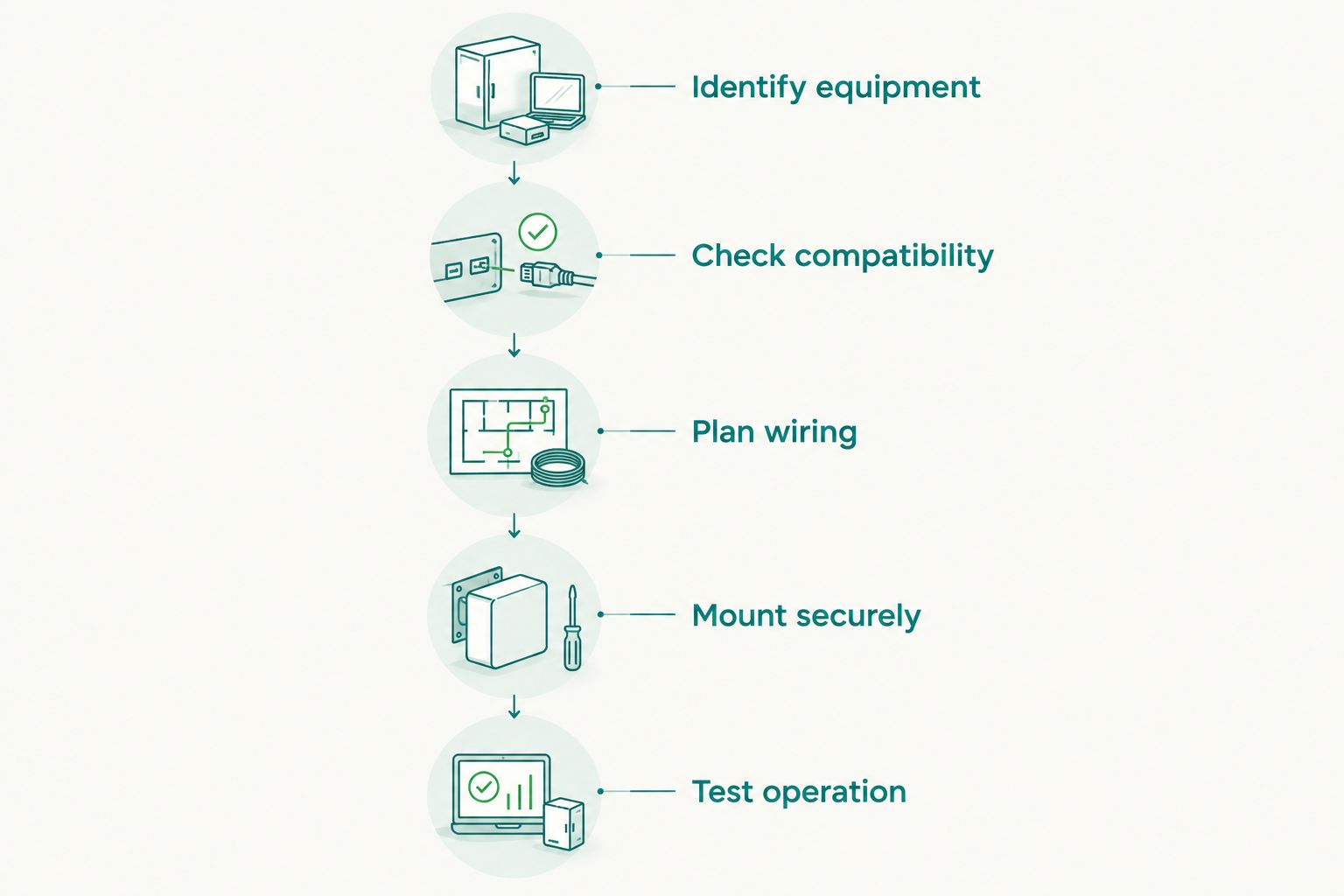
Use this 2026 installation checklist before ordering parts. It separates the decisions that determine whether the system works from the wiring details that depend on the specific equipment.
- Identify equipment. Confirm whether the subwoofer is powered or passive. Record the exact model and locate its installation manual.
- Check compatibility. Identify the radio, factory amplifier if fitted, supported inputs, and speaker-load requirements.
- Plan wiring. Determine the approved power source, circuit protection, ground location, audio connection, and turn-on method.
- Mount securely. Check enclosure clearance, ventilation, cable protection, and safe attachment points before drilling.
- Test operation. Verify clean playback, correct turn-on and shutdown, secure wiring, and balanced output before reinstalling trim.
The diagram below keeps those checks in order. It is a planning sequence, not a substitute for the vehicle's service information or the equipment manufacturer's wiring instructions.
On modern vehicles, battery disconnection and electrical work can require vehicle-specific procedures. Avoid airbag wiring, moving mechanisms, and high-voltage components. If you cannot identify a circuit confidently, stop rather than testing it with an improvised connection.
Auto Sound Cape Coral is best for Cape Coral and Fort Myers owners who want local car audio installation instead of DIY wiring. Bring photos of the current equipment, the subwoofer model, and a description of the bass you want. That gives the installation discussion a useful starting point.
Plan your car audio installation
Review the vehicle, existing stereo, and subwoofer choice before installation.
Can you connect a subwoofer to rear speaker wires?
You can use rear speaker wires as an audio source if the powered subwoofer or integration equipment accepts that signal. Those wires feed the amplifier's input; they do not eliminate the amplifier. Confirm the tapped signal contains usable bass and matches the input's supported range.
Factory processing can change bass output as volume changes. A connection that produces sound at low volume still needs testing across the listening range you actually use.
Can you keep your factory radio and add a subwoofer?
You can keep the factory radio if suitable integration equipment can obtain a usable signal. Depending on the vehicle, that means supported speaker-level inputs, a signal converter, or a vehicle-specific interface. Replacing the radio is not automatically necessary.
For a 2026 upgrade, confirm the factory system before selecting an interface. A basic signal converter changes signal level; it does not automatically correct factory filtering, bass reduction, or other processing.
Will a powered subwoofer drain your battery?
A powered subwoofer draws electrical current whenever its amplifier operates. Correct installation includes a turn-on method that lets it shut down as intended, rather than leaving it operating after the vehicle is parked.
If the battery goes flat after installation, check amplifier shutdown and measure parked-current draw. Do not assume the subwoofer is responsible without testing, and do not bypass circuit protection to chase the problem.
FAQ
Can I install a subwoofer without an amplifier in my car?
You can install a subwoofer without a separate amplifier if it has a built-in amp or uses a compatible existing amplifier. A passive subwoofer still requires amplified power.
What's the difference between a powered and passive subwoofer?
A powered subwoofer contains an amplifier; a passive subwoofer does not. A passive model needs a compatible amplifier elsewhere in the system.
Can I plug a passive subwoofer into an RCA subwoofer output?
No, an RCA subwoofer output normally provides an audio signal for an amplifier input, not speaker-driving power. Connect it to a compatible amplifier or powered subwoofer input.
Do I need a line output converter for a powered subwoofer?
You do not always need a line output converter. A powered subwoofer with compatible speaker-level inputs can accept a supported speaker signal directly, while other systems require conversion or an interface.
Can my factory amplifier power an aftermarket subwoofer?
A factory amplifier can power an aftermarket subwoofer only when the speaker load, wiring, signal, and physical installation are compatible. A higher power-handling rating on the replacement does not increase factory amplifier output.
Can I bridge my radio outputs to power a subwoofer?
Do not bridge radio outputs unless the head unit manual explicitly supports that configuration. Unsupported wiring can damage equipment or trigger protection shutdown.
Does Auto Sound Cape Coral install car audio?
Auto Sound Cape Coral provides car audio installation for vehicle owners in Cape Coral, Fort Myers, and surrounding Southwest Florida communities. Share the vehicle details and exact equipment models when discussing an installation.
One last thing
For your 2026 upgrade, check what the subwoofer's terminals actually do before buying a wiring kit. Power, ground, gain controls, and audio inputs indicate a different installation from an enclosure with only speaker terminals. Confirm the model's manual rather than relying on appearance alone.
A powered subwoofer removes the separate amp box, not the need for an amplifier. That distinction keeps the shopping list accurate and prevents the most basic wiring mistake.