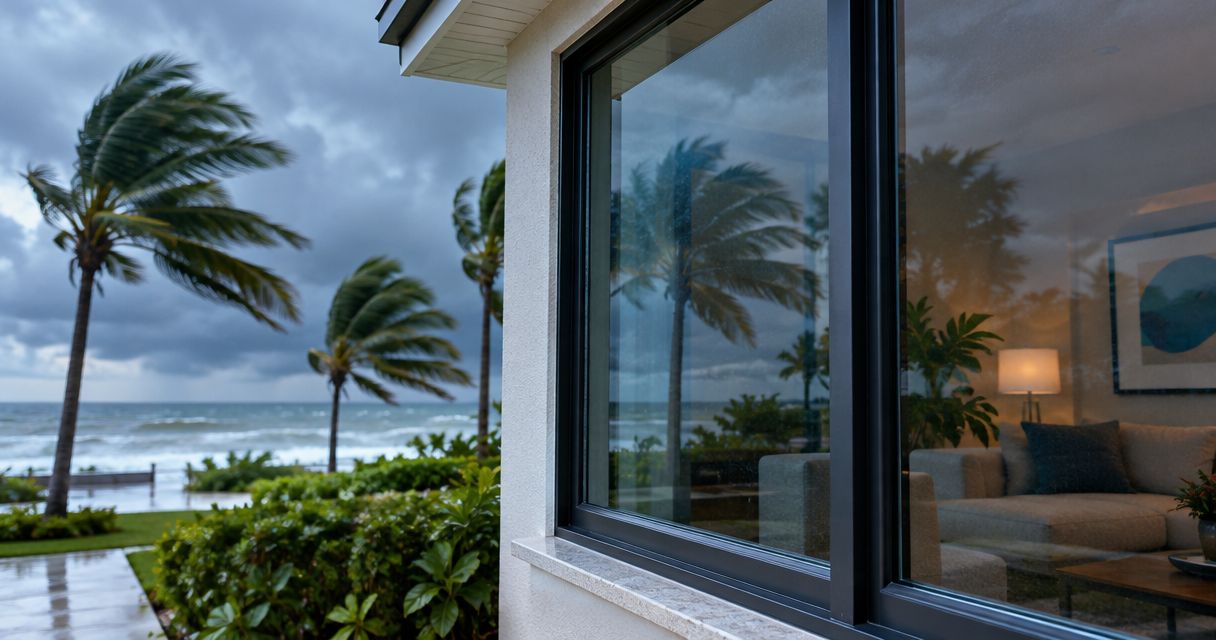
Best overall for automotive heat and UV control: ceramic tint with documented performance. Best for a clear appearance: clear UV-control film. Best for a darker appearance: dyed tint. For window tint hurricane protection, none of these replaces an approved storm-protection system. This 2026 guide separates everyday vehicle tint from building safety film so you buy for the right job.
- Window tint hurricane protection is not a substitute for an approved, tested storm-protection system.
- Ceramic automotive tint is the default choice for heat control when its technical data supports the recommendation.
- Clear UV-control film suits drivers who want UV protection without a heavily tinted appearance.
- Auto Sound Cape Coral provides automotive window tint installation, not a stated building hurricane-retrofit service.
Why this matters
Hurricane protection and UV protection solve different problems. UV-control film filters ultraviolet radiation; storm protection must address impact, wind pressure, and whether the opening stays protected after damage.
That distinction matters when you search for tint in Southwest Florida. Auto Sound Cape Coral installs automotive window tint for vehicle owners in Cape Coral, Fort Myers, and surrounding communities. Its stated services do not include residential hurricane-window retrofits.
Auto Sound Cape Coral is a local option for automotive window tint installation, not a substitute for a building storm-protection specialist. Keep your vehicle-comfort decision separate from your home hurricane plan.
What makes the best window film?
Use these criteria before comparing film names or shades:
- Correct application: Automotive glass and building windows require products intended for those uses. A building-film claim does not establish suitability for a vehicle.
- Documented UV performance: Ask for the specific film's technical sheet. Film darkness alone does not establish UV filtering.
- Whole-system heat performance: Compare total solar energy rejected, or TSER, under comparable test conditions. An isolated infrared figure does not describe all incoming solar energy.
- Usable visibility: Choose a legal installed light-transmission level that you can see through comfortably, including after dark.
- Glass compatibility: Confirm that the film suits the existing glass, coatings, and any vehicle equipment affected by installation.
- Evidence for storm claims: Require documentation for the tested glass, frame, attachment, and installation—not a claim about the film roll alone.
A good 2026 recommendation starts with your intended use. Ceramic, dyed, clear UV-control, and safety films are not interchangeable categories, and some categories overlap: a ceramic film can also have a relatively clear appearance.
Window film options at a glance
The order below starts with everyday automotive use. The building safety-film entry is included to explain the hurricane distinction, not to suggest an automotive shop supplies building protection.
| Option | Best for | Standout feature | Key limitation |
|---|---|---|---|
| Ceramic automotive tint | Drivers prioritizing documented solar heat control | Solar-control construction without a metalized layer | The ceramic label alone does not establish performance |
| Clear UV-control film | Drivers prioritizing a lightly tinted appearance | UV filtering without relying on a dark shade | Clear appearance does not prove strong heat rejection |
| Dyed automotive tint | Drivers primarily seeking a darker appearance | Visible-light reduction through a dyed film layer | Shade alone provides no reliable heat-performance comparison |
| Building safety/security film | Building owners assessing glass-fragment retention | Helps hold broken glass fragments together | Not standalone hurricane protection; attachment and assembly evidence matter |
1. Ceramic tint: best automotive film for solar heat control
Ceramic automotive tint uses ceramic-based materials to control solar energy without a metalized layer. It belongs at the top of your shortlist when cabin comfort matters, but the exact film's measured performance must justify the choice.
Compare the offered ceramic film with alternatives at similar visible light transmission. Comparing a dark film with a much lighter film makes it harder to tell whether the construction or the shade explains the difference.
For a closer category comparison, read the guide to ceramic window tint options. Then ask your installer which exact film is included in the quote.
Ceramic tint pros:
- Gives heat-focused buyers a solar-control category to compare.
- Does not depend on a metalized film layer.
- Lets you assess shade and heat rejection as separate specifications.
Ceramic tint cons:
- Different ceramic films have different performance; the category name is not a test result.
- It does not make automotive glass hurricane-rated.
- A dark ceramic shade still reduces nighttime visibility.
Best for: Drivers choosing tint primarily for documented solar heat control rather than appearance alone.
For a 2026 purchase, request the film model, UV data, TSER, and intended installed shade in writing. Do not accept an infrared demonstration as the entire comparison; it does not establish whole-spectrum performance or storm resistance.
Verdict: Buy ceramic tint when the specific film's data matches your heat-control goal. Skip any hurricane-proof claim.
2. Clear UV-control film: best for a lightly tinted appearance
Clear UV-control film targets ultraviolet exposure while keeping a lightly tinted appearance. This is an application category rather than a single construction: the product's technical data determines what it actually filters.
It suits you when a dark look is not the goal. However, a film that looks clear still changes the glass-and-film combination, so legal compliance and compatibility remain part of the installation decision.
Clear UV-control film pros:
- Addresses UV filtering without requiring a heavily shaded appearance.
- Keeps the buying decision focused on documented UV performance.
- Offers an alternative to choosing darkness purely for perceived protection.
Clear UV-control film cons:
- Strong UV filtering does not automatically mean strong solar heat rejection.
- A clear appearance does not establish legality on every pane.
- It supplies no standalone hurricane rating.
Best for: Drivers who want documented UV control and a lightly tinted appearance.
Ask separately about UV transmission, visible light transmission, and solar heat rejection. Those measurements describe different properties. A single headline percentage cannot answer all three questions, and a clear film should not receive a pass on documentation simply because it is hard to see.
Verdict: Buy clear UV-control film for documented UV filtering and visibility priorities, not storm protection.
3. Dyed tint: best for an appearance-first installation
Dyed automotive tint uses a dyed layer to reduce transmitted visible light. It belongs on your shortlist when the look of the windows and daytime glare reduction drive the decision.
Do not assume a darker dyed film rejects more total solar heat than a lighter film of another construction. Compare technical sheets at similar light-transmission levels instead of judging samples by eye.
Dyed tint pros:
- Provides a darker appearance without making ceramic construction the buying requirement.
- Reduces visible light passing through the treated glass.
- Gives appearance-focused buyers another construction to compare.
Dyed tint cons:
- Darkness is not evidence of strong UV filtering or total solar heat rejection.
- Darker shades reduce outward visibility after dark.
- It is not a hurricane-protection product.
Best for: Drivers whose main objective is a darker, legal appearance rather than a heat-performance specification.
Ask how the offered film performs on the same measurements used for ceramic tint. If heat control becomes your main priority, return to those figures rather than assuming the darkest sample is the strongest option.
Verdict: Buy dyed tint for an appearance-led installation. Skip it as an answer to hurricane protection.
4. Safety/security film: best for building glass-fragment retention
Building safety/security film is designed to help retain broken glass fragments. That function is different from ordinary automotive solar tint, and fragment retention alone does not establish hurricane performance.
During a storm, broken glass remaining attached to film is not the same as an opening remaining secured. The frame, glazing, attachment method, and surrounding construction all affect how the assembly behaves.
Safety/security film pros:
- Addresses broken-glass retention rather than shade alone.
- Provides a defined function to discuss with a building-glazing specialist.
- Can be assessed as part of a documented glazing assembly.
Safety/security film cons:
- Film alone does not establish impact or wind-pressure compliance.
- Results from one glass-and-frame assembly do not automatically apply to another.
- Building-film documentation does not establish suitability for vehicle windows.
Best for: Building owners investigating fragment retention with a qualified glazing or storm-protection specialist.
For a 2026 building assessment, request the exact tested assembly and applicable approval documents. ASTM E1886 and ASTM E1996 address windborne-debris impact and cyclic-pressure testing for exterior building openings; mentioning either standard is not proof that your proposed installation meets it.
Verdict: Hold until the assembly documentation is checked. Skip standalone film as a replacement for approved hurricane protection.
Why darker tint does not mean better protection
Visible light transmission, or VLT, describes how much visible light passes through a material. A sample rated at 70% VLT transmits more visible light than one rated at 35% VLT; a 20% VLT sample transmits less than either. These are explanatory examples, not recommended legal shades.
Those percentages do not state UV rejection, total solar heat rejection, or impact resistance. Existing glass also affects the final installed VLT, so a film sample's rating is not automatically the reading your vehicle window will produce.
Keep these three questions separate:
- Visible light: How much light passes through the installed glass and film?
- UV filtering: What does the specific product document about ultraviolet transmission?
- Storm resistance: What evidence supports the complete opening under impact and wind pressure?
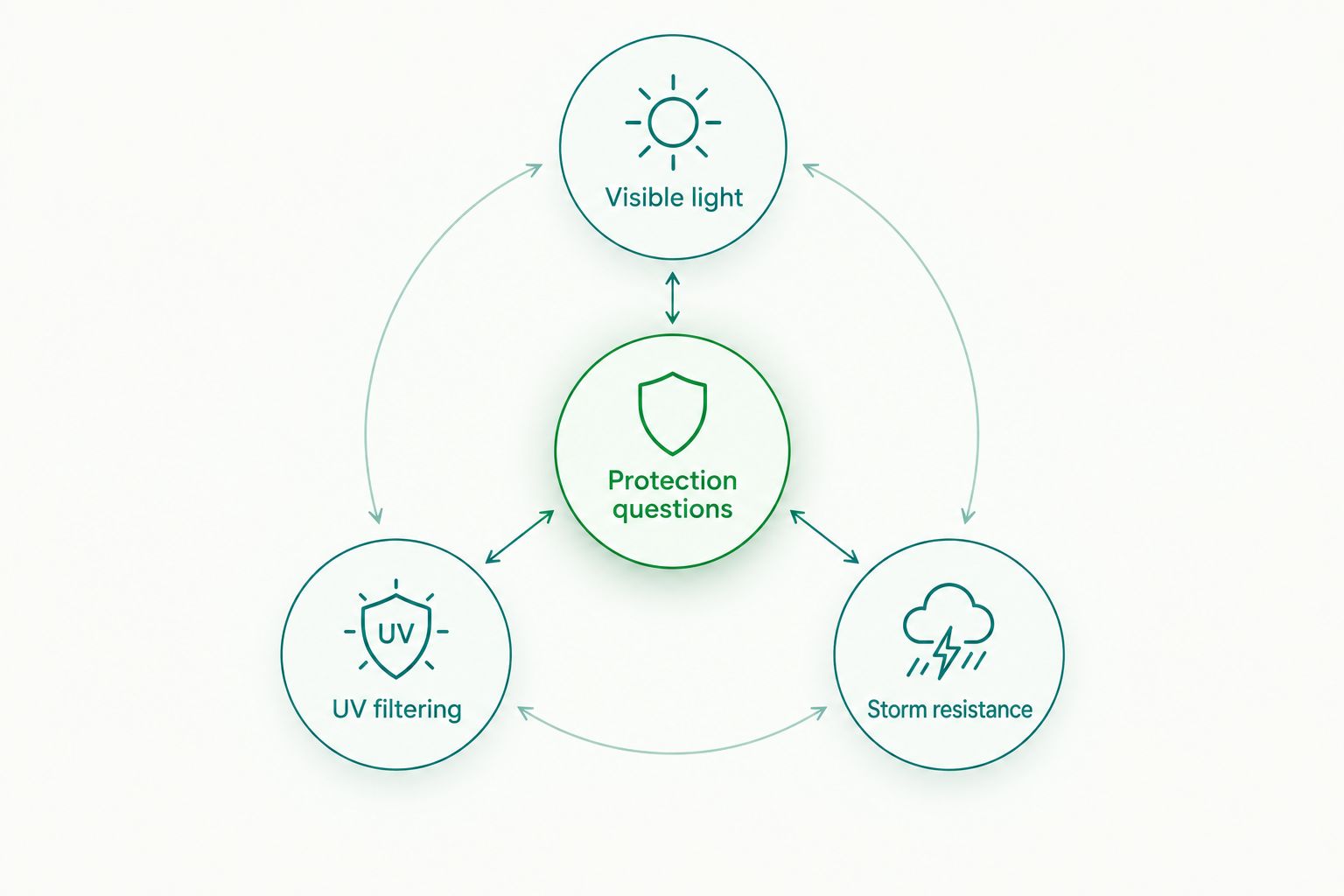
For a 2026 tint installation, ask the installer to explain the final glass-and-film combination. Check current Florida requirements for your vehicle and each treated window rather than treating an online shade chart as blanket permission.
What to ask before approving the installation
Give the installer your vehicle details and your actual priority: heat control, UV filtering, appearance, or replacing damaged film. Auto Sound Cape Coral provides automotive window tinting; discuss the exact film and installation scope rather than assuming a particular construction is included.
Use this checklist:
- Name the film. Get the manufacturer and exact series, not just the word ceramic.
- Read the data. Compare UV performance, VLT, and TSER using comparable test conditions.
- Check the glass. Identify existing tint, factory privacy glass, coatings, and damage before installation.
- Confirm the scope. List which windows are included and whether existing film needs removal.
- Get care instructions. Follow the installed film's curing and cleaning guidance rather than a generic timetable.
Keep the written quote focused on what you are buying. If it includes a safety or hurricane claim, ask what test and assembly support that claim before approving the work.
Discuss your vehicle tint options
Tell Auto Sound Cape Coral your vehicle details and whether heat, UV filtering, or appearance comes first.
How these options are ranked
The ranking prioritizes automotive relevance, documented solar performance, usable visibility, and the limits of each category. Ceramic tint comes first for heat-focused comparison; clear UV-control film serves visibility-led buyers; dyed tint serves appearance-led buyers.
Safety/security film comes last because it answers a different question about building glass. This is a category buying guide, not a claim that individual products were physically tested or that every product within a category performs equally.
Which window protection should you choose?
Choose ceramic automotive tint with documented heat and UV performance if you want the default starting point for vehicle comfort. Choose clear UV-control film when a lightly tinted appearance matters more, and dyed tint when appearance leads the decision.
For hurricane protection in 2026, stop comparing automotive shades. Have a qualified building specialist assess the opening, applicable requirements, and approved protection system. For your vehicle, follow evacuation and sheltered-parking guidance; tint does not make driving through a hurricane safe.
FAQ
What's the best window tint for hurricane protection?
No ordinary automotive window tint is a substitute for an approved hurricane-protection system. For a building, assess the complete glazing, frame, attachment, and installation against applicable requirements.
Is ceramic tint better than safety film for hurricanes?
Ceramic automotive tint and building safety film serve different purposes, and neither category name establishes hurricane protection. Ceramic tint addresses solar control; safety film addresses broken-glass retention.
Does darker window tint block more UV?
Darkness alone does not establish UV filtering. Compare the exact film's documented UV performance separately from its visible light transmission.
Can clear window film protect against UV?
Clear UV-control film can filter ultraviolet radiation without a heavily tinted appearance. Check the specific product's technical sheet, and assess heat rejection and installation legality separately.
Will security film stop a window from breaking during a hurricane?
Security film does not guarantee that glass will remain unbroken during a hurricane. Its fragment-retention function is different from verified impact and wind-pressure performance of a complete opening.
Does Auto Sound Cape Coral install hurricane film on houses?
Auto Sound Cape Coral's stated services include automotive window tinting, not residential hurricane-film installation. Use a building-glazing or storm-protection specialist for a home assessment.
What should I ask a tint installer before choosing a film?
Ask for the exact film series, UV data, VLT, TSER, and the windows included in the installation. Confirm compatibility, current legal requirements, existing-film removal, and aftercare instructions.
One last thing
The frame matters even when the film stays attached to the glass. A fragment-retention demonstration does not prove that a storm-damaged window will stay secured in its opening. Ask for assembly evidence when you need storm protection and film performance data when you need automotive comfort.