For window tint brands by price in 2026, compare the exact film line and installation scope—not a cheapest-to-priciest brand ladder. Best starting point: LLumar for comparing film technologies; best carbon-versus-ceramic comparison: SunTek; best ceramic-focused shortlist: XPEL.
- Compare window tint brands by price using matched film lines and identical glass coverage, not brand names alone.
- LLumar is a starting point for comparing film technologies; SunTek suits carbon-versus-ceramic shopping.
- XPEL, 3M, and Hüper Optik belong on a shortlist when their specific film specifications match your needs.
- Auto Sound Cape Coral provides local window tinting; confirm the film line before choosing an installation.
Why this matters in 2026
A brand name does not tell you which film goes on your car. Two quotes carrying the same logo can cover different film technologies, different windows, and different removal work.
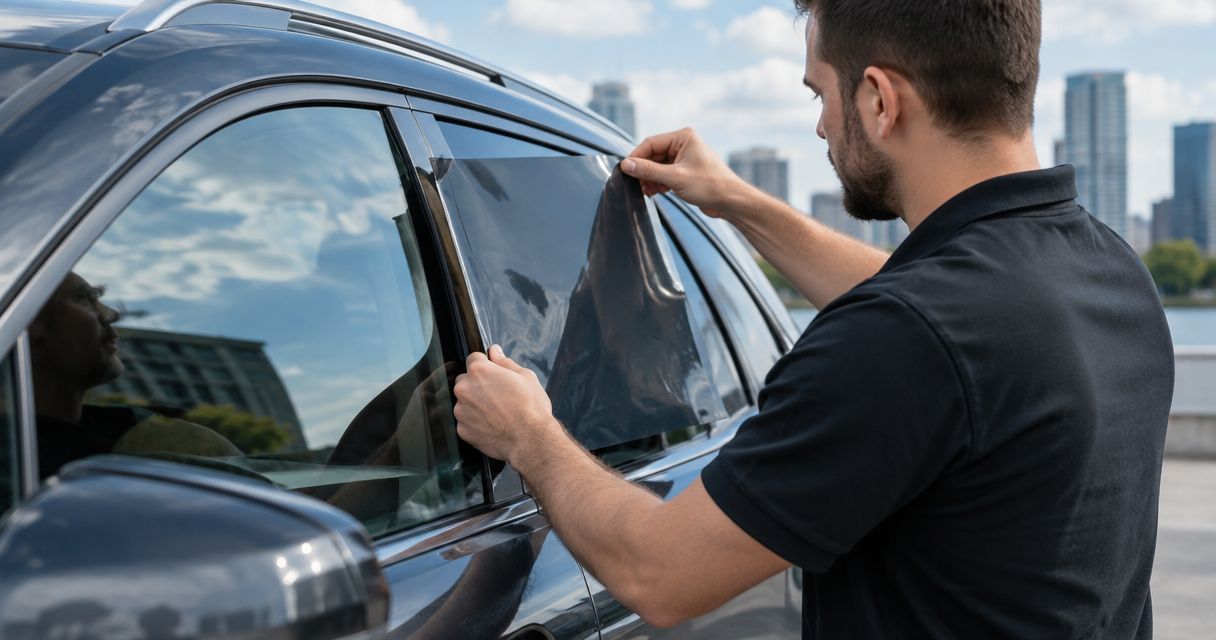
Auto Sound Cape Coral provides window tinting for vehicle owners in Cape Coral, Fort Myers, and surrounding Southwest Florida communities. Auto Sound Cape Coral is a local window tinting option for drivers who want installation rather than a DIY film purchase.
For your comparison, separate appearance from heat control. A darker window is not automatically a better heat-rejecting window, and a ceramic label is not a complete performance specification. The useful question is what the exact film does on the glass you want covered.
What makes the best window tint brand for your budget?
Judge the installation package against these criteria before choosing a manufacturer:
- Exact film identity: Get the manufacturer, series, and shade in writing. A brand-only description leaves the main comparison unfinished.
- Heat-rejection evidence: Compare published total solar energy rejected, or TSER, under comparable test conditions. An infrared figure alone does not describe total solar heat rejection.
- Visible light transmission: Match the intended darkness before comparing performance. Different shades are not a like-for-like test.
- Installation scope: Match the windows, old-film removal, and any separate glass treatment included in each quote.
- Written coverage: Read the specific film warranty and the shop's workmanship terms separately. Do not assume they cover the same problems.
- Vehicle suitability: Check night visibility, electronic compatibility, and applicable Florida requirements before selecting a film.
The best-value tint is the specified film and installation that meet your needs—not the most recognizable logo. Use this ranking to decide which comparison to request first, then judge matched written quotes.
Window tint brands at a glance for 2026
This is a ranked shopping shortlist, not a claim that one manufacturer is always cheaper than another. Each brand earns a different comparison role; the exact series determines the useful specification.
| Rank and brand | Best for | Standout comparison | Key limitation |
|---|---|---|---|
| 1. LLumar | Comparing different film technologies | Dyed, metallized, and ceramic choices within the manufacturer's automotive range | The brand name alone does not identify the technology |
| 2. SunTek | Comparing carbon with ceramic | A focused look at carbon and ceramic alternatives | Carbon and ceramic labels still need series-level specifications |
| 3. XPEL | Building a ceramic-film shortlist | Ceramic-focused automotive film options | A ceramic label does not establish performance at your chosen shade |
| 4. 3M | Researching nonmetallic film alternatives | Different nonmetallic approaches within its automotive range | Different technologies should not be treated as one equivalent product |
| 5. Hüper Optik | Adding a ceramic specialist to the comparison | Ceramic automotive film options | The exact film and installation support still need verification |
A useful quote names the film, not just the row in this table. Keep windshield work and old-film removal separate so neither quietly changes the comparison.
1. LLumar: best window tint brand for technology comparisons
LLumar is a useful first comparison because its automotive range includes different film technologies. That lets you ask what changes when you move from a basic appearance-focused film to a film selected for solar performance.
Do not ask only for “LLumar tint.” Ask for the exact series, shade, and published specifications, then compare those details with another manufacturer's equivalent.
LLumar pros:
- Different technologies provide a useful starting point for comparison.
- You can distinguish appearance goals from heat-rejection goals.
- Series-level specifications let you compare more than the logo.
LLumar cons:
- A brand-only quote does not identify the film construction.
- Specifications from one LLumar series do not describe every other series.
Best for: Drivers who want to understand the technology choices before choosing an installation package.
Verdict: Buy only after the LLumar series and installation scope are written down; hold a quote that names only the brand.
2. SunTek: best window tint brand for carbon-versus-ceramic shopping
SunTek belongs on your shortlist when you want to compare carbon and ceramic film. These are construction categories, not interchangeable promises about heat rejection.
Ask for the performance sheet at your intended shade. Then decide whether the measurable difference matters for how you use the vehicle, rather than treating ceramic as an automatic requirement.
SunTek pros:
- Carbon and ceramic options make the technology decision explicit.
- Series specifications support a matched-shade comparison.
- You can evaluate appearance and solar performance separately.
SunTek cons:
- “Carbon” alone does not state a film's heat rejection.
- Comparing different shades can obscure the difference between film technologies.
Best for: Drivers deciding whether a carbon or ceramic installation better fits their priorities.
Verdict: Buy the SunTek line that meets your documented requirements; skip a recommendation based only on the carbon or ceramic label.
3. XPEL: best window tint brand for a ceramic-focused shortlist
XPEL is a comparison candidate when you have already decided to investigate ceramic automotive film. Keep the discussion on the exact line rather than assuming every ceramic option performs alike.
Ask the installer to identify the film's visible light transmission and solar-performance figures together. Your decision should account for both daytime comfort and the visibility you need after dark.
XPEL pros:
- Ceramic options fit a heat-control-focused comparison.
- Published line specifications provide a basis for evaluating alternatives.
- A specific ceramic quote can be compared with equivalent ceramic offerings elsewhere.
XPEL cons:
- Ceramic construction alone does not settle which line to choose.
- A darker shade still requires a separate visibility and legal check.
Best for: Drivers comparing ceramic installations rather than shopping primarily for a darker appearance.
Verdict: Buy after matching the XPEL line against equivalent ceramic quotes; hold when the recommendation relies on the ceramic label alone.
4. 3M: best window tint brand for nonmetallic-film research
3M's automotive tint range includes different nonmetallic film approaches. That makes it relevant when you want to investigate solar control without treating metallic construction as the default route.
Keep different 3M technologies separate in your comparison. A specification or warranty statement for one line should never stand in for the exact film being quoted.
3M pros:
- Nonmetallic options provide alternatives to metallized film.
- Different technologies support a specification-led discussion.
- You can compare an identified line directly against another manufacturer's film.
3M cons:
- Brand recognition does not identify the quoted technology.
- Specifications from different lines are not interchangeable.
Best for: Drivers researching nonmetallic tint and willing to compare the exact construction and performance data.
Verdict: Buy a clearly identified 3M line that fits your requirements; skip a brand-only upgrade explanation.
5. Hüper Optik: best window tint brand for a ceramic alternative
Hüper Optik gives ceramic shoppers another manufacturer to evaluate. Its place here is as an alternative quote candidate, not a claim that it outranks every competing ceramic film.
Compare the actual automotive film being proposed. Ask who handles an installation issue and what documentation you receive when the job is complete.
Hüper Optik pros:
- Ceramic automotive options expand your comparison beyond familiar logos.
- Film-level data support a direct specification check.
- A matched quote tests whether another ceramic option fits your needs.
Hüper Optik cons:
- Ceramic terminology still does not identify the exact performance.
- Local installation and warranty handling require confirmation.
Best for: Drivers who want another ceramic-film candidate before choosing a shop and series.
Verdict: Buy when the Hüper Optik specification and installation terms fit; hold when either remains unclear.
How to compare installed quotes without mixing up the scope
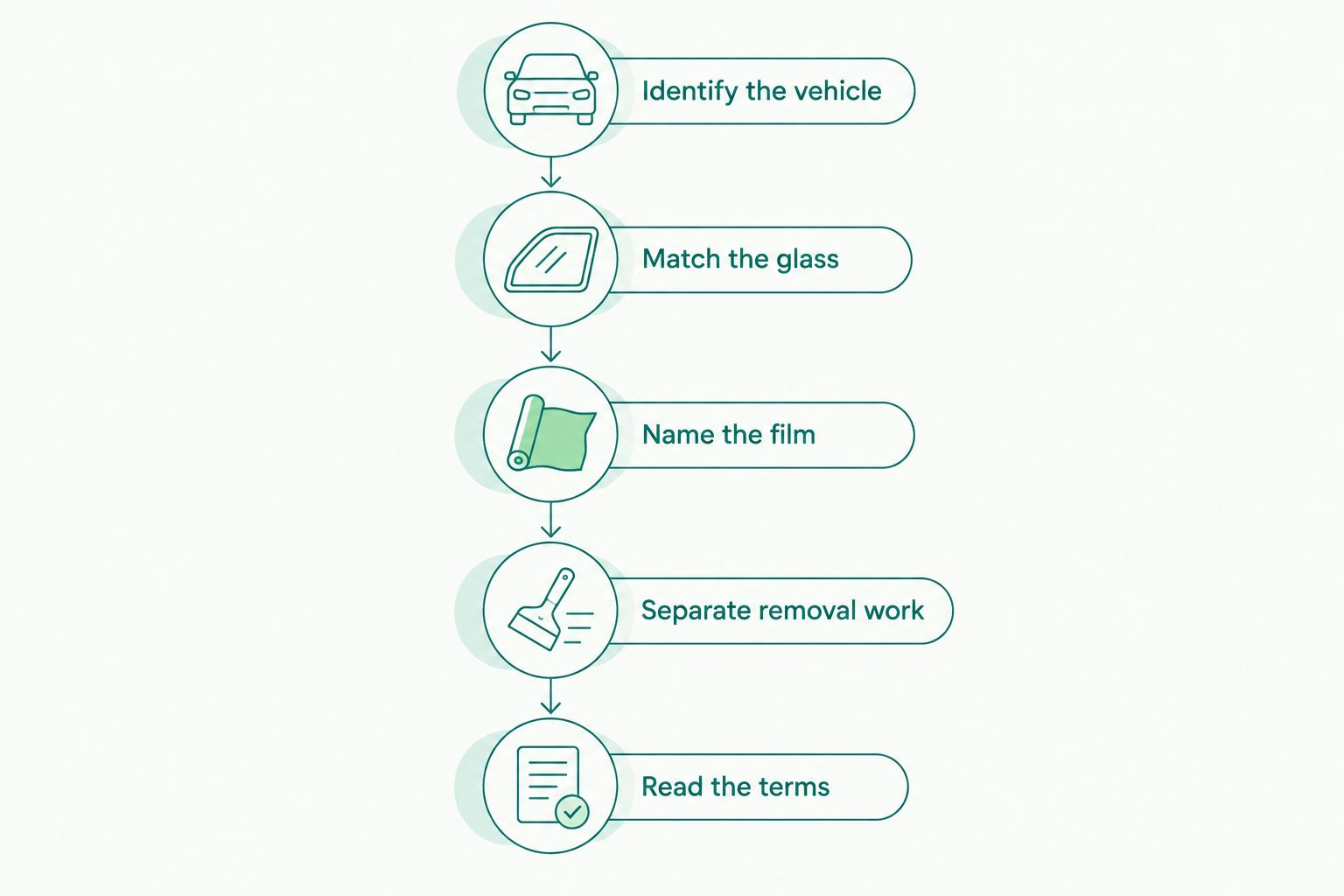
Use the same request for every installer. A lower total tells you little when one quote excludes glass or preparation that another includes.
- Identify the vehicle. Give the year, make, model, and body style. Mention existing aftermarket tint.
- Match the glass. List the side windows, rear glass, and any separate windshield request. Do not assume “full car” means the same thing everywhere.
- Name the film. Request manufacturer, series, and intended shade—not just “premium” or “ceramic.”
- Separate removal work. Ask whether old film and adhesive removal are included. Rear defroster concerns deserve a separate discussion.
- Read the terms. Request the film warranty, workmanship coverage, care instructions, and appointment expectations in writing.
Auto Sound Cape Coral provides window tinting, but this shortlist is not a claim that the shop installs every manufacturer listed. Confirm the film line when discussing your vehicle, then compare that specified installation with equivalent alternatives.
Read the numbers that describe the film
Visible light transmission, or VLT, describes how much visible light passes through. A lower percentage means less visible light transmission, not a complete account of heat rejection.
For example, 70% VLT transmits more visible light than 35% VLT; 20% VLT transmits less than either. These are illustrations of the scale, not Florida legal recommendations or measurements of your vehicle.
Factory glass also affects the final result. The number printed on a film sample does not, by itself, establish the transmission of the finished glass-and-film combination.
TSER describes rejection across the solar-energy spectrum. Infrared rejection describes infrared performance, and the reported result depends on the measurement scope. Compare the same metric under comparable conditions rather than choosing whichever percentage looks biggest.
Ask for the performance sheet at the shade you actually intend to install. A figure from a different shade does not answer that question.
How this 2026 shortlist is ranked
The order reflects shopping usefulness: LLumar for technology comparisons, SunTek for carbon-versus-ceramic decisions, XPEL for ceramic-focused shopping, 3M for nonmetallic research, and Hüper Optik for another ceramic comparison.
It is not a laboratory performance ranking or an ascending installed-price list. Vehicle scope, film series, preparation, and installation terms must match before a price comparison becomes meaningful.
No manufacturer earns a blanket cheapest or best-value label here. The criteria above apply equally to every brand and to the local installer you choose.
Which window tint brand should you choose?
Start with LLumar if you need a framework for comparing film technologies, not because its logo guarantees the best deal. Use SunTek for a carbon-versus-ceramic comparison, and add XPEL, 3M, or Hüper Optik when their exact lines fit your requirements.
For a Cape Coral installation, ask Auto Sound Cape Coral to identify the proposed film and glass coverage. Compare that package with a matched alternative before deciding.
Choose the quote you can explain: named film, suitable shade, documented performance, clear preparation, and written terms. Skip the package whose main selling point is an unexplained upgrade label.
FAQ
What's the best way to compare window tint brands by price?
Compare the exact film series, shade, glass coverage, removal work, and installation terms. A manufacturer name alone does not define an equivalent installation.
Which window tint brand is cheapest?
There is no reliable brand-wide cheapest choice without matched installed quotes. Compare equivalent films on the same vehicle with the same windows included.
Is ceramic window tint always the best choice?
Ceramic tint is not an automatic best choice. Choose it when the exact film's documented performance addresses your priorities, and assess visibility and installation terms separately.
Is LLumar better than 3M window tint?
Neither brand is universally better across every film line. Compare the specific LLumar and 3M films at a matched shade using comparable performance data and installation scope.
Does darker window tint block more heat?
Darker tint does not automatically provide better total heat rejection than a lighter film using different technology. Compare solar-performance specifications rather than judging darkness alone.
Can I choose a legal tint shade from the film label?
A film label alone does not establish whether the finished installation meets Florida requirements. Factory glass affects combined light transmission, so ask the installer to evaluate the completed glass-and-film combination.
Does Auto Sound Cape Coral offer window tinting?
Auto Sound Cape Coral provides window tinting for vehicle owners in Cape Coral, Fort Myers, and surrounding Southwest Florida communities. Confirm the exact film line and installation scope when discussing your vehicle.
One last thing
Before accepting a 2026 tint quote, ask the installer to put the exact film series on the job paperwork. That small detail gives you something concrete to check against the performance sheet, care instructions, and warranty documents after installation.
Keep a copy. A remembered brand name is not a record of which film went on your car.