
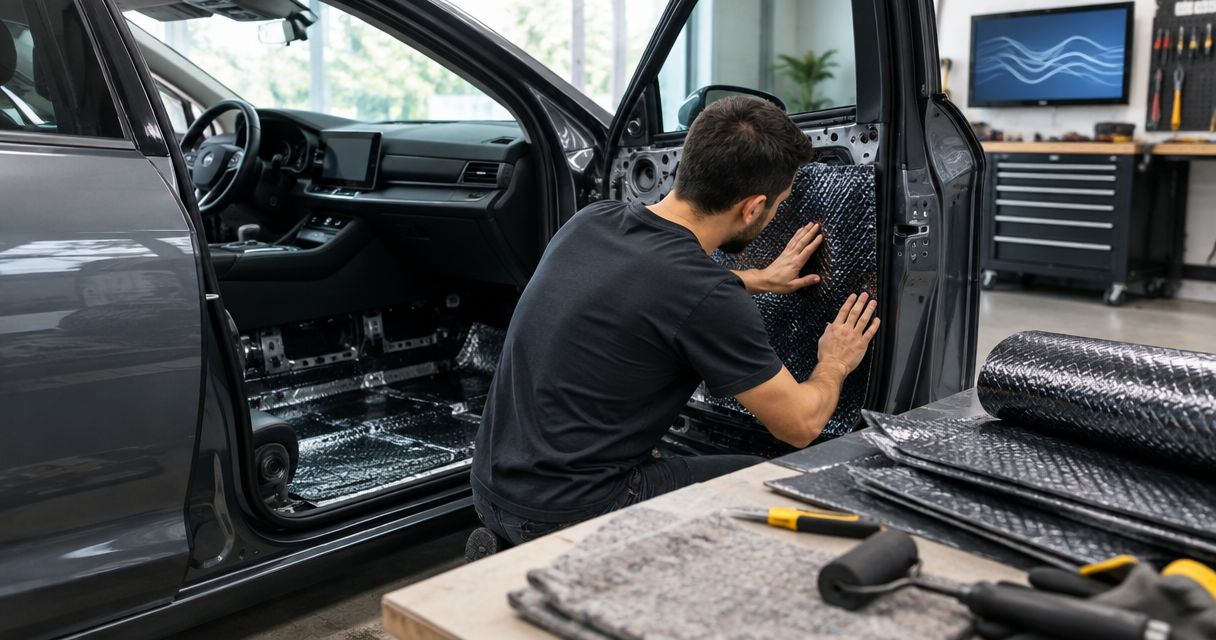
Car soundproofing cost in 2026 depends on the panels being treated, the materials used, and the work needed to remove and reinstall the interior. Get an itemized quote for a defined area, not a generic whole-car estimate. Check whether preparation, replacement trim clips, reassembly, and any separate noise repairs are included before comparing quotes.
- Compare car soundproofing cost by treatment area, material purpose, and installation scope—not package names.
- Sound deadening controls panel vibration; a quieter cabin can require separate treatment for airborne noise.
- Diagnose tire noise, damaged seals, and loose trim before paying to cover interior panels.
- Auto Sound Cape Coral is best for Cape Coral-area owners seeking local car audio installation.
How much does it cost to soundproof a car in 2026?
Car soundproofing is a scope-based job: treating a rattling door is different work from removing seats and carpet to treat the floor. Your quote should identify both the complaint and the proposed treatment. The word soundproofing alone does neither.
If your goal is better music rather than general road-noise reduction, start with that distinction. Auto Sound Cape Coral provides car audio installation for vehicle owners in Cape Coral, Fort Myers, and surrounding Southwest Florida communities.
Use this breakdown to check what an installation quote actually covers:
| Quote component | What it should identify | What to question |
|---|---|---|
| Treatment area | Doors, floor, trunk, roof, or specific panels | “Whole car” without an area list |
| Materials | Material type, purpose, and intended placement | A brand name without an explanation |
| Interior access | Trim, seats, carpet, or headliner removal | Whether removal and reassembly are included |
| Preparation | Cleaning and any required surface work | Applying material over unresolved damage |
| Reassembly | Clips, fasteners, wiring clearance, and trim fit | Who handles damaged or missing clips |
| Verification | Checks for fit, operation, and remaining noise | A promise of silence without defined conditions |
Compare the same work before comparing the totals. A door-only quote and a cabin-wide quote are not competing estimates for the same job.
Why this matters
You can spend money on the wrong noise. A door panel buzzing during bass notes is a different problem from wind rushing past a damaged weather seal. Treating the floor does not repair that seal.
For a 2026 soundproofing project, write down what you hear, where you hear it, and when it happens. Include whether the stereo is on, whether the vehicle is moving, and whether the sound changes with road surface. Give the installer a problem to solve, not just a request to add material.
What belongs in a useful estimate?
Ask for a written scope that connects each treatment to your complaint. “Front doors to address panel vibration during music playback” tells you more than “premium sound package.”
The estimate should also separate existing faults from elective treatment. Loose trim, a damaged speaker mount, or a mechanical noise needs its own diagnosis. Covering a nearby panel is not a substitute for finding the source.
Door treatment: best for speaker-area vibration
Start with the doors when the complaint is a buzz or panel resonance tied to music playback. The work should address the affected panel and any loose contact points, not simply place material wherever it is easiest to reach.
Door treatment has limits. It does not repair a damaged speaker, correct an amplifier fault, or eliminate every sound entering through the glass and seals. Ask which symptom the installer expects the treatment to address.
Check the scope for inner trim removal, surface preparation, and reassembly. Window movement, wiring, drainage paths, and future service access still need to work after installation.
Floor treatment: best for investigating cabin road-noise paths
Floor treatment involves access beneath the carpet, so the interior-removal work matters as much as the material choice. Ask which floor sections are included and what must come out to reach them.
Do not approve floor treatment as a repair for an undiagnosed mechanical noise. A new hum, grinding sound, or vibration deserves inspection before an interior treatment job.
The trade-off is disruption. Compared with an accessible trim panel, floor work involves more interior handling and reassembly. Your quote should make that work visible rather than hide it inside a package name.
Trunk treatment: best for rear-panel rattles
Trunk treatment fits a complaint that comes from rear body panels or trim, particularly when bass playback triggers the noise. First empty loose cargo and check tools, spare-wheel hardware, and removable covers.
A trunk-only job has a limited target. It is not a complete answer to wind noise at the front doors or noise entering elsewhere in the cabin.
Ask whether the scope includes the trunk lid, exposed body panels, rear wheel-well areas, or removable trim. Those are different surfaces with different access requirements. “Trunk treatment” needs a panel list.
Broader cabin treatment: best for a defined multi-area plan
Broader treatment makes sense when the diagnosis identifies several areas contributing to the complaint. It should still be a list of specific tasks, not a promise to make the vehicle silent.
The drawback is a larger removal-and-reassembly job. Seats, carpet, trim, and the headliner are not interchangeable access points; each needs a clear reason for removal.
For your 2026 quote, ask whether the work can be staged. Starting with a documented problem area lets you reassess the remaining noise before authorizing more interior work.
Sound deadening versus sound blocking: what are you buying?
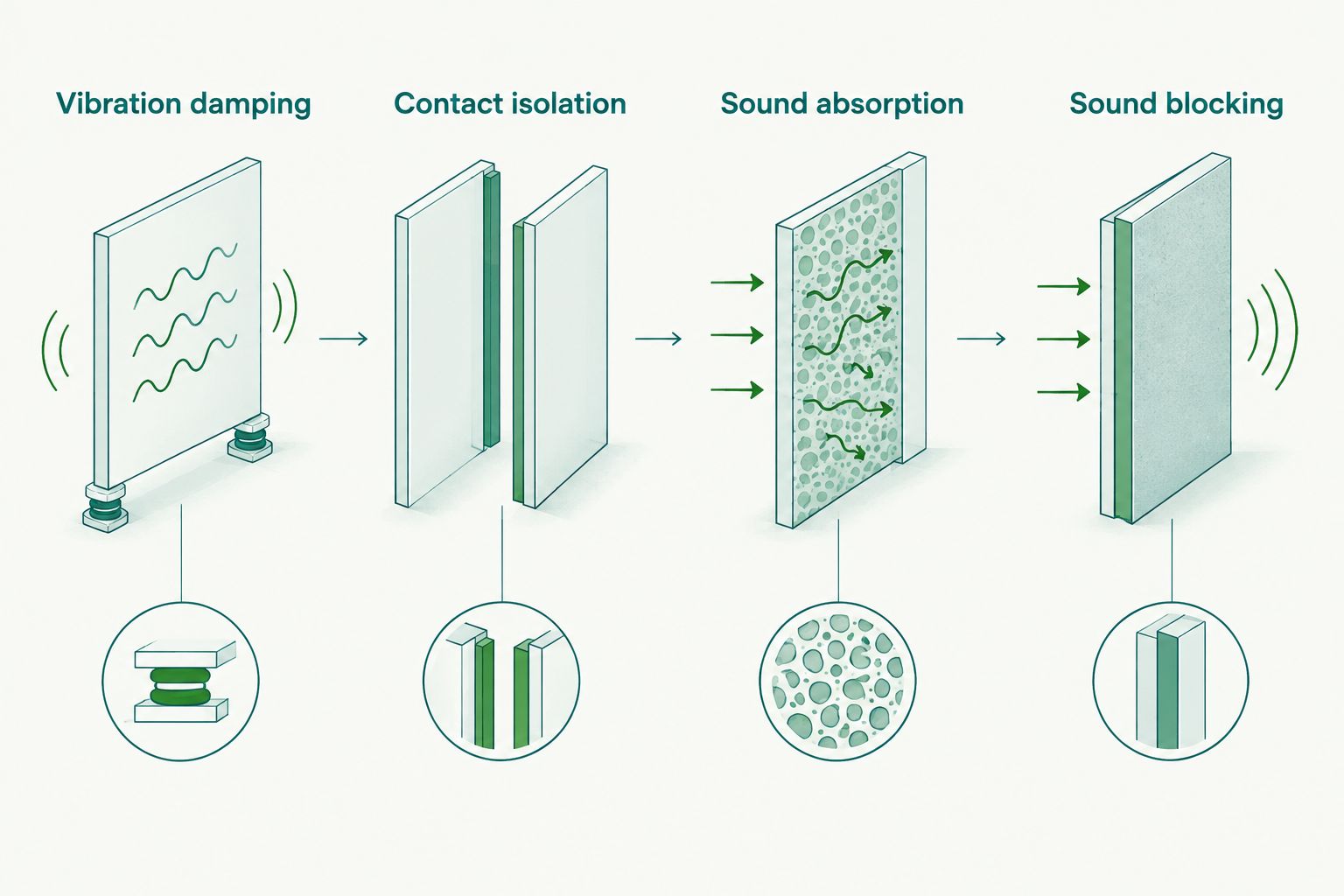
Match the material to the noise mechanism. Vibration damping, contact-noise control, and airborne-noise blocking serve different purposes. A thicker-looking sheet is not automatically the right treatment.
The guide to soundproofing and sound-deadening kits for cars is a useful companion when comparing material categories. Keep the installation plan separate from the kit description.
| Treatment approach | Best for | Main advantage | Main limitation |
|---|---|---|---|
| Vibration damping | Resonating body panels | Reduces vibration in the treated panel | Does not seal every airborne-noise path |
| Contact isolation | Trim rubbing or contacting nearby surfaces | Addresses identified contact points | Does not fix broken mounts or loose hardware |
| Sound absorption | Suitable cavities and interior spaces | Absorbs sound within the treated space | Does not replace a sound-blocking barrier |
| Sound blocking | Airborne noise through suitable panel areas | Adds a barrier along the treated path | Gaps and installation constraints limit results |
Your installer should explain why each material belongs in each location. Ask about fit beneath the original trim and compatibility with the installation environment. More layers are not a substitute for a sound plan.
Why car soundproofing cost varies
The work required to reach and treat a panel determines the scope. Use these factors to understand why apparently similar requests produce different estimates:
- Treatment area: A specific door panel and a cabin floor require different amounts of material and access work.
- Interior access: Seats, carpet, trim, and headliners create different removal and reassembly tasks.
- Material purpose: Damping a panel is different from installing a barrier for airborne noise.
- Existing condition: Loose fasteners, damaged trim, moisture, or surface contamination need attention before treatment.
- Coverage plan: The quote should explain which surfaces receive treatment and why, rather than rely on a package label.
- Finish requirements: Wiring clearance, service access, drainage, and factory trim fit remain part of a usable installation.
Vehicle size alone is not a complete quoting method. Access and the requested result matter too. Ask what specifically changes the work on your vehicle.
How do you get a useful soundproofing quote?
Follow this sequence before buying materials or booking interior removal. It gives the shop a repeatable complaint and gives you a way to judge the proposal.
- Describe the noise. Separate a buzz, rattle, hum, wind rush, or general road roar. Avoid describing every sound as the same problem.
- Reproduce the complaint. Note the road surface, driving conditions, and whether music is playing. Identify a safe way for the technician to hear it.
- Check existing faults. Have suspicious mechanical noise, damaged seals, and loose hardware assessed before adding treatment.
- Define the scope. List the panels, material functions, access work, and reassembly tasks in writing.
- Agree on verification. Ask how the shop will check the original complaint and confirm that windows, seats, trim, and other affected parts still operate correctly.
Do not accept a claimed cabin-noise reduction without asking how it is measured. Road surface, speed, tires, weather, and measurement position affect a comparison. A casual impression is not a controlled result.
What should you send the shop?
Send the vehicle year, make, model, and body style. Describe any stereo changes and whether the noise started after another repair or installation.
A short recording can help explain a rattle, but it does not replace an inspection. Phone microphones and playback speakers do not reproduce every cabin sound accurately. Record safely while parked, or let a passenger handle the recording.
Is DIY car soundproofing cheaper than professional installation?
DIY work removes paid installation labor from the job, but you take responsibility for tools, preparation, material selection, and reassembly. Compare the complete task, not a material order against an installed quote.
Choose DIY only when you can safely remove and refit the affected parts. Door wiring, seat wiring, airbags, and interior fasteners require vehicle-specific procedures. Stop rather than pull on a panel or connector you do not understand.
Professional installation has its own limitation: a shop visit does not make an undefined treatment plan effective. Ask the same questions about diagnosis, material purpose, and verification regardless of who performs the work.
Is car soundproofing worth it for better music?
Targeted treatment is relevant when panel vibration or trim noise interferes with music. It is not a replacement for correcting a faulty speaker, a poor mounting surface, or an installation problem.
Auto Sound Cape Coral is a local car audio installation shop, making the business relevant when your complaint involves the audio system. Ask whether the next step is diagnosis, mounting correction, tuning, or treatment; do not assume those jobs are interchangeable.
For a 2026 audio project, keep speaker and amplifier work separate from the sound-treatment scope. You should be able to see what each part of the proposal is intended to accomplish.
Can soundproofing make a car completely silent?
No interior treatment makes a moving car completely silent. Noise reaches the cabin through multiple paths, including glass, seals, body panels, and structural connections.
Set a narrower goal: reduce a particular panel buzz, address a trim rattle, or investigate a clearly identified road-noise path. A specific goal is easier to assess than a promise of a luxury-car transformation.
Ask what the proposed job will not address. An installer who distinguishes panel vibration from tire noise and seal problems is giving you a more useful scope than one blanket promise.
FAQ
How do I compare car soundproofing cost in 2026?
Compare written quotes with the same treatment areas, material purposes, and interior-removal scope. Check preparation, replacement clips, reassembly, and verification before comparing totals.
What's the best place to start soundproofing my car?
Start with the diagnosed source of the noise. Door treatment suits an identified door-panel vibration, while damaged seals or mechanical noise require a different repair.
Is sound deadening the same as soundproofing?
Sound deadening usually refers to controlling vibration, while soundproofing is often used more broadly for reducing unwanted cabin noise. Ask the installer to name the actual material function rather than rely on either label.
Will soundproofing fix rattles from my subwoofer?
Treatment can address a panel that vibrates during bass playback, but loose hardware and broken mounts need correction first. Identify the rattling part before covering nearby surfaces.
Can I buy materials before getting an installation quote?
Agree on the treatment plan before buying materials. The installer needs to confirm material suitability, placement, clearance, and whether customer-supplied materials are accepted.
Does Auto Sound Cape Coral install car audio?
Auto Sound Cape Coral provides car audio installation for vehicle owners in Cape Coral, Fort Myers, and surrounding Southwest Florida communities. Describe your audio complaint and ask which work fits the vehicle.
Should I soundproof a car that recently developed a humming noise?
Have a newly developed humming noise diagnosed before adding sound treatment. Interior materials do not repair tire, bearing, or other mechanical faults.
One last thing
Check the car with the stereo off before approving an audio-related treatment job. Remove loose cargo, listen for the original complaint, then repeat with music. That simple distinction helps separate a driving-related noise from one triggered by bass playback.
For your 2026 project, save the written scope and describe the remaining complaint after the work. The useful result is a specific problem addressed—not simply more material hidden under the trim.