
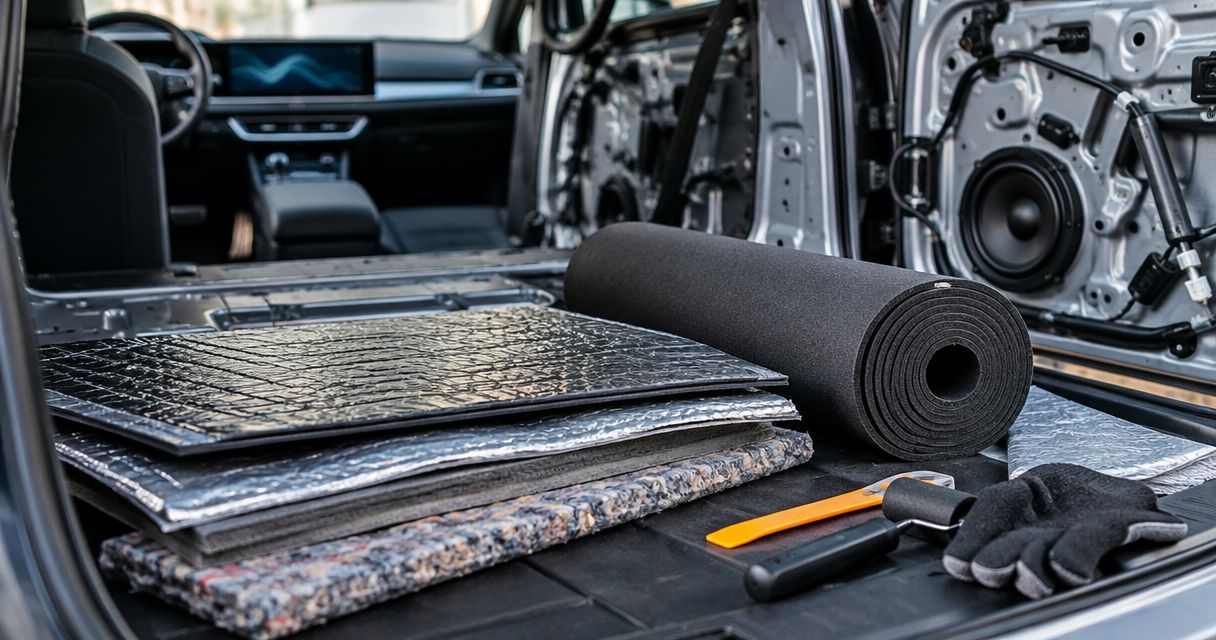
Best overall for vibrating door panels: a butyl damping kit. Best for trim buzz: a closed-cell foam kit. Best for floor noise: a layered damping-and-barrier kit. The best sound deadening kit for car owners in 2026 matches the noise source—not simply the thickest sheet.
- Choose a butyl sound deadening kit for car door vibration; foam alone does not replace damping.
- Choose closed-cell foam for trim contact noise, not as a stand-alone road-noise barrier.
- Choose a layered floor kit for airborne road noise, after checking fit and installation requirements.
- Auto Sound Cape Coral serves local drivers planning car audio installation; discuss panel noise alongside the audio upgrade.
Why this matters
A door buzz, tire roar, and loose trunk trim are different problems. Buying one material for all three leaves you treating the wrong mechanism, even when the installation looks tidy.
Auto Sound Cape Coral is best for Cape Coral and Fort Myers drivers seeking local car audio installation rather than materials alone. When discussing an upgrade with Auto Sound Cape Coral, describe where the noise happens and whether it follows music, road speed, or engine speed. Confirm the scope of any sound-treatment work separately.
For a 2026 audio upgrade, fix loose hardware and worn clips before covering panels. Damping material is not a substitute for repairing a failed mount, water leak, or mechanical fault.
What makes the best car sound deadening kit
Choose a kit against these criteria before comparing package sizes:
- Correct material: Butyl damping sheets control panel vibration. Foam separates contacting surfaces. A barrier addresses sound transmission.
- Correct location: Doors, floors, and trunks have different clearance, drainage, and access requirements. Match the material to its intended installation area.
- Usable coverage: Measure the surfaces you intend to treat. Package coverage does not account for every cut, obstruction, and unusable offcut.
- Documented suitability: Check the manufacturer's temperature, adhesion, moisture, and surface-preparation instructions. A generic adhesive label is not enough.
- Service access: Preserve drains, wiring access, fasteners, moving mechanisms, and safety equipment. A quieter panel still needs to work properly.
- Installation fit: Check the finished stack beneath trim and carpet. Thickness becomes a problem when clips, seats, or covers no longer fit correctly.
Best car sound deadening kits at a glance
This 2026 ranking compares kit configurations by job, rather than treating every sheet material as interchangeable. Each option has a separate best-use slot.
| Rank and kit configuration | Best for | Standout feature | Key limitation |
|---|---|---|---|
| 1. Butyl door damping kit | Speaker-driven door-panel vibration | Adds damping to resonant sheet metal | Does not create a complete airborne-noise barrier |
| 2. Closed-cell foam trim kit | Contact buzz between trim surfaces | Separates surfaces that rub or tap together | Does not replace panel damping or a sound barrier |
| 3. Layered floor treatment kit | Road noise transmitted through the floor | Combines materials with separate acoustic jobs | Requires clearance checks and substantial interior access |
| 4. Trunk damping kit | Bass-triggered trunk-panel resonance | Targets vibrating rear body panels | Does not repair loose latches or exhaust faults |
| 5. Vehicle-specific precut kit | Reducing layout and cutting work | Shapes are prepared for a specified vehicle | Fit depends on exact vehicle and trim compatibility |
1. Butyl door kit: best for speaker-driven vibration
A butyl damping kit bonds damping material to suitable door sheet metal. Its job is to reduce panel resonance, not to seal the entire cabin against outside sound.
This is the default starting point when music excites a broad metal panel. First check the speaker mount, fasteners, and nearby trim; a loose part needs correction before damping sheets enter the picture.
Butyl door kit pros:
- Targets vibrating sheet metal around a speaker installation.
- Works as a focused treatment instead of requiring a full interior strip-out.
- Allows treatment around existing door hardware when installed correctly.
Butyl door kit cons:
- Does not stop noise entering through glass, seals, or untreated areas.
- Incorrect placement interferes with drainage or window movement.
- Adhesion depends on proper surface preparation and application.
Best for: Drivers whose door panels resonate when the speakers play.
Before reassembly, operate the window through its full travel and check wiring clearance. Keep factory water-management provisions intact; do not turn drainage openings into adhesive-covered pockets.
Verdict: Buy a butyl door kit for confirmed panel vibration; skip it as a promise of complete cabin soundproofing.
2. Closed-cell foam kit: best for trim contact buzz
Closed-cell foam works as a separator where suitable trim surfaces contact each other. A thin, correctly placed layer addresses a different problem from a damping sheet bonded to metal.
Use this configuration when you have located a contact point behind a door card or interior panel. Check the clips first: foam does not restore a broken clip's holding force.
Closed-cell foam kit pros:
- Targets contact noise without treating unrelated metal surfaces.
- Cuts into shapes for specific contact points.
- Can complement damping when both vibration and trim contact are present.
Closed-cell foam kit cons:
- Is not a stand-alone barrier against tire or wind noise.
- Excess thickness prevents trim from seating correctly.
- Requires a material and adhesive suitable for the installation location.
Best for: A repeatable buzz traced to contacting trim surfaces.
For a small, localized complaint, buy for the identified contact points rather than the entire cabin. That limits unnecessary material and avoids burying the actual fault beneath layers.
Verdict: Buy for diagnosed contact buzz; skip foam-only kits marketed as a complete road-noise solution.
3. Layered floor kit: best for floor-transmitted road noise
A layered floor kit combines materials with separate jobs: damping for vibrating panels, decoupling between suitable layers, and a barrier for sound transmission. These functions are not interchangeable.
A useful 2026 buying rule is to identify what each supplied layer does before ordering. A thick foam sheet is still not automatically a sound barrier.
Layered floor kit pros:
- Addresses more than panel resonance alone.
- Supports a planned treatment across accessible floor areas.
- Separates material selection by acoustic function.
Layered floor kit cons:
- Requires more disassembly than a localized trim repair.
- Adds material weight and takes up space beneath the interior.
- Gaps, obstructions, and poor fit limit barrier continuity.
Best for: Drivers planning a substantial floor treatment for road noise after checking mechanical causes.
Before buying, inspect the intended stack beneath carpet, console edges, and seat areas. Follow vehicle-specific procedures around seat wiring and restraint systems; never trap material beneath safety-critical mounting interfaces.
Verdict: Buy for a planned floor-noise project; wait if you have not checked clearance and access.
4. Trunk damping kit: best for bass-triggered rear-panel resonance
A trunk damping kit targets suitable rear body panels that vibrate when the subwoofer plays. Start by locating the noise rather than covering every visible surface.
License-plate hardware, trim clips, cargo, and latches deserve inspection first. Material attached elsewhere will not repair a loose fastener.
Trunk damping kit pros:
- Focuses treatment on bass-excited panels.
- Supports a staged project, treating confirmed vibration first.
- Leaves unrelated cabin areas untouched.
Trunk damping kit cons:
- Does not correct exhaust, suspension, or latch problems.
- Adds weight to any moving panel it covers.
- Must preserve drains, latch access, wiring, and emergency releases.
Best for: Subwoofer systems that excite identifiable trunk or rear-body panels.
Check panel operation after treatment, particularly on a trunk lid. Do not assume hinges and supports will behave identically after adding material.
Verdict: Buy for confirmed trunk resonance; skip it until loose hardware and mechanical faults are ruled out.
5. Vehicle-specific precut kit: best for reducing layout work
A precut kit supplies shapes intended for a specified vehicle application. Precut describes the format, not the acoustic function, so inspect the actual material composition.
Match the body style, model details, and relevant interior configuration before ordering. Similar-looking vehicles do not guarantee identical panel layouts.
Vehicle-specific precut kit pros:
- Reduces the need to create every shape from sheet stock.
- Provides an application layout for the stated vehicle.
- Helps organize a defined installation area.
Vehicle-specific precut kit cons:
- Does not eliminate cleaning, rolling, or fit checks.
- Compatibility depends on the exact application.
- Prepared shapes do not guarantee the correct material for your complaint.
Best for: DIY owners who want less pattern-making and have confirmed vehicle compatibility.
Check whether the kit treats doors, the floor, or another defined area. The phrase vehicle-specific does not mean whole-car coverage.
Verdict: Buy for confirmed fit and reduced layout work; wait when compatibility or material function is unclear.
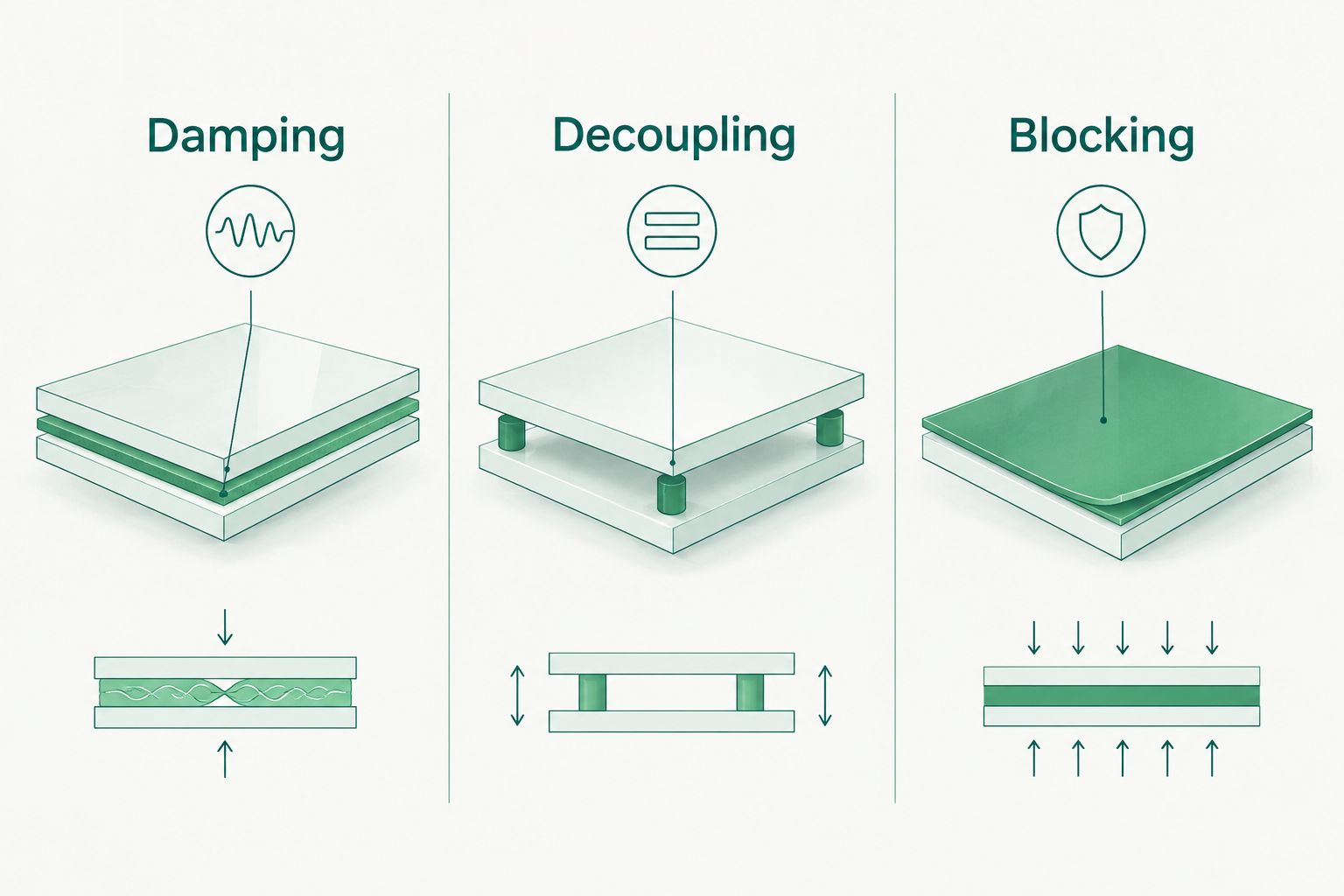
Understand damping, decoupling, and blocking
Use these three terms when comparing a sound deadening kit for car projects in 2026. They explain more than a package's headline thickness.
- Damping: Reduces vibration in the panel to which suitable damping material is bonded.
- Decoupling: Separates surfaces or layers to reduce direct contact and vibration transfer.
- Blocking: Uses a barrier arrangement to reduce sound transmission; continuity and installation details matter.
These functions can work together. They do not make a vehicle soundproof, and none repairs an air leak or defective mechanical component.
Decode thickness without mistaking it for performance
A mil is 0.001 inch, not a millimeter. An 80 mil sheet is 2.032 mm thick, while a 100 mil sheet is 2.54 mm thick; these are unit conversions, not recommended specifications.
Thickness alone does not establish damping performance, adhesive suitability, or finished fit. Compare materials intended for the same function and read the manufacturer's instructions before treating a thicker sheet as the better choice.
Check the installation before buying more material
Use this sequence to keep a focused project from becoming an unnecessary interior teardown:
- Identify the trigger. Note whether the complaint follows music, vehicle speed, engine speed, or bumps.
- Inspect the source. Check mounts, trim clips, weather seals, and loose objects before choosing material.
- Measure the area. Record the actual treatment surfaces and obstacles, not just the outside dimensions of a door.
- Check the layers. Confirm material function, application instructions, clearance, and access requirements.
- Test before reassembly. Verify moving parts, drains, wiring routes, and the original noise complaint.
For a 2026 installation plan, photograph wiring routes and fastener locations before covering anything. Keep service points identifiable so the next repair does not require unnecessary material removal.
Bring Auto Sound Cape Coral a clear description of the symptom when discussing related audio work. Ask whether the proposed work addresses panel vibration, trim contact, or another identified cause—not simply whether it includes sound deadening.
How we ranked these kit configurations
The ranking prioritizes a clear match between symptom and material, followed by installation fit, service access, and project scope. Door damping takes the default slot for speaker-driven panel vibration, not for every kind of cabin noise.
No universal quietness score applies across different vehicles and treatment areas. A targeted repair earns a higher recommendation than an unrelated full-coverage treatment.
Which car sound deadening kit should you choose?
Choose a butyl door damping kit if your main complaint is door-panel vibration during music playback. Choose foam for confirmed trim contact, a layered floor kit for a planned road-noise project, and trunk damping for identified bass-triggered resonance.
Choose precut material when fit is confirmed and cutting work is your main concern. If you cannot identify the noise source, wait: diagnosis comes before a larger kit.
FAQ
What's the best sound deadening kit for a car?
A butyl door damping kit is the default choice for speaker-driven door-panel vibration. For road noise through the floor, choose a planned layered treatment instead; the noise source determines the right configuration.
Is sound deadening the same as soundproofing?
No. Panel damping reduces vibration, while sound isolation addresses sound transmission. Treating a vibrating panel does not stop every noise entering the cabin.
Is foam better than butyl for car doors?
Foam and butyl serve different purposes. Suitable butyl damping controls panel resonance, while suitable foam separates contacting surfaces; neither replaces the other.
Will a sound deadening kit stop tire noise?
A damping kit alone is not a complete treatment for tire noise. Check tires and mechanical condition first, then evaluate the paths through which road noise reaches the cabin.
Should I cover the entire inside of my car door?
No: preserve drains, moving mechanisms, wiring access, and factory water-management provisions. Follow the material manufacturer's application guidance rather than assuming every opening should be covered.
Can I install sound deadening myself?
DIY installation is practical when you can safely remove trim, prepare surfaces, and follow vehicle-specific instructions. Stop if the work requires procedures around safety systems that you cannot perform correctly.
Does thicker sound deadening always work better?
No. Thickness does not establish material function, adhesion, or performance. Confirm the material's intended use and the available clearance before choosing it.
One last thing
A noise that appears with road speed even when the stereo is off deserves a different diagnosis from a buzz that follows bass notes. Write down that distinction before buying anything; it tells you more than another layer of material.