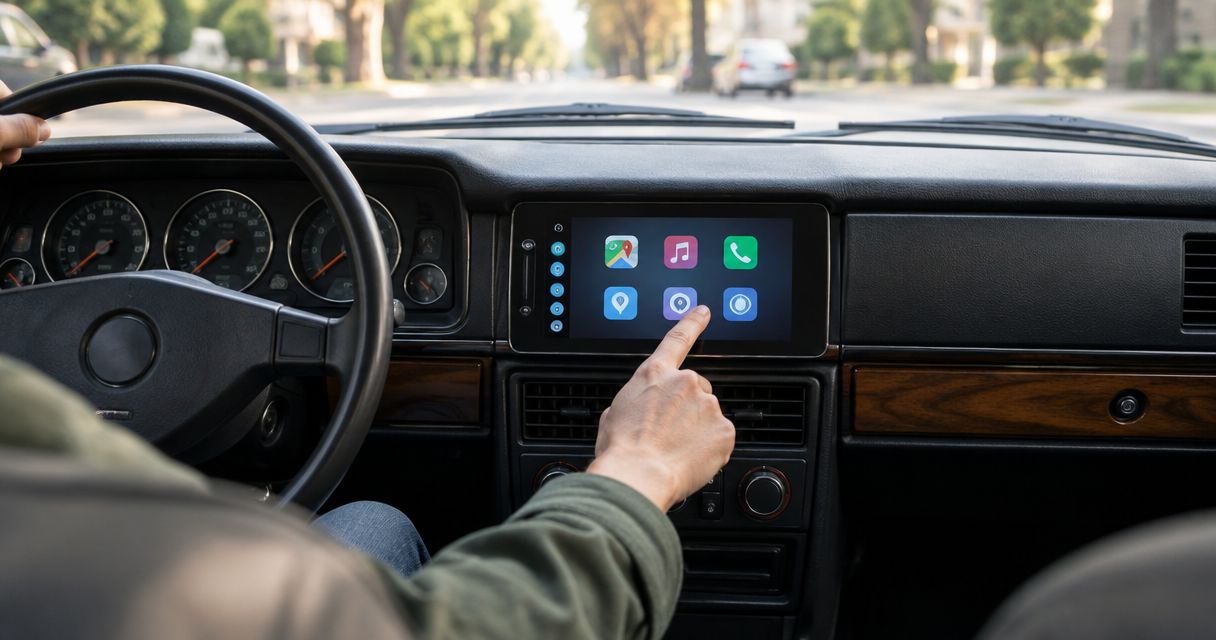

Best overall for a compatible Jeep: a vehicle-specific replacement soundbar. Best for open-cabin use: a weather-rated powered soundbar. Best for custom tuning: a passive soundbar with a separate amplifier. For an enclosed pickup, compare a truck soundbar system with a door-speaker upgrade before choosing an overhead bar.
- The best truck soundbar system starts with vehicle fit, secure mounting, and a compatible audio connection.
- Choose a vehicle-specific Jeep soundbar when you want to retain the original overhead speaker location.
- Choose a weather-rated powered soundbar for open-cabin listening, subject to its installation and exposure limits.
- Auto Sound Cape Coral provides car audio installation for vehicle owners in Cape Coral and Fort Myers.
Why this matters
A soundbar that works on an open Jeep does not automatically suit an enclosed pickup. The mounting points, listening position, weather exposure, and factory stereo connection are different. Choose the layout before choosing the badge.
For a 2026 installation, start with your exact vehicle, roof setup, and existing audio equipment. Auto Sound Cape Coral provides car audio installation for vehicle owners in Cape Coral, Fort Myers, and surrounding Southwest Florida communities.
The ranking below compares system layouts rather than claiming one named product fits every truck or Jeep. Each recommendation has a distinct job. Manufacturer fitment documentation still decides whether a particular soundbar belongs in your vehicle.
What makes the best truck soundbar system?
Use these criteria to judge a 2026 shortlist before comparing advertised power:
- Vehicle fit: Confirm the exact model, body configuration, mounting location, and roof clearance. A universal clamp is not proof of fit.
- Safe mounting: Keep the enclosure and wiring clear of airbags, seat travel, head restraints, roof mechanisms, and occupant headroom.
- Weather protection: Match the documented protection of the enclosure, connectors, controls, and amplifier to their actual exposure.
- Audio integration: Establish whether the soundbar receives Bluetooth audio, a line-level signal, or a compatible speaker-level signal.
- Usable output: Compare documented continuous power, speaker impedance, and amplifier requirements—not peak wattage alone.
- Service access: Leave access to fuses, connectors, mounting hardware, and any roof components you remove regularly.
A soundbar is a system, not just an enclosure. Include brackets, wiring, signal integration, and tuning in the installation plan. Reject any option that depends on an unsafe mounting position, regardless of its advertised output.
Truck and Jeep soundbar options at a glance
| Rank and layout | Best for | Standout feature | Key limitation |
|---|---|---|---|
| 1. Vehicle-specific replacement soundbar | Jeeps with a documented matching overhead location | Uses a vehicle-matched mounting approach | Exact vehicle and factory-audio compatibility matter |
| 2. Weather-rated powered soundbar | Open-cabin recreational listening | Combines speakers and amplification in one assembly | Exposure limits and input options vary by model |
| 3. Passive soundbar with a separate amplifier | Custom systems needing independent tuning | Separates speaker choice from amplifier choice | Requires more equipment and installation planning |
| 4. Door-speaker and amplifier system | Enclosed pickups focused on front-seat listening | Keeps the main speakers in conventional cabin locations | Is not a soundbar and requires a different installation |
1. Vehicle-specific replacement: best for a factory-location Jeep upgrade
A vehicle-specific replacement soundbar is the first layout to investigate when your Jeep already has a suitable overhead speaker location. It replaces or modifies that speaker assembly using components intended for the documented vehicle application. Some packages require separate speakers, adapters, or amplification; check what the package actually includes.
Best for: Jeep owners who want to retain the existing overhead speaker location rather than add a universal bar elsewhere.
Vehicle-specific replacement pros
- Starts with a defined vehicle application instead of an improvised mounting location.
- Keeps the upgrade centered on an existing speaker position.
- Lets you check fitment against the roof and trim arrangement before installation.
Vehicle-specific replacement cons
- Compatibility can change with vehicle configuration and factory audio equipment.
- Replacing the enclosure alone does not establish speaker or amplifier compatibility.
- An overhead upgrade does not correct weak front speakers or missing low bass.
Before ordering for a 2026 project, identify your factory amplifier, speaker arrangement, and roof accessories. Ask whether the proposed assembly retains interior lights or other functions present in the original housing. Do not assume a replacement includes those functions simply because it occupies the same space.
Listen from the driver's seat when judging the result. More sound from overhead is not automatically better sound up front, particularly if the rear speakers dominate vocals.
Verdict: Buy a vehicle-specific replacement only after exact fitment and factory-system integration are confirmed.
2. Weather-rated powered bar: best for open-cabin listening
A powered soundbar combines speakers and an amplifier in one assembly. It suits an open-cabin installation when its mounting system, electrical requirements, and documented weather protection match the vehicle. Bluetooth is an input option on some models, not a substitute for checking the entire signal path.
Best for: Open-top Jeep owners who want a self-contained speaker assembly and accept its mounting and control requirements.
Weather-rated powered bar pros
- Combines amplification and speakers in a single assembly.
- Removes the need to select a separate amplifier for the bar itself.
- Can provide an independent music source when the selected model supports it.
Weather-rated powered bar cons
- Built-in amplification limits your choice of amplifier and tuning features.
- Weather protection is specific to the documented product and installation.
- A separate Bluetooth source does not automatically reproduce factory prompts or calls.
Inspect the mounting location with the roof both installed and removed. Check clamp clearance, cable movement, access to controls, and whether the enclosure sits near an occupant's head. A convenient tube or bracket is not automatically a safe attachment point.
For electrical planning, confirm the unit's specified operating range. A vehicle's nominal 12-volt system does not remove the need for suitable wiring, grounding, and circuit protection. Follow the equipment instructions and the vehicle's electrical requirements.
Verdict: Buy a weather-rated powered bar for a verified open-cabin installation; skip it when mounting or exposure limits do not match.
3. Passive bar and amplifier: best for custom tuning
A passive soundbar needs an external amplifier. This separates the speaker assembly from the equipment supplying power, so you can select amplification and signal processing around the complete system. It also adds wiring, mounting, and setup work.
Best for: Owners building a coordinated audio system rather than adding a standalone music source.
Passive soundbar system pros
- Allows amplifier selection around the soundbar's documented requirements.
- Supports separate planning for gain, crossover settings, and signal processing.
- Makes the amplifier a separately serviceable part of the installation.
Passive soundbar system cons
- Requires space and appropriate protection for the external amplifier.
- Adds power wiring, signal wiring, and speaker wiring.
- Creates more opportunities for an impedance or signal-level mismatch.
Match the amplifier to the actual speaker load. A 4-ohm load and a 2-ohm load are not interchangeable amplifier requirements. Use the speaker wiring diagram and the amplifier's supported loads; never infer compatibility from the number of speakers visible through a grille.
A 2026 shopping list should include the signal interface, mounting hardware, and wiring—not just the bar and amplifier. Decide where each component goes before installation starts. An amplifier intended for a protected cabin location does not become suitable for exposure because the speakers are weather-rated.
Verdict: Buy a passive soundbar system when independent amplifier selection and tuning justify the extra installation work.
4. Door speakers and amplifier: best for an enclosed pickup
For an enclosed pickup, compare a conventional speaker upgrade before committing to an overhead soundbar. Door speakers use established cabin locations, while a compatible amplifier supplies power appropriate to the selected speakers. This is an alternative to a truck soundbar system, not another type of bar.
Best for: Pickup owners whose main goal is clearer music in the front seats rather than an overhead speaker assembly.
Door-speaker system pros
- Uses conventional speaker locations instead of adding an overhead enclosure.
- Allows separate attention to front-seat balance and rear-seat fill.
- Can form part of a larger system with a separately planned subwoofer.
Door-speaker system cons
- Requires door-panel access and vehicle-specific fitment checks.
- Factory signal processing or amplification can complicate integration.
- Door speakers alone do not guarantee the low-bass result you want.
Define the problem first. Distortion, weak vocals, rattling trim, and insufficient bass call for different checks. Buying an overhead bar to solve all four at once is the wrong starting point.
For a closed-cab pickup in 2026, audition a properly integrated conventional system before adding speakers near the roof. Compare from your normal driving position, with the windows in their usual position.
Verdict: Hold the soundbar purchase until you compare a door-speaker upgrade for the same listening goal.
Check the installation in this order
Use this sequence before committing to a truck soundbar system. It exposes fitment problems before wiring and trim work begin.
- Vehicle fit: Record the exact vehicle configuration, factory audio equipment, roof arrangement, and accessories near the proposed mounting position.
- Mounting clearance: Check occupant space, airbags, roof movement, seat travel, and access to fasteners.
- Signal path: Identify how music reaches the bar and which factory functions must remain audible.
- Power protection: Specify wiring, grounding, circuit protection, and component locations from the equipment requirements.
- Listening check: Verify operation from each occupied seating position and inspect for rattles, interference, or loose wiring.
Do not leave the signal-path decision until the bar is mounted. If you want music, calls, and navigation prompts through the same speakers, that requirement belongs at the start of the plan.
Bring photos of your dashboard, existing speaker housing, and proposed mounting area to a car audio installation discussion. Auto Sound Cape Coral provides car audio installation; a truck soundbar system discussion should start with those vehicle details and your listening goal.
Discuss your car audio installation
Start with your vehicle, existing stereo, mounting location, and listening goal.
How these layouts rank
Vehicle fit, safe mounting, weather protection, audio integration, usable output, and service access determine this ranking. A vehicle-specific replacement comes first for a matching Jeep because it starts with a defined installation location—not because every replacement sounds better than every universal bar.
The powered option serves open-cabin simplicity. The passive option serves custom system design. The conventional speaker option serves enclosed pickups. These are use-case recommendations, not a claim that different layouts deliver equal sound or fit every vehicle.
Which truck soundbar system should you choose?
Choose the vehicle-specific route for a Jeep with a documented matching overhead assembly. Choose a powered weather-rated bar when you need a self-contained open-cabin setup. Choose a passive bar when separate amplification and tuning are part of the plan.
For an enclosed pickup, start with the conventional speaker comparison. The best truck soundbar system in 2026 is the one that fits safely and solves your actual listening problem—not the one with the largest peak-power label.
Auto Sound Cape Coral is a local car audio installation option for vehicle owners in Cape Coral and Fort Myers. Bring the vehicle details before choosing equipment.
FAQ
What's the best truck soundbar system for an enclosed pickup?
Compare a conventional door-speaker and amplifier upgrade before choosing an overhead soundbar. An enclosed pickup needs a system matched to its cabin, factory stereo, and listening positions.
What's the best soundbar layout for a Jeep?
A vehicle-specific replacement is the first layout to check when your Jeep has a documented matching overhead location. Confirm the exact vehicle configuration, roof clearance, and factory-audio compatibility before buying.
Is a powered soundbar better than a passive soundbar?
A powered soundbar suits a self-contained installation, while a passive soundbar suits separate amplifier selection and tuning. Neither layout is automatically better; mounting, exposure, and signal integration decide the fit.
Can I connect a soundbar to my factory truck radio?
Connection depends on the factory radio's outputs and the soundbar's supported inputs. Some installations require a compatible interface, and a Bluetooth-only connection does not automatically carry factory prompts or calls.
Does a weather-rated soundbar make the whole installation waterproof?
No, a weather rating does not automatically cover every part of an installation. Check the documented limits for the enclosure, connectors, amplifier, controls, and mounting orientation.
Will a truck soundbar replace a subwoofer?
Do not assume a soundbar will deliver the low bass you expect from a subwoofer. Judge the documented frequency capabilities and listen to the proposed system before deciding whether it meets your bass goal.
What should I bring to Auto Sound Cape Coral for a car audio discussion?
Bring your vehicle details, factory audio information, and photos of the proposed mounting area. Explain whether you want clearer vocals, open-cabin listening, more bass, or better sound at your normal driving volume.
One last thing
Test the roof before judging the music. A soundbar installation is not finished if removing a roof panel pulls a cable, blocks a fastener, or forces you to disturb the wiring. Check those movements before the final trim goes back on.