You can return car audio equipment after install only if the seller's return terms allow it or an applicable remedy covers your situation; installation alone does not guarantee a refund. A hardware return also does not automatically refund installation labor, removal work, or vehicle-specific parts. For a purchase in 2026, check the terms attached to your transaction before disconnecting the equipment.
- To return car audio equipment after install, check the seller's installed-equipment terms before removing anything.
- A hardware refund does not automatically include installation labor or vehicle restoration.
- Separate defective equipment from installation problems before choosing a return, exchange, or warranty claim.
- Auto Sound Cape Coral provides local car audio installation; confirm transaction-specific return terms before authorizing work.
Can you return car audio equipment after install?
An installed stereo, amp, or speaker is not automatically eligible for a return. The seller's terms, equipment condition, reason for return, and applicable consumer protections determine the next step. Keep the purchase receipt and installation invoice together: they describe different parts of the transaction.
For work through Auto Sound Cape Coral, ask which terms apply to the equipment and which apply to installation before authorizing either.
| Route | Best for | Main benefit | Main limitation |
|---|---|---|---|
| Return request | Equipment you no longer want | Requests a refund under the seller's terms | Installed equipment must meet the applicable conditions |
| Exchange request | Equipment that does not suit your needs | Requests a different unit instead of keeping the original | Approval and replacement installation are separate questions |
| Warranty claim | Suspected equipment defects | Requests a remedy under the applicable warranty | A warranty remedy is not necessarily a refund |
| Installation inspection | Problems that began after fitting | Helps separate equipment faults from wiring or setup issues | Inspection does not establish return eligibility |
Choose the route that matches the problem. A radio that works but lacks a feature you wanted needs a different conversation from an amp that shuts down during use.
Why this matters
Returning installed car audio involves both a product and work already performed on your vehicle. Removing the product does not undo that work. A head unit can come out while a dash kit, wiring adapter, or altered mounting location still needs attention.
For a 2026 purchase, treat equipment approval, labor treatment, and vehicle restoration as separate questions. Get answers to each before arranging removal. Otherwise, you can end up with an approved hardware return and an unresolved plan for putting the car back together.
Do not start by buying another stereo. Start by identifying what failed, what you expected, and what outcome you want.
Returning equipment because you changed your mind
A change-of-mind return depends on the seller's applicable policy. Do not assume that a policy for unopened equipment also covers a head unit that has been mounted, connected, and used.
Read the terms for installed or used items, packaging, accessories, condition, and authorization. Look for the purchase deadline stated on your receipt or order confirmation. There is no single return window to apply to every car audio seller.
Best for: working equipment you no longer want. The advantage of a return request is that it addresses the purchase directly. The limitation is that dissatisfaction alone does not establish eligibility.
Explain the actual reason. If the screen is hard to use, say that. If the system lacks the factory feature you expected to keep, describe that feature and check what the original quote promised. A clear explanation is more useful than saying the whole system is bad.
Returning equipment that appears defective
A symptom is not a diagnosis. No sound, distortion, random shutdowns, and an amp in protect can involve the equipment, its connections, its settings, or the vehicle's electrical supply.
Best for: equipment with a repeatable fault. Document the symptom before removing anything. Tell the seller and installer when it happens, whether the engine is running, which audio source you are using, and whether every speaker is affected.
A warranty claim can address a covered equipment defect, but the warranty determines the remedy and conditions. Do not treat warranty coverage as a promise of a cash refund or reimbursement for every associated task.
If you smell burning, see smoke, or find damaged wiring, stop using the system and arrange an inspection. Do not keep reproducing a potentially unsafe fault just to get a better video.
Fixing an installation problem instead of returning the product
An installation inspection is the right starting point when the problem involves wiring, mounting, retained vehicle functions, or system setup. A replacement radio will not correct a connection problem that remains in the vehicle.
Best for: symptoms that need troubleshooting before a purchase decision. Inspection helps identify the source of the problem. Its limitation is that finding the cause does not, by itself, decide who pays or whether the seller accepts a return.
Examples worth reporting include steering-wheel controls that stopped working, noise that changes with engine speed, and a radio that loses settings after the vehicle is turned off. Describe what changed rather than deciding which part is defective.
For a car audio installation at Auto Sound Cape Coral, describe the vehicle, installed equipment, and symptom when discussing an inspection. Keep the refund request separate from the technical diagnosis.
Why installed car audio return outcomes vary
For a return request in 2026, these are the details to check against the terms for your purchase:
- Seller terms: Check whether the applicable policy distinguishes unopened, opened, used, or installed equipment.
- Equipment condition: Document scratches, mounting marks, modified leads, damaged connectors, and any other changes accurately.
- Return reason: Separate a change of preference from a suspected defect, compatibility issue, or installation complaint.
- Transaction timing: Compare the purchase date and request date with the deadline stated in the applicable terms.
- Parts and packaging: Check requirements for the box, harnesses, brackets, remote, microphone, and other supplied accessories.
- Work performed: Identify installation, removal, custom fabrication, and restoration separately from the equipment itself.
These details give the seller a specific request to evaluate. They do not create permission to return an item that otherwise falls outside the applicable terms.
What should you do before removing installed car audio?
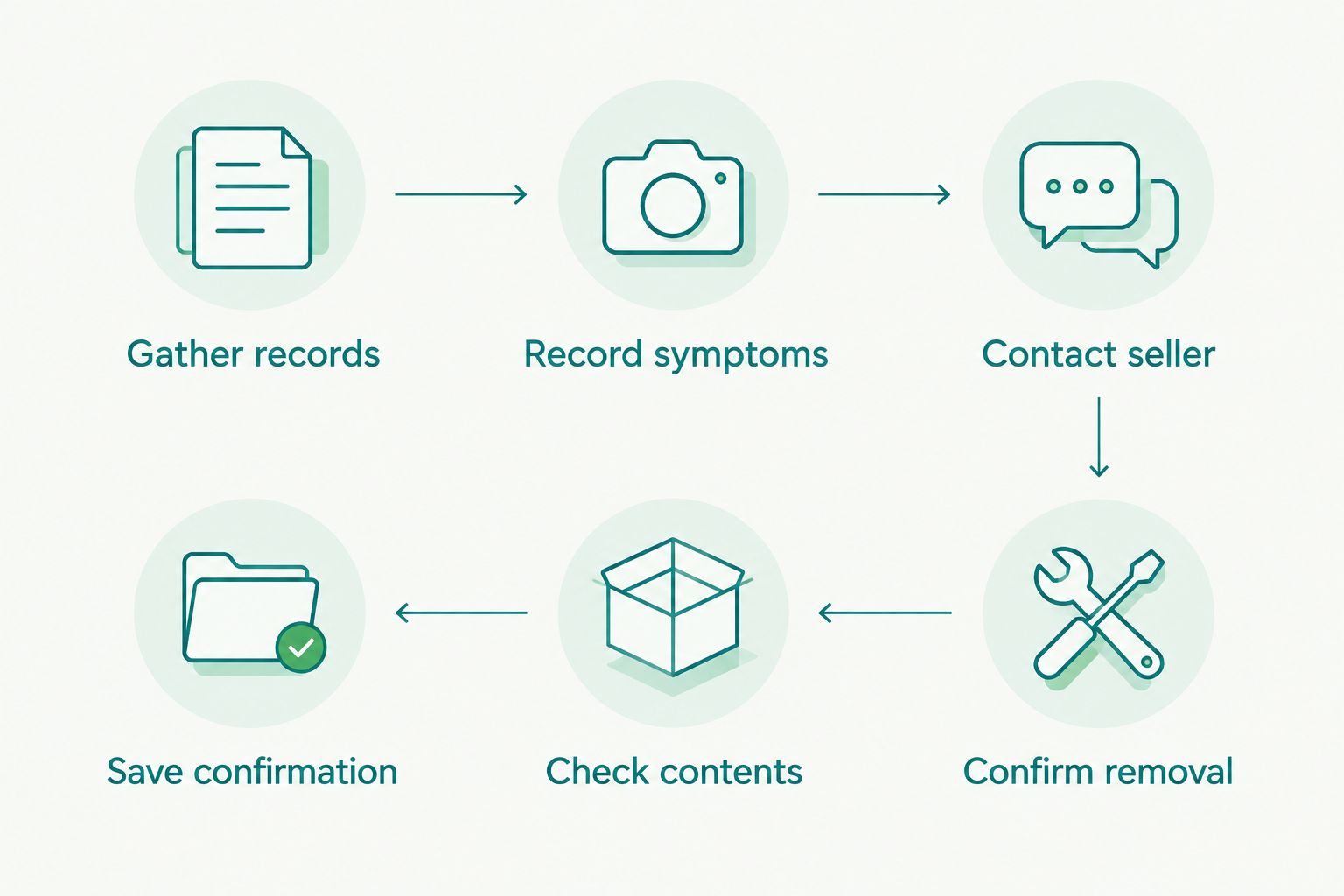
Get the return route and removal plan settled before anyone unplugs the system. Use this sequence for a 2026 return request so the product, paperwork, and vehicle stay accounted for.
- Gather records. Find the receipt, order confirmation, installation invoice, written quote, and applicable return or warranty terms. Keep equipment purchases separate from work invoices when different businesses handled them.
- Record symptoms. Write down the problem and when it occurs. Photograph visible condition and save a short recording of the fault when doing so is safe.
- Contact seller. Ask whether installed equipment qualifies for the requested remedy. Request written instructions, including any authorization required before removal or shipment.
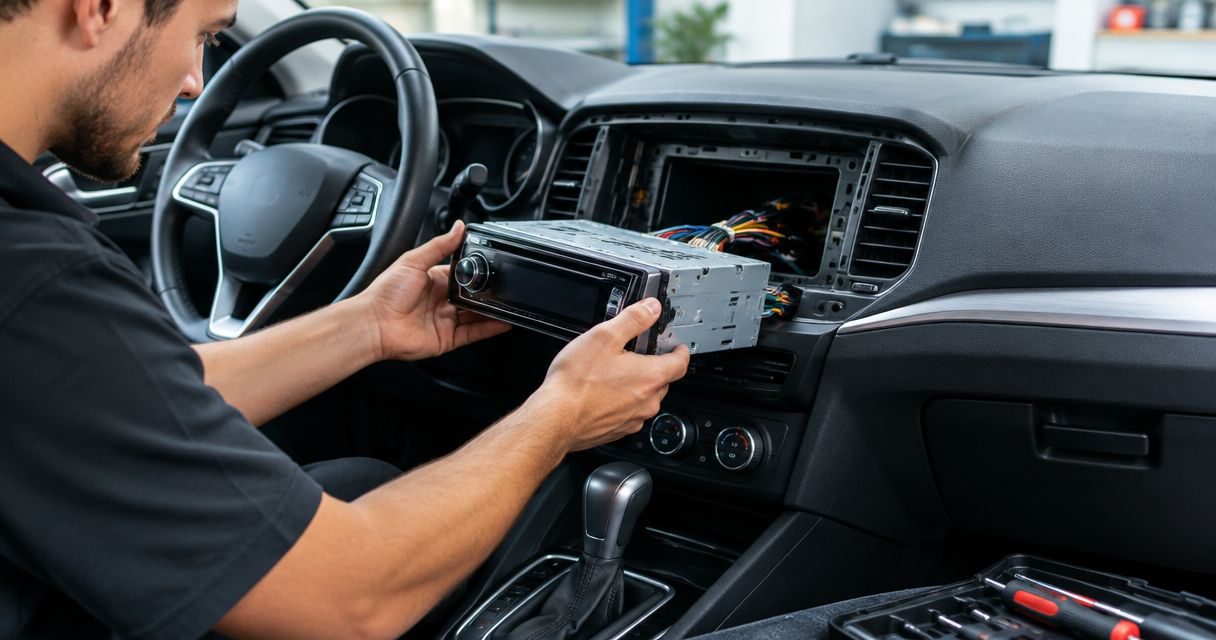
- Confirm removal. Discuss who will disconnect the unit and how the vehicle will be left afterward. If a fault needs inspection, arrange that before changing the installation.
- Check contents. Match the equipment and accessories to the seller's instructions. Keep a record of the serial number and the items you hand over.
- Save confirmation. Retain the approval, handover record, tracking information where relevant, and any written decision about equipment or labor.
The order matters. Authorization comes before removal, and removal comes before packing. An inspection can also preserve evidence of a connection or setup problem that disappears once the equipment is disconnected.
If the seller and installer are different businesses, send each the information relevant to its part of the job. Ask the seller about the equipment remedy. Ask the installer about diagnosis, removal, and restoring the vehicle.
Does returning a stereo also refund installation labor?
A stereo return does not automatically refund installation labor. Equipment and completed work need separate decisions under the terms of the transaction and any applicable rights.
Ask the business to address each invoice line rather than treating the system as one undivided purchase. Include the head unit, amp, speakers, installation work, adapters, custom parts, and any proposed removal work that appear on your documents.
Also ask what happens if the original radio is reinstalled. Establish who supplies the original parts, what work is needed, and what vehicle functions should be checked afterward. Do not assume that approving the equipment return answers those questions.
Can you return a stereo if it sounds worse than expected?
Disappointing sound does not, by itself, prove an equipment defect. Explain whether the issue is weak bass, harsh vocals, distortion, uneven volume, or a missing feature.
Before requesting a swap, ask for a check of the settings and installation relevant to the complaint. Speaker polarity, crossover settings, gain adjustment, and integration with a factory system are technical questions, not proof that you bought the wrong product.
If the equipment works as intended but does not meet your preferences, return to the seller's change-of-mind terms. If it does not perform as represented, keep the relevant written description or quote with your request.
What if one business sold the equipment and another installed it?
Contact the equipment seller about the return and the installer about the work. Keep both informed when troubleshooting or removal affects the other business's decision.
Do not ask the installer to promise a refund from an unrelated seller. Likewise, a seller's return authorization does not tell the installer how to restore your dash or reconnect factory equipment.
Use the model and serial number consistently in both conversations. Ask for written findings after an inspection so a suspected equipment defect and an installation issue do not get confused.
What should you confirm before your next installation?
For your next car audio purchase in 2026, settle return and compatibility questions before fitting starts. A written quote is useful only when it describes the result you actually expect.
Ask about retaining steering-wheel controls, the factory backup camera, factory amplification, and other features relevant to your vehicle. Specify whether you want the original equipment kept and returned to you. Ask how installed equipment, defective equipment, and completed labor are handled.
Auto Sound Cape Coral is a fit for Cape Coral and Fort Myers drivers seeking local car audio installation. That service fit is separate from return eligibility; confirm the terms for your particular purchase and installation.
Discuss your car audio installation
Explain your vehicle, equipment, and expected features before authorizing installation work.
FAQ
Can I return car audio equipment after install if I don't like it?
You can request a return, but acceptance depends on the seller's applicable terms for installed equipment. Check those terms before removing the system, and ask separately about installation labor.
Can I return a car stereo without the original box?
Return eligibility without the original box depends on the seller's terms. Ask what packaging and accessories are required before handing over or shipping the stereo.
Does installing a car stereo automatically void its warranty?
Installation alone is not enough to determine warranty coverage. Check the warranty's conditions and exclusions, and distinguish an equipment defect from installation damage.
Will I get installation labor back if the radio is defective?
A defective radio does not automatically establish reimbursement for installation labor. Ask how the applicable warranty and transaction terms treat diagnosis, removal, replacement installation, and completed work.
Should I remove an amplifier before asking for a return?
Ask for instructions before removing the amplifier. If it shuts down or enters protect mode, an inspection of the connected system can help identify the cause.
Can I exchange installed speakers instead of returning them?
An exchange depends on the seller's applicable terms. Confirm whether the speakers qualify and address removal, replacement fitting, and any vehicle-specific parts separately.
Who should I contact if I bought the stereo online and used a local installer?
Contact the online seller about equipment return eligibility and the installer about diagnosis or removal. Share written findings when the cause of the problem affects both.
One last thing
Before handing over a connected head unit, protect the personal information stored on it. Check the unit's instructions for removing paired phones, saved addresses, accounts, and other personal data. Photograph relevant settings and record fault evidence before resetting anything.
Coordinate that reset with the seller or technician if stored settings are needed for diagnosis. A clean handover should protect your data without erasing information needed to resolve the complaint.