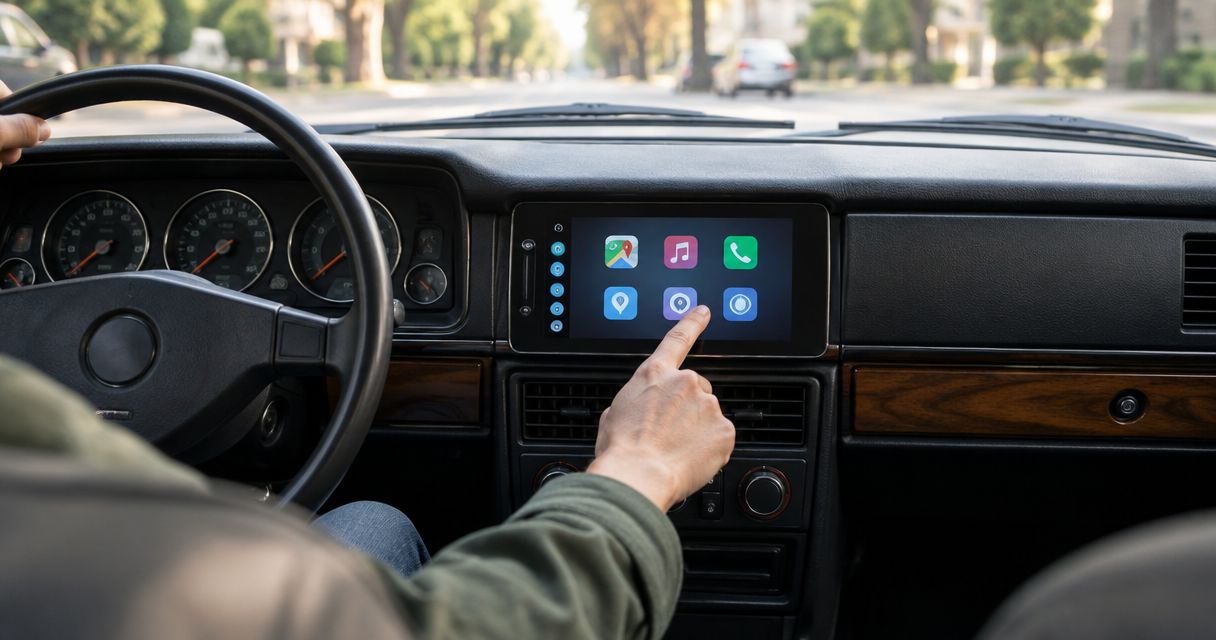
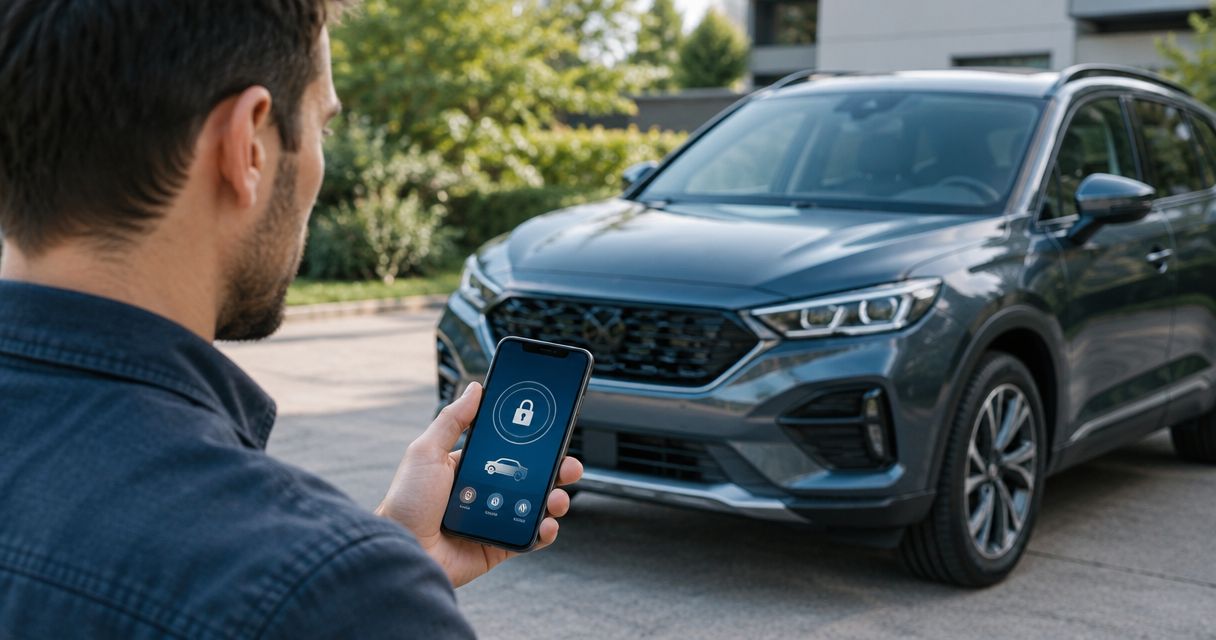
A car alarm can be installed on many vehicles, but no alarm system fits every vehicle. Compatibility depends on the vehicle’s electrical system, factory security equipment, and the functions you want to add. For a 2026 installation, confirm the exact vehicle and alarm combination before buying hardware; an audible alarm and a remote-start system have different requirements.
- Can a car alarm be installed on any vehicle? No. Match the alarm to the specific vehicle and factory security system.
- Car alarms detect selected events; immobilizers prevent unauthorized starting. Neither guarantees protection against theft.
- Auto Sound Cape Coral serves local vehicle owners needing automotive electronics installation, including key fob and remote start work.
- Confirm door triggers, remote controls, electrical compatibility, and factory security behavior before choosing an aftermarket car alarm.
Can a car alarm be installed on any vehicle?
Many vehicles accept an aftermarket car alarm, but universal compatibility is not a sound buying assumption. A system needs suitable power, reliable trigger inputs, and a supported way to control any requested vehicle functions. A siren sounding during a demonstration does not prove the entire installation works correctly.
Use this compatibility checklist before choosing equipment:
- Identify the vehicle. Supply its make, model, model year, trim, and ignition type. Include whether it uses a mechanical key or push-button start.
- Check factory security. Establish whether the vehicle already has an alarm, an immobilizer, or both. Keep those functions separate when discussing upgrades.
- Check electrical compatibility. Confirm the alarm’s rated supply voltage and the vehicle circuits it will connect to. Do not choose equipment by vehicle size alone.
- Define the functions. Specify door protection, impact detection, remote notifications, lock control, or remote start. Each adds its own compatibility checks.
- Confirm installation support. Ask for the alarm manufacturer’s vehicle application information and the interface requirements for your exact configuration.
If compatibility cannot be confirmed, do not buy the kit on the strength of a universal-fit label. Get the installation plan settled first.
Why this matters
An alarm is connected to a vehicle that already manages locks, lighting, starting authorization, and battery use. Poor integration can create problems even when the siren itself operates. Your goal is added protection without losing normal vehicle behavior.
Auto Sound Cape Coral provides automotive electronics installation, including key fob and remote start services, for vehicle owners in Cape Coral, Fort Myers, and surrounding Southwest Florida communities. Auto Sound Cape Coral is best for local vehicle owners seeking automotive electronics installation. For an alarm-specific request, confirm the proposed equipment and installation scope before making plans.
For your 2026 upgrade, start with what you need protected. Detecting a door opening, receiving a remote alert, and preventing unauthorized starting are different jobs—not interchangeable features.
Which alarm setup matches your goal?
An aftermarket alarm is not automatically a replacement for every factory security function. Compare the function you need before comparing hardware. The right choice depends on what your vehicle already does and what you want it to do differently.
| Setup | Best for | Main benefit | Main limitation |
|---|---|---|---|
| Existing factory alarm | Owners satisfied with the vehicle’s original intrusion protection | Retains the original controls and integration | Detection and notification functions depend on the vehicle |
| Aftermarket audible alarm | Owners wanting added intrusion or impact detection | Sounds a warning when a connected trigger activates | Does not automatically notify you when you are away |
| Two-way alarm | Owners wanting confirmation or alerts on a compatible remote | Sends supported status information back to the remote | Communication depends on range, surroundings, and equipment |
| Connected alarm | Owners wanting supported phone-based notifications | Provides alerts through the system’s communication service | Depends on connectivity and any required service account |
| Alarm with remote start | Owners wanting security functions and remote engine starting | Combines both functions in a supported installation | Adds starting, immobilizer, and safety-interface requirements |
Choose the functions you will use, not the longest feature list. A basic installation that detects the intended events is more useful than a complicated setup with unclear controls or unsupported vehicle functions.
Existing factory alarm: keep it if it meets your needs
A factory alarm offers familiar operation through the vehicle’s original controls. Its limitation is the set of events and alerts the manufacturer built into that vehicle. Check the owner’s manual rather than assuming a flashing security light means every opening or disturbance is monitored.
Aftermarket audible alarm: focus on reliable detection
An audible system is suited to owners who want a warning at the vehicle when a supported trigger activates. Its limitation is simple: if you cannot hear it, the siren alone does not tell you what happened. Confirm which doors and other openings are actually monitored.
Two-way or connected alarm: check how alerts reach you
A two-way remote or connected system is suited to owners who want information beyond a siren. The trade-off is dependence on the communication method. Ask what happens when the remote is out of range or the connected system has no usable signal.
Alarm with remote start: treat starting as a separate job
A combined system is suited to owners who want remote starting as well as security features. Remote start needs additional checks beyond those required for intrusion detection. Do not assume that a vehicle accepting an alarm also supports every remote-start feature.
Why car alarm compatibility varies
The differences come from the vehicle and the requested functions—not just the alarm brand. These factors determine how the installation must work:
- Electrical architecture. Traditional wired inputs and electronically managed vehicle signals require different connection methods.
- Supply voltage. A 12-volt alarm must not be assumed suitable for a 24-volt electrical system. Vehicles with 48-volt equipment also require identification of the correct accessory supply and approved connections.
- Factory immobilizer. Starting authorization remains a separate function from sounding an alarm. A combined remote-start installation needs a supported way to work with it.
- Door and opening signals. The installer needs reliable information about the openings you want protected, whether supplied through direct wiring or a compatible interface.
- Existing equipment. An older alarm, aftermarket remote start, or modified wiring changes the starting point for the installation.
- Requested controls. Factory-fob operation, an added remote, phone alerts, and remote start each introduce different requirements.
For a 2026 purchase, verify support for the exact equipment being installed. A general description such as compatible with push-button vehicles is not enough to establish compatibility with yours.
Can older cars have an alarm installed?
Older cars can accept an aftermarket alarm when their wiring, power supply, and trigger connections are suitable. Age alone is not the deciding factor. A straightforward electrical system can still have damaged wiring or modifications that need attention first.
Tell the installer about previous work. An old alarm tucked under the dash, a remote-start module you no longer use, or a lock conversion can affect the new installation. Unexplained wiring should be identified rather than connected to another module by guesswork.
Mechanical door locks also change the discussion. Adding an alarm does not automatically add power locks. If you want remote locking, ask whether the vehicle needs separate actuators or other supporting hardware, and keep that work clearly listed in the installation scope.
Can hybrids and electric vehicles have an alarm installed?
Hybrids and electric vehicles can accept compatible alarm equipment, but installation must follow vehicle-specific electrical guidance. Their accessory electrical systems are not the same as their traction-battery systems. Alarm wiring must use approved accessory connections, not high-voltage components.
Do not confuse an alarm upgrade with remote engine starting. An electric vehicle has no combustion engine to start, and remote climate functions depend on the vehicle’s supported controls. Define the actual function you want instead of asking for a generic remote-start package.
For these vehicles, documented compatibility matters more than a claim that the installer can make anything work. Keep factory security and normal vehicle operation intact.
What should you tell the installer before booking?
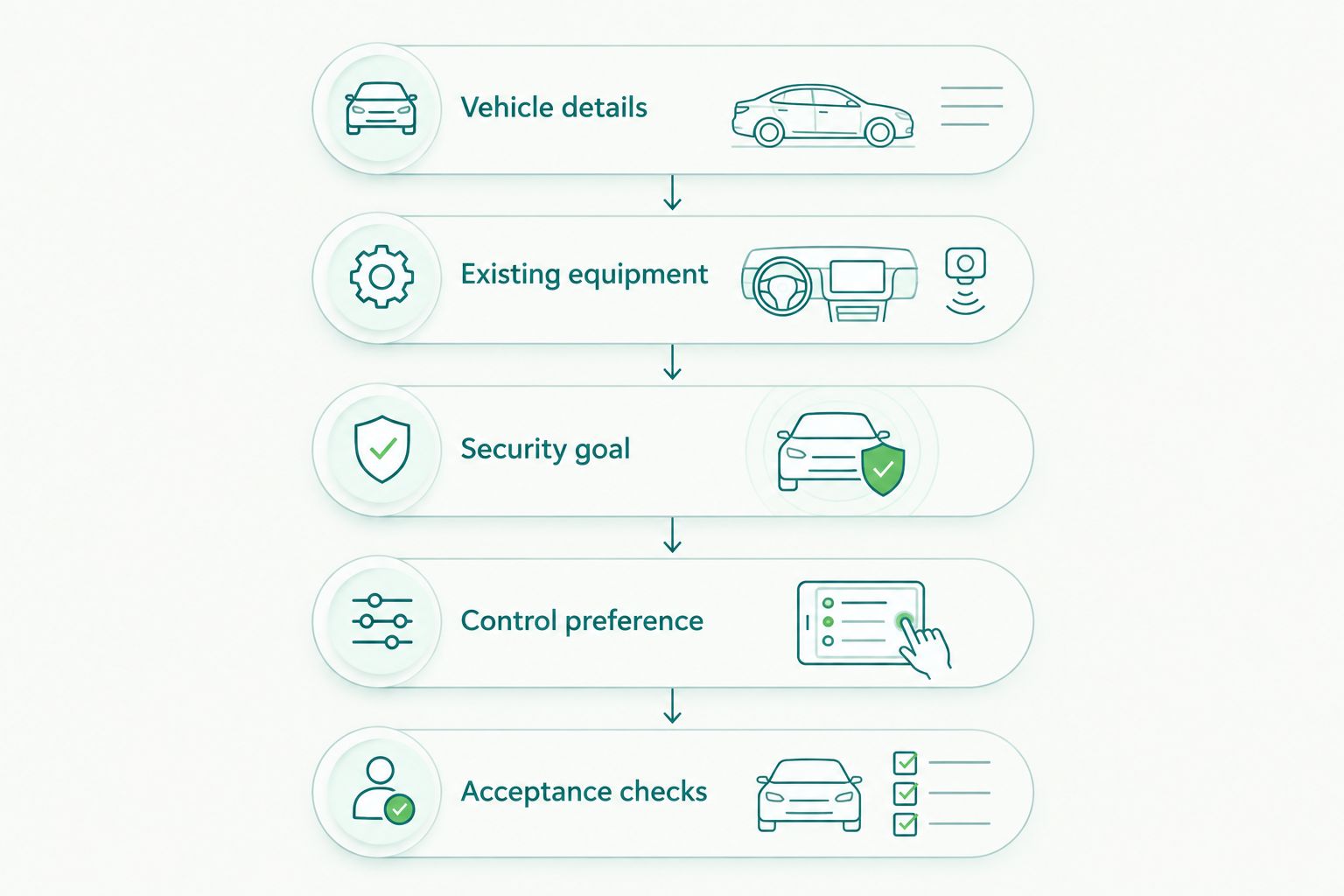
Give the installer a clear picture of the vehicle and the problem you want solved. This avoids choosing an alarm first and discovering its limitations during installation. For a 2026 appointment, use the following sequence.
- Vehicle details. Share the make, model, model year, trim, and ignition type. Mention any factory security or remote-start functions you already use.
- Existing equipment. Describe aftermarket electronics and known wiring changes. Report intermittent locking, starting, or battery problems before adding another device.
- Security goal. Say whether you want intrusion detection, impact detection, alerts, or another specific function. Explain how and where you use the vehicle.
- Control preference. Decide whether you want the factory fob, a separate remote, or supported phone controls. Confirm which functions each control method provides.
- Acceptance checks. Agree on what must be demonstrated before you collect the vehicle. Include alarm operation and normal factory behavior.
The installer should be able to explain those points in plain language. You do not need a wiring diagram in your hand, but you do need to know what the finished system will and will not do.
What should work before you collect the vehicle?
A finished installation needs a practical demonstration. Ask the installer to show the behavior you requested, not just press a button and sound the siren. You should leave knowing how to arm, disarm, and recover access if a remote fails.
Check these items with the installer:
- Arming and disarming: Confirm which controls operate the alarm and what indicates its current state.
- Protected openings: Demonstrate the agreed door, hood, or trunk triggers rather than assuming all are connected.
- Sensor behavior: Confirm what activates any added sensor and how sensitivity is adjusted.
- Normal starting: Verify normal key or push-button operation with the alarm disarmed.
- Factory functions: Check locks, windows, lighting, and existing remote functions affected by the work.
- Backup procedure: Learn the manufacturer’s authorized emergency-disarm process and keep the instructions accessible.
Also ask how the installation’s electrical draw will be checked. An alarm remains connected while the vehicle is parked. Correct standby behavior matters, particularly when a vehicle sits unused or already has other always-powered accessories.
Will adding an alarm stop someone from stealing the car?
An alarm does not guarantee theft prevention. It detects selected events and produces the warning or notification its equipment supports. An immobilizer performs a different job by restricting unauthorized starting.
That distinction matters when choosing features. A siren is not a tracker, and a tracker is not automatically an immobilizer. Read the feature description literally and ask which actions the proposed system actually takes.
Keep everyday security measures in place: lock the vehicle, secure the keys, and avoid leaving valuables visible. An alarm adds a layer of protection; it does not remove the need for those habits.
Should you install a car alarm yourself?
A do-it-yourself installation requires the correct wiring information, electrical testing skills, and knowledge of the vehicle’s security system. Guessing at wire functions or using a generic diagram risks incorrect connections. Choose professional installation if you cannot verify every connection and test the completed system.
The advantage of doing the work yourself is control over the project. The disadvantage is responsibility for wiring, programming, troubleshooting, and any effects on factory functions. Professional installation also needs scrutiny: ask about vehicle-specific support and the handover tests, not just whether the shop installs alarms.
FAQ
Can a car alarm be installed on any vehicle?
No single car alarm fits every vehicle. Many vehicles accept an aftermarket alarm, but the electrical system, factory security equipment, and requested functions must match the proposed installation.
Can I add an alarm if my car already has factory security?
Yes, when the added system supports your vehicle and works correctly with its factory security. Confirm what protection the factory equipment already provides before adding overlapping functions.
Will an aftermarket alarm work with my original key fob?
Factory-key-fob operation depends on the alarm, interface, and vehicle. Ask which buttons arm and disarm the system and whether a separate remote is required.
Can I install an alarm without adding remote start?
Yes, an alarm can provide supported security functions without remote start. Remote starting adds separate compatibility and safety requirements.
Can a car alarm drain the battery?
A car alarm uses electrical power while connected, including when armed. Incorrect wiring, abnormal standby draw, or a weak battery can contribute to starting problems, so check the completed installation's electrical behavior.
Is a car alarm the same as an immobilizer?
No, a car alarm detects selected events and gives a warning, while an immobilizer restricts unauthorized starting. Check which functions your vehicle and proposed equipment actually provide.
Can Auto Sound Cape Coral help with vehicle electronics?
Auto Sound Cape Coral provides automotive electronics installation, including key fob and remote start services, in Cape Coral, Fort Myers, and surrounding Southwest Florida communities. Confirm the scope of an alarm-specific request directly before booking.
One last thing
Before committing to your 2026 alarm installation, ask this question: What happens if the alarm remote stops working while the system is armed? The answer should be an authorized, documented recovery procedure—not an improvised wiring workaround.
Compatibility is only the beginning. A useful alarm protects the agreed openings, preserves normal vehicle operation, and gives you controls you understand.