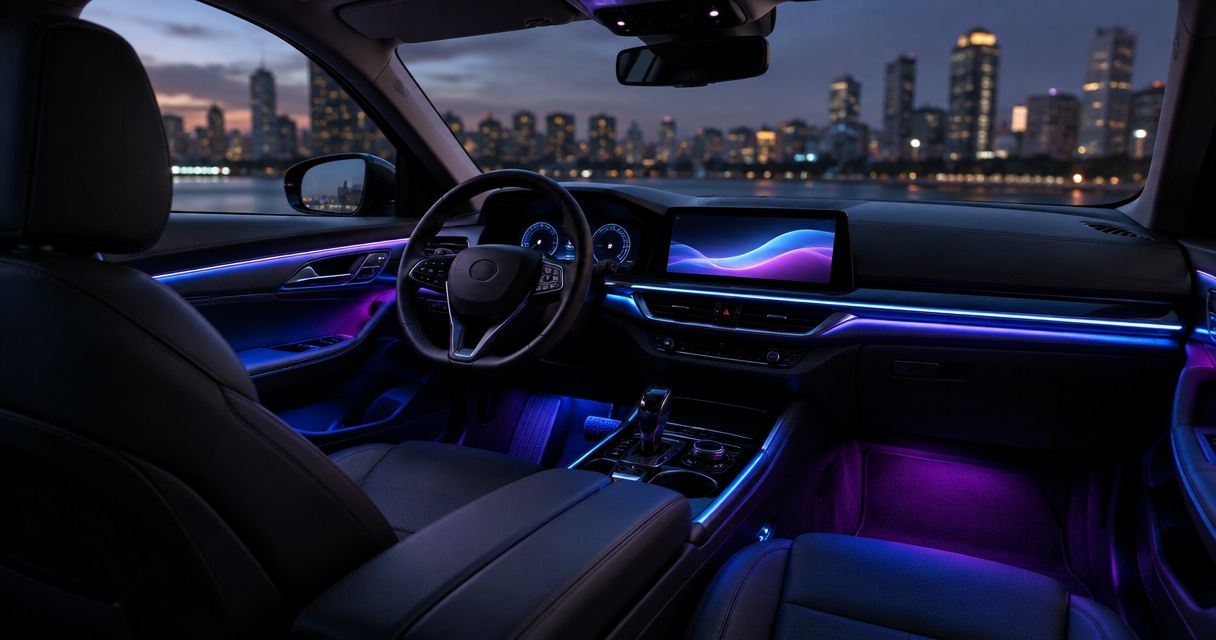
Best overall: dimmable, diffused footwell lighting. Best for a factory-look accent: trim-mounted light guides. Best for easy removal: a plug-in USB kit. The best ambient lighting kit for car interior use in 2026 fits your cabin, keeps wiring away from moving parts, and stays out of your windshield reflections.
- Choose a dimmable footwell ambient lighting kit for car interior use when you want subtle, everyday lighting.
- Choose trim-mounted light guides for dashboard accents only after checking trim fit and cable routing.
- Autosoundcapecoral provides local auto electronics installation; confirm your lighting project's scope before choosing hardware.
- Prioritize secure mounting, accessible controls, and verified shutdown behavior over animated lighting effects.
For local auto electronics help, Autosoundcapecoral serves vehicle owners in Cape Coral, Fort Myers, and surrounding Southwest Florida communities. Discuss your vehicle and proposed lighting layout before buying components that require hardwiring or trim removal.
Why this matters
An interior lighting kit changes more than the color inside your car. It adds power connections, cables, mounting points, and controls around seats, pedals, and trim.
Choose the installation layout before choosing the lighting effects. A hidden light source and a secure cable route matter more during daily driving than an animated demonstration on a product page. This 2026 guide ranks kit types by their intended use, not unverified product specifications.
What makes the best interior ambient lighting kit?
Use these criteria to compare kits before ordering:
- Light placement: Look for illumination on surfaces rather than exposed LEDs aimed toward your eyes.
- Brightness control: Choose adjustable output that you can reduce for nighttime driving. Confirm the lowest setting works for your cabin.
- Electrical fit: Match the kit's documented input requirements to its power source. A USB-powered controller and a hardwired automotive controller are not interchangeable.
- Secure mounting: Check the attachment method, cable routing, and clearance around pedals, seat rails, and airbags.
- Usable controls: Confirm how you turn the lights off, change brightness, and restore your preferred setting without handling your phone while driving.
- Service access: Favor a layout that lets you reach connectors and remove trim later without destroying the installation.
For a hardwired setup, review how to install LED lights without triggering warning lights. Do not assume an unused wire or convenient fuse position is suitable just because the lights turn on.
Interior ambient lighting kits at a glance
These options describe installation styles, not specific models. Features such as dimming, memory, and independent zone control must be confirmed in the individual kit's documentation.
| Rank and kit type | Best for | Standout characteristic | Key limitation |
|---|---|---|---|
| 1. Diffused footwell kit | Subtle daily-driver lighting | Concealed light directed toward the floor | Requires careful mounting around feet and seat movement |
| 2. Trim-mounted light-guide kit | Thin dashboard and door accents | A line of light along selected trim | Trim gaps and cable routes determine fit |
| 3. Vehicle-specific integrated kit | A model-matched cabin layout | Components intended for a particular vehicle application | Exact vehicle and trim compatibility must be verified |
| 4. Removable USB kit | A reversible interior update | Plug-in power without a permanent electrical connection | Visible cables and outlet behavior need attention |
| 5. Addressable effects kit | Parked display use | Individually controlled lighting segments | More effects do not improve nighttime visibility |
1. Diffused footwell kit: best for daily-driver lighting
A footwell kit places light beneath the dashboard or seats and directs it toward the floor. Choose a version with diffusion and dimming so you can soften the light rather than exposing bright LED points.
Start with the 2 front footwells if you want a restrained layout. Add rear illumination only after confirming a protected cable route through the full seat travel.
Diffused footwell kit pros:
- Keeps the lighting source below your normal forward sightline.
- Adds cabin illumination without outlining every dashboard panel.
- Lets you build a simple layout before adding more zones.
Diffused footwell kit cons:
- Poor placement exposes strips to shoes or loose belongings.
- Cables near seat tracks require secure routing and movement checks.
Best for: Drivers who want a low-key cabin accent rather than a light show.
Buy: Choose a dimmable footwell kit when you can hide the light source and secure every cable.
2. Trim-mounted light-guide kit: best for dashboard accents
A light-guide kit creates a narrow illuminated line along selected interior trim. The light source feeds a guide rather than placing a visible LED at every point along the accent.
The result depends on the trim. Check the guide's mounting profile, allowable bends, and entry points before assuming it will follow your dashboard or door panel.
Trim-mounted light-guide kit pros:
- Creates a defined accent instead of lighting a broad floor area.
- Lets you highlight selected trim rather than the whole cabin.
- Can conceal the light source when the installation layout allows it.
Trim-mounted light-guide kit cons:
- A poor fit leaves the guide loose or visibly raised.
- Door installations require planning around moving wiring and panel removal.
Best for: Owners who want a thin dashboard or door accent and accept the fitting work involved.
Hold: Verify the trim profile and wiring route before buying a light-guide kit for your 2026 project.
3. Vehicle-specific integrated kit: best for model-matched fit
A vehicle-specific kit is designed around a stated vehicle application. Depending on the product, that can involve shaped trim pieces, matched mounting locations, or a dedicated wiring arrangement; confirm exactly what the kit includes.
A vehicle name in the listing is not enough. Verify model year, trim level, body style, and any factory equipment restrictions against the manufacturer's fitment information.
Vehicle-specific integrated kit pros:
- Starts with a defined vehicle application rather than universal placement.
- Can reduce the need to improvise mounting locations when fitment is correct.
- Provides a clearer fitment checklist than a generic strip kit.
Vehicle-specific integrated kit cons:
- Similar-looking cabins do not establish compatibility.
- Proprietary parts can complicate later repairs or changes.
Best for: Owners prioritizing a model-matched layout over easy transfer to another car.
Hold: Buy only after the seller or manufacturer confirms your exact vehicle configuration and installation requirements.
4. Removable USB kit: best for a reversible update
A USB-powered kit uses a compatible USB supply instead of a permanent connection to the vehicle wiring. It suits a simple layout when the cable can stay clear of your controls and passengers' feet.
Confirm the required power output and the vehicle port's behavior. Some ports remain powered after shutdown, so unplugging the kit can still be part of your routine.
Removable USB kit pros:
- Avoids a permanent electrical connection to the vehicle harness.
- Makes it easier to remove the lighting when you change your mind.
- Lets you evaluate placement before considering a hardwired installation.
Removable USB kit cons:
- Occupies a compatible power port and can leave visible wiring.
- Removable power does not guarantee removable adhesive or damage-free trim.
Best for: Drivers who want to try ambient lighting without committing to hardwiring.
Buy: Choose a removable USB kit when reversibility matters more than completely hidden wiring.
5. Addressable effects kit: best for parked displays
Addressable lighting controls individual LEDs or groups of LEDs, allowing patterns beyond a single shared color. The controller and software determine which effects a particular kit supports.
Treat animation as a parked-use feature. For driving, select a steady, dim setting that does not reflect in your glass or pull your attention away from the road.
Addressable effects kit pros:
- Supports segmented patterns when the controller provides them.
- Suits owners who want to customize a parked display.
- Allows a different visual approach from a single-color accent.
Addressable effects kit cons:
- Adds controller settings and wiring details to manage.
- Animated output is unnecessary for a restrained driving setup.
Best for: Owners who specifically want lighting effects while parked.
Skip: Skip an effects-focused kit if your only goal is subtle lighting during normal driving.
Check the installation before you commit
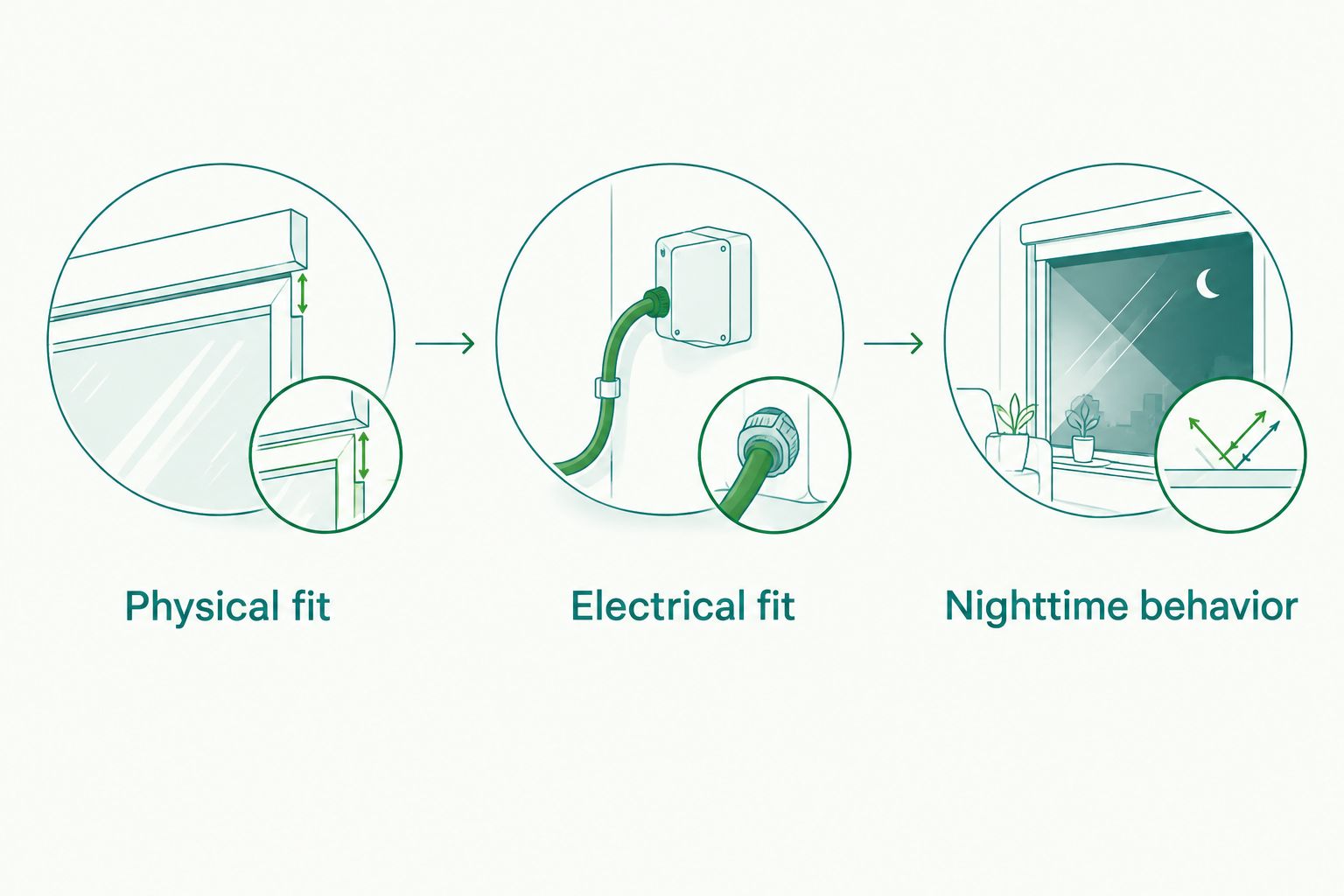
For a 2026 installation, separate the project into 3 checks: physical fit, electrical fit, and nighttime behavior. A kit needs to pass all of them, not just look good with the doors open.
Physical fit
Position the components without permanent attachment first. Move each seat through its full travel, operate nearby controls, and check access to storage compartments and removable panels.
Keep lighting and wiring clear of pedals, seat tracks, and airbag deployment areas. Do not push a cable into an unknown trim gap merely to hide it.
Electrical fit
Read the controller's input specification and installation instructions. Conventional USB power is commonly 5 volts, while many passenger vehicles use a nominal 12-volt electrical system; the controller must receive the supply it was designed for.
A hardwired installation needs suitable circuit protection, a sound ground connection, and a verified power source. Never tap an airbag circuit or treat a warning-free startup as proof that a connection is correct.
Nighttime behavior
Check the finished layout after dark while parked. Look from the driver's normal seating position for reflections in the windshield and side glass, then reduce brightness or reposition the source.
Test shutdown and restart behavior too. Confirm whether the controller stays off, restores a setting, or needs manual adjustment before you drive.
How the kit types rank
This 2026 ranking prioritizes light placement, brightness control, electrical fit, mounting, controls, and service access. Diffused footwell lighting takes the default position because its intended layout keeps the accent low in the cabin without requiring illuminated trim lines.
The other options serve different needs. Trim guides prioritize accent shape, vehicle-specific kits prioritize fitment, USB kits prioritize removal, and addressable kits prioritize effects. These are selection recommendations, not claims of hands-on product testing.
Which ambient lighting kit should you choose?
Choose a dimmable, diffused footwell kit unless you have a clear reason to choose another layout. Before ordering, write down where the lights mount, how they receive power, and how you switch them off.
For a local installation discussion, bring your vehicle details and the kit's instructions. Autosoundcapecoral is best suited to Cape Coral and Fort Myers vehicle owners seeking local auto electronics installation. Confirm the proposed ambient lighting work and hardware requirements directly before committing to the project.
FAQ
What's the best ambient lighting kit for car interior use in 2026?
A dimmable, diffused footwell kit is the default recommendation for subtle daily-driver lighting. Confirm secure mounting, a suitable power source, and low nighttime brightness before choosing a specific model.
Is a USB lighting kit better than a hardwired kit?
A USB kit is better for easy removal; a properly planned hardwired kit suits a more permanent installation. USB power still requires compatible output, secure cable routing, and a shutdown check.
Can I put ambient lighting in my car's door panels?
Door-panel lighting requires verified physical fit and a safe cable route. Check window movement, panel attachment, existing wiring, and airbag locations before choosing components.
Will an ambient lighting kit drain my car battery?
A lighting kit draws battery power whenever its supply remains active. Verify the outlet or circuit's shutdown behavior rather than assuming that switching off the ignition cuts power.
Are interior LED lights legal in Florida?
A kit listing alone does not establish whether your installation complies with Florida law. Check current requirements for your lighting placement, visibility, colors, and operating mode before using it on public roads.
Do I need an app to control interior ambient lights?
You need an app only if the selected kit requires one for the functions you want. Check whether a physical controller handles brightness and power without opening your phone.
Can Autosoundcapecoral help with my vehicle electronics project?
Autosoundcapecoral provides auto electronics installation for vehicle owners in Cape Coral, Fort Myers, and surrounding Southwest Florida communities. Confirm the scope of your specific ambient lighting project before choosing a kit.
One last thing
Judge the lighting from the driver's seat with the doors closed, not from outside with the doors open. A source that looks hidden from the sidewalk can still reflect in your windshield. Make that parked, after-dark check part of your 2026 installation plan.