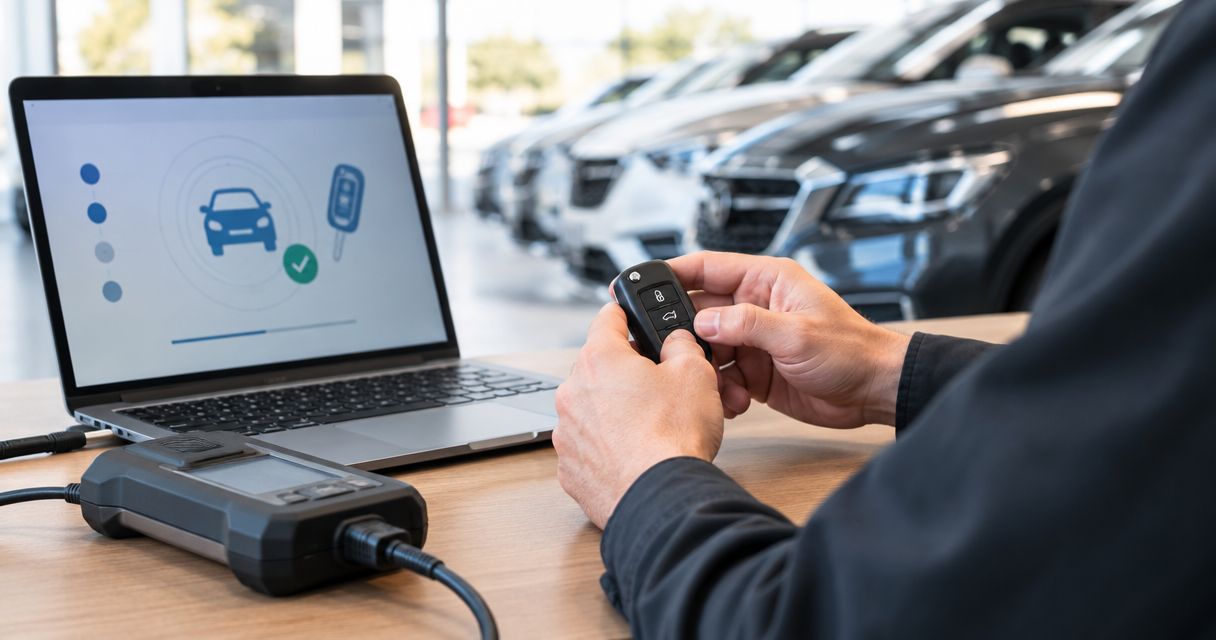
Key fob programming for used car dealerships is the process of cutting, coding, and testing a working key so every vehicle leaves the lot with a functioning fob instead of a single worn-out original from the last owner. Dealerships deal with a different problem than individual car owners: unknown vehicle history, trade-ins that show up with one key or none, and a sale that can stall if a buyer walks the lot and finds a car with no spare.
- Key fob programming for dealerships means cutting and coding a working fob before a trade-in hits the lot, not after a buyer asks for a spare.
- Auto Sound Cape Coral programs fobs for most makes without a dealership-only tool or a week-long wait.
- Selling a used car with only one working key is the fastest way to lose a buyer at the last minute in 2026.
- Immobilizer and rolling-code systems vary by manufacturer, so the same fix does not work on every trade-in.
Why key fob programming matters for used car dealerships
A trade-in with a missing or dead fob is a liability the moment it lands on your lot. Buyers in 2026 expect two working keys as a baseline, the same as they'd get from a new-car dealership, and a car that only has one gets flagged in every walk-around.
Key fob programming isn't optional inventory prep — it's part of getting a used vehicle ready to sell, right alongside detailing and a safety inspection. A car that sits an extra week because a spare fob had to be special-ordered from a dealership parts counter is a car that isn't turning a profit.
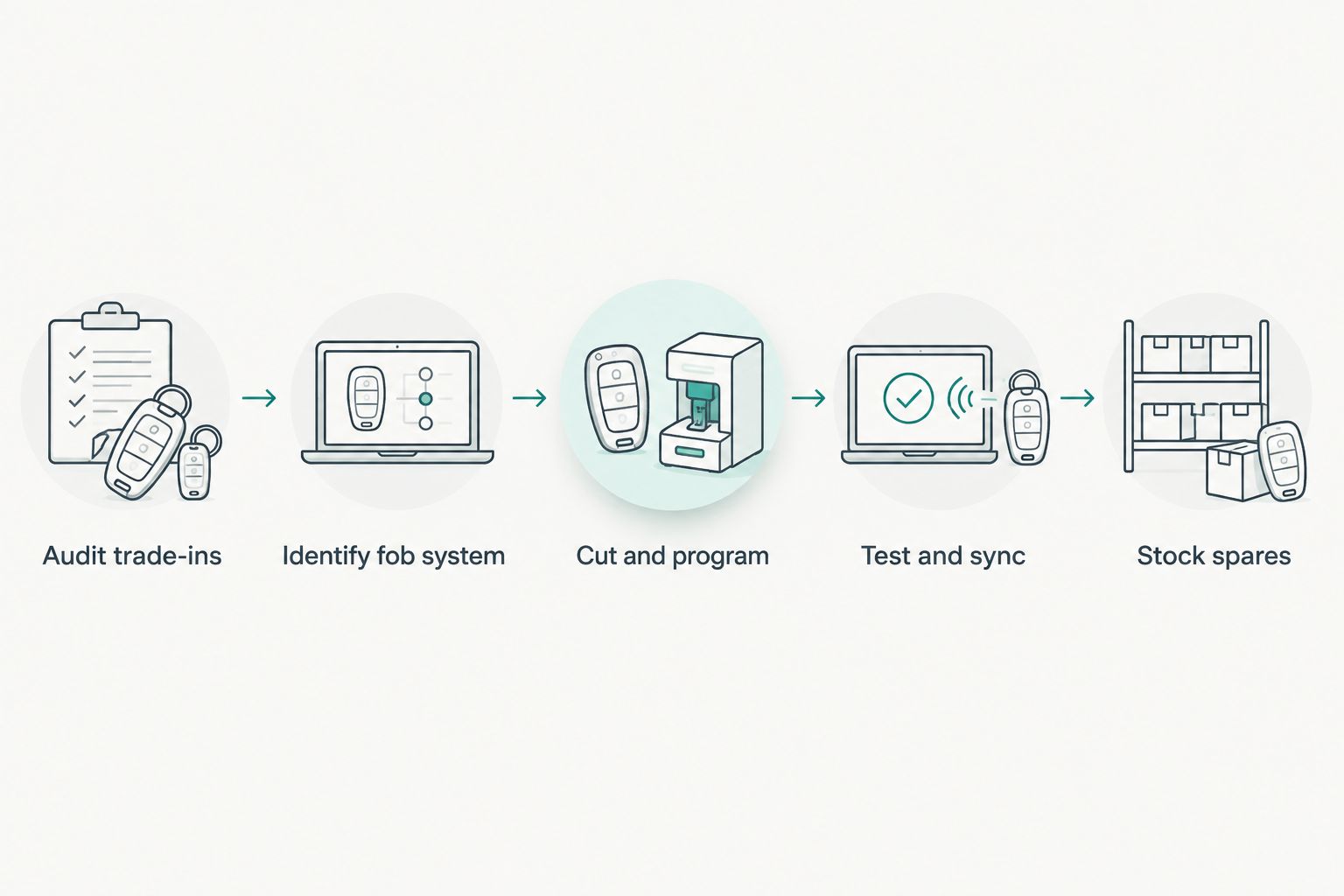
Audit every trade-in for key count and fob condition
Before a trade-in gets priced or listed, check what's actually in the glovebox.
- Count how many working fobs came in with the vehicle
- Test the lock, unlock, and trunk-release buttons on each fob
- Check battery condition — a dead battery can look like a programming failure
- Note whether the fob has visible wear on the buttons or case
- Flag any vehicle with zero working keys immediately, before it's assigned a stock number
Identify the transponder or fob system for that make and model
Not every used car uses the same key technology. A 2014 sedan and a 2022 crossover on the same lot can require completely different programming procedures.
- Match the VIN to the correct key type — bladed transponder key, smart fob, or proximity key
- Check whether the vehicle uses a rolling security code that resets when a key is added or removed
- Note any aftermarket alarm or remote start already wired into the vehicle, since that can interfere with programming
- Confirm whether the immobilizer needs a specific number of keys programmed together (some systems erase all keys if you program a new one alone)
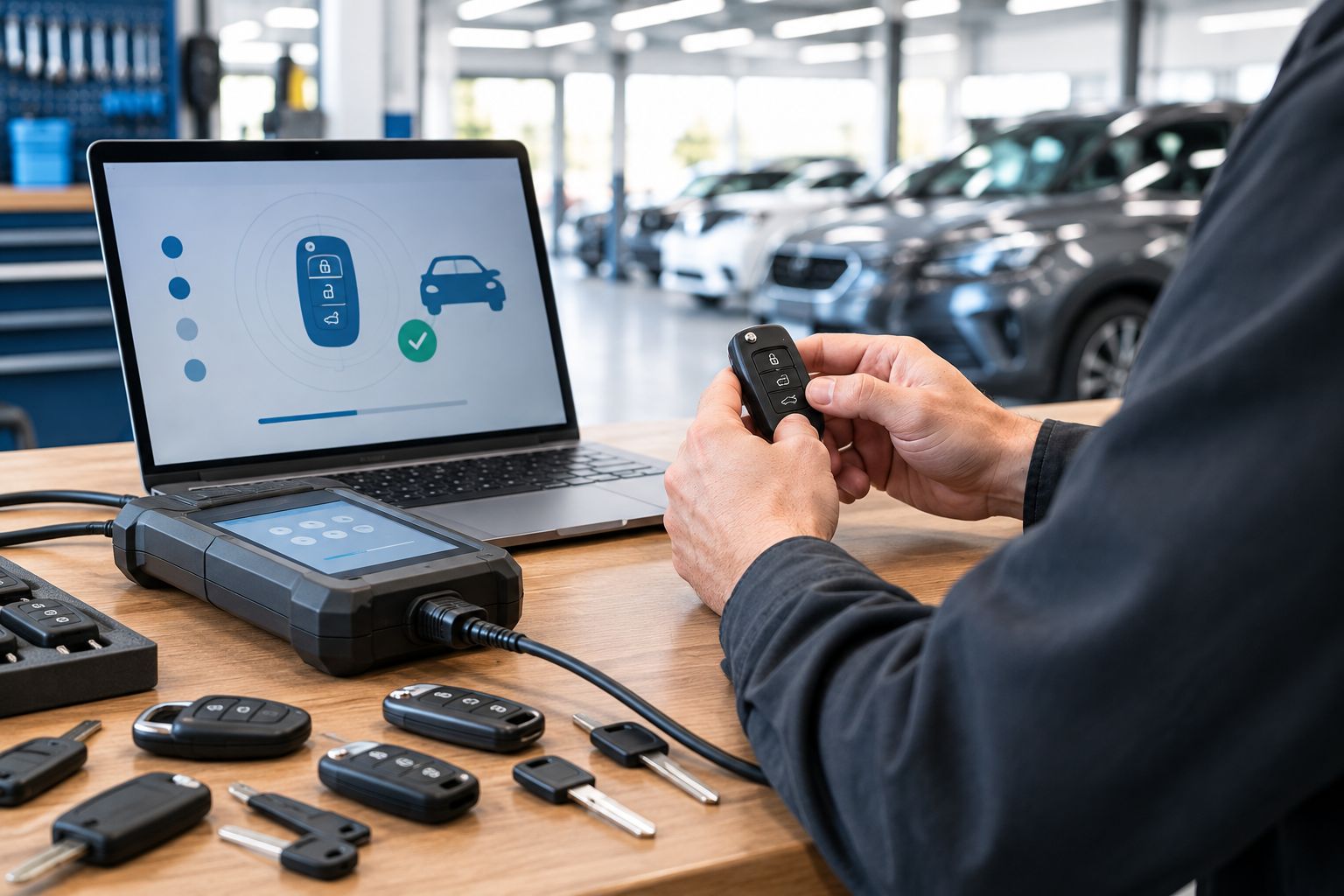
Decide between the manual route and a professional programmer
Some older vehicles with basic transponder keys can be handled with a cheap key blank and a cutting machine — no chip programming required. That's the manual route, and it works fine for a narrow slice of older inventory.
- Basic bladed keys with no transponder chip can be cut mechanically with no programming step
- Some early-2000s vehicles allow self-programming through a dashboard sequence, no tool needed
- Anything with a smart fob, proximity key, or push-button start almost always needs a dedicated programming tool
- A missing or damaged immobilizer module usually rules out the self-programming route entirely
Once a vehicle needs anything beyond a basic cut key, Auto Sound Cape Coral programs fobs in-shop for most makes without sending the car to a dealership parts department and waiting on a special-order fob.
Cut and program replacement keys before the car hits the lot
Do this before the vehicle gets photographed, priced, or moved to the front row. A car that's already lot-ready with two working keys sells faster than one that needs a follow-up appointment after the test drive.
- Program a minimum of two working fobs per vehicle before it's listed
- Match the fob's buttons and layout to the actual trim — a wrong fob variant can miss a feature the trim has
- Re-test the fob's range from typical parking-lot distances, not just standing next to the door
- Wipe any codes tied to the previous owner's phone or garage remote pairing before resale
Test remote functions and immobilizer sync before delivery
A fob that unlocks the door but won't start the car is a comeback waiting to happen. Test the full function set, not just the lock button, before the vehicle goes to F&I.
- Confirm the engine starts and the immobilizer light goes off within a normal cycle
- Test remote start or keyless entry if the trim includes it
- Check trunk/liftgate release separately — it's the button most often skipped in a quick test
- Verify a second fob works identically to the first, not just that one fob functions
Stock spare fobs and batteries for common used-car makes
A dealership moving inventory in Southwest Florida sees a predictable mix of makes. Stocking ahead of demand avoids next-day scrambles when a trade-in shows up with a dead fob.
- Keep replacement batteries on hand for the most common fob styles on your lot
- Stock blank fobs for the three or four makes that show up most often in trade-ins
- Keep a log of which vehicles still need a second key ordered
- Set a standing appointment slot with a shop that can turn around programming same day for lot-ready vehicles
Document the key fob work for the buyer at delivery
Buyers remember whether they got two keys or one. A short note at delivery closes the loop and prevents a comeback call two weeks later.
- Hand over both fobs at delivery, not one now and one "to follow"
- Note the fob programming on the deal jacket or delivery checklist
- Give the buyer a battery-life reminder if the fob is a proximity type
- Point buyers to where they can get a replacement cut later if a fob is lost
Comparison of key fob programming options for dealerships
| Option | Best for | Key limitation |
|---|---|---|
| Basic key blank, cut only | Older vehicles with no transponder chip | Doesn't work on any car with a security chip or smart fob |
| Dashboard self-programming sequence | A narrow set of early-2000s vehicles | Only works on specific makes and model years, not universal |
| Dealership parts counter (OEM) | Vehicles still under a factory program that requires OEM parts | Slow turnaround, often a special-order wait |
| Auto Sound Cape Coral in-shop programming | Trade-ins with smart fobs, proximity keys, or missing keys, prepped for resale | Some rare or newly-released models may require a factory tool not yet in the field |
Get trade-ins lot-ready faster
Key fob programming for dealership inventory, done in-shop.
Common mistakes used car dealerships make
- Selling a car with only one working fob and telling the buyer a second is "on order" — it delays closing and invites a comeback complaint.
- Not wiping the previous owner's paired data from a trade-in's fob, which can leave old garage remotes or phone pairings active.
- Assuming every make uses the same programming procedure. A domestic truck and an import sedan on the same lot rarely share the same tool or steps.
- Waiting until the test drive to discover a dead fob battery, which reads as a mechanical problem to a buyer even when it isn't.
- Skipping the trunk-release and remote-start test because the door lock worked, then getting a callback after delivery.
FAQ
What is key fob programming for a used car dealership?
It's the process of cutting and coding a working key fob for a trade-in or lot vehicle so it has at least two functioning keys before it's sold. It covers the fob itself plus syncing it to the vehicle's immobilizer system.
How long does key fob programming take for a used car?
Most standard fob programming jobs are handled same day at an in-shop appointment rather than a multi-day dealership parts order. Vehicles with rare or newly-released fob systems can take longer if a specific tool isn't in stock yet.
Can a locksmith or independent shop program a car key fob instead of the dealership?
Yes, most makes can be programmed by an independent automotive electronics shop using the same category of handheld programming tools dealerships use. Auto Sound Cape Coral programs fobs for most makes in-shop without a dealership parts order.
Do all used cars need a spare key fob before sale?
Buyers in 2026 expect two working fobs as standard, so any trade-in with only one should get a second cut and programmed before it's listed. Selling with a single fob is a common reason for a comeback complaint after delivery.
What does key fob programming cost at a dealership versus an independent shop?
Cost varies by make, model, and how many keys need to be programmed together, so it's worth getting an upfront quote rather than assuming a flat rate. Independent shops typically turn the job around faster than a dealership parts-department order.
Is programming different for keyless entry fobs versus traditional keys?
Yes. A basic bladed key with no chip can sometimes be cut with no programming step, while a smart fob or proximity key almost always needs a dedicated programming tool synced to the vehicle's immobilizer.
Can you program a fob for a car that has no working key at all?
In most cases yes, using a programming tool that can access the vehicle's security system directly rather than through an existing key. This is common on trade-ins that arrive with zero working fobs.
Does Auto Sound Cape Coral program key fobs for dealerships in Cape Coral and Fort Myers?
Yes, Auto Sound Cape Coral handles key fob programming for dealership inventory across Cape Coral, Fort Myers, and surrounding Southwest Florida areas, working directly with lot vehicles and trade-ins.
One last thing
The fobs that cause the most delays in 2026 aren't the oldest ones on the lot — they're the newest. A three-year-old trade-in with a proximity fob and a rolling security code takes more steps to program correctly than a ten-year-old sedan with a basic transponder key, so don't assume newer inventory means a faster turnaround.