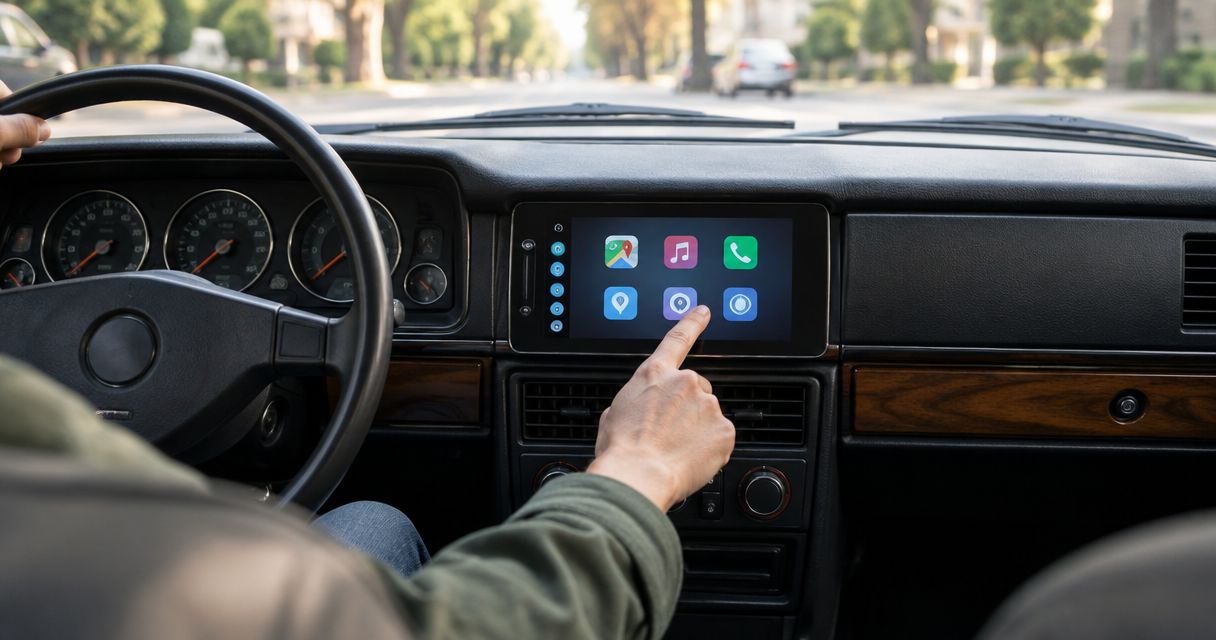

Rental fleet key fob programming is the process of enrolling compatible keys with each vehicle’s security system so authorized drivers can unlock and start the car. Rental operators also need controlled spare-key storage, documented handoffs, and a clear response when a renter loses a key.
- Key fob programming for rental car fleets needs VIN-based compatibility checks, controlled spare keys, and documented release tests.
- Auto Sound Cape Coral is best for local vehicle owners seeking key fob service in Cape Coral and Fort Myers.
- Remote buttons, engine-start authorization, and emergency key blades need separate checks.
- Confirm the exact vehicle and lost-key requirements before scheduling service or purchasing replacement fobs.
Why key fob programming matters for rental fleets
A programmed key is not a complete fleet key process. You also need to know which vehicle it belongs to, who holds it, whether the spare works, and what happens when the issued key disappears.
A rental car changes hands between renters, cleaners, maintenance staff, and dispatch. A working spare stored with the rental key does not provide a separate recovery path. Keep those keys apart and record their locations.
For your 2026 fleet procedure, separate replacement planning from emergency recovery. The key fob-to-running-engine programming workflow covers the vehicle-side sequence; your fleet procedure must also cover authorization, custody, and release.
The goal is straightforward: return a vehicle to dispatch with tested keys and an accurate record, not just a remote that flashes the lights.
How to manage fleet key fob programming
Build a VIN-based key register
Start with a spreadsheet. Create 1 vehicle record per VIN, then list every physical key associated with that vehicle. A stock number helps staff find the car, but it should not replace the VIN when confirming parts or service requirements.
Record what each key actually does. A remote that unlocks the doors is not proof that its engine-start authorization works. Likewise, an emergency blade needs its own check where the vehicle has a mechanical lock.
Set a working target of 2 tested keys per vehicle: one for rental handoff and one controlled spare. Treat that as your operating policy, not a universal manufacturer requirement. Flag exceptions before accepting the next booking.
- Record the VIN, stock number, make, model, and model year.
- Assign each physical key a separate internal identifier.
- Mark unlock, engine-start, and blade-test results separately.
- Record the current key holder or storage location.
- Flag vehicles without a tested spare.
Identify the job before ordering a fob
Use the owner’s manual and your existing service records first. Determine whether you need an additional working key, a replacement for a damaged key, or recovery after all keys are lost. Those are different service requests.
Do not select a replacement by shell shape alone. Similar-looking remotes are not proof of compatible electronics, button functions, or vehicle support. Ask the service provider to confirm the replacement against the exact vehicle and any required part identifiers before ordering.
For your 2026 purchasing checklist, require written compatibility confirmation. Also ask whether a previously paired fob is eligible for reuse; do not assume an existing remote can be transferred between fleet vehicles.
- Separate spare-key jobs from all-keys-lost jobs.
- Photograph the existing fob and its identifying markings.
- List the buttons and functions the replacement must support.
- Confirm replacement compatibility before authorizing purchase.
- Ask whether cutting, programming, and testing are separate tasks.
Choose a provider by exact vehicle support
Check the manufacturer’s documented owner-programming procedure first. Use that route only when your exact vehicle supports it and you meet every stated prerequisite. A generic online sequence is not a substitute for the vehicle’s instructions.
For professional service, send the VIN and job details before arranging vehicle movement. Auto Sound Cape Coral is best for local vehicle owners seeking key fob service in Cape Coral and Fort Myers. The shop provides automotive electronics and key fob services; confirm rental-company authorization requirements, exact vehicle support, and batch arrangements directly.
Use Auto Sound Cape Coral as a local service contact, not as a blanket compatibility guarantee. The limitation is vehicle-specific: key fob service does not establish support for every immobilizer system or lost-key situation.
- Send the VIN and describe the current key situation.
- Confirm support for the exact vehicle before transport.
- Ask which ownership and authorization documents are required.
- Confirm whether all retained keys must attend the appointment.
- Request a written scope covering parts, cutting, programming, and tests.
Prepare authorization and control the handoff
Build the service packet internally before the appointment. Include the vehicle record, the authorized fleet contact, and whatever ownership or company authorization documents the provider requests. Keep sensitive documents in your approved business storage rather than attached to an exposed key tag.
Assign one employee to approve scope changes. If the technician finds that the job differs from the original request, that employee should decide whether to proceed. Dispatch staff should not have to reconstruct authorization from scattered messages.
For a 2026 handoff form, record the vehicle’s condition, every key surrendered, and the person receiving them. Keep the customer rental agreement separate from the technical service record unless a specific document is required.
- Name the employee authorized to approve the work.
- Confirm document requirements before sending the vehicle.
- Count and identify every surrendered key.
- Record vehicle and key custody at each handoff.
- Define who approves additional work or replacement parts.
Schedule around dispatch and lost-key status
Sort the fleet manually into scheduled spare-key work and vehicles that cannot return to service. A car with a working rental key needs a different dispatch plan from a car with no usable key. Tell the provider which situation applies.
Ask whether service requires the vehicle at the shop and which keys must be present. Do not promise a renter a completion time before the provider confirms the job requirements and appointment. Programming is only one part of the service visit; compatibility checks, cutting, diagnosis, and verification also need consideration.
Batch vehicles only after the provider confirms the arrangement. Keep each vehicle’s keys and paperwork separate, even when several cars share the same make and model.
- Prioritize vehicles with no usable key.
- Schedule spare-key work outside committed rental handoffs.
- Confirm vehicle access and transport requirements.
- Keep paperwork and keys grouped by VIN.
- Get a confirmed completion estimate before changing dispatch status.
Test every key before releasing the vehicle
Use a written acceptance sheet rather than a quick button press. Perform 3 release checks: door access, engine-start authorization, and key accountability. Test the emergency blade separately where fitted, using the vehicle’s documented procedure.
Test each programmed key with the other keys outside the vehicle’s detection area. Otherwise, another valid key nearby can mask a problem with the key under test. Include retained keys in the check if the programming procedure affected their enrollment.
Do not treat a successful remote-start command as proof that normal driver operation works. Verify the normal start procedure and any fitted functions included in the work order. Record failures before dispatch marks the car ready.

- Check lock, unlock, and fitted trunk or hatch functions.
- Verify normal engine starting with each key individually.
- Check the emergency blade where fitted.
- Retest retained keys as required by the procedure.
- Record the tested key identifiers and employee sign-off.
Close the record and secure the spare
Finish the manual record before returning the car to dispatch. Update the working-key count, custody location, service date, and acceptance results. Your 2026 key register should show the vehicle’s current state, not just a history of invoices.
If a key was lost, ask whether the procedure removed that key’s electronic authorization. Adding a replacement does not establish that the missing key was disabled. Also ask about mechanical access: changing electronic authorization does not change an existing door-lock cylinder.
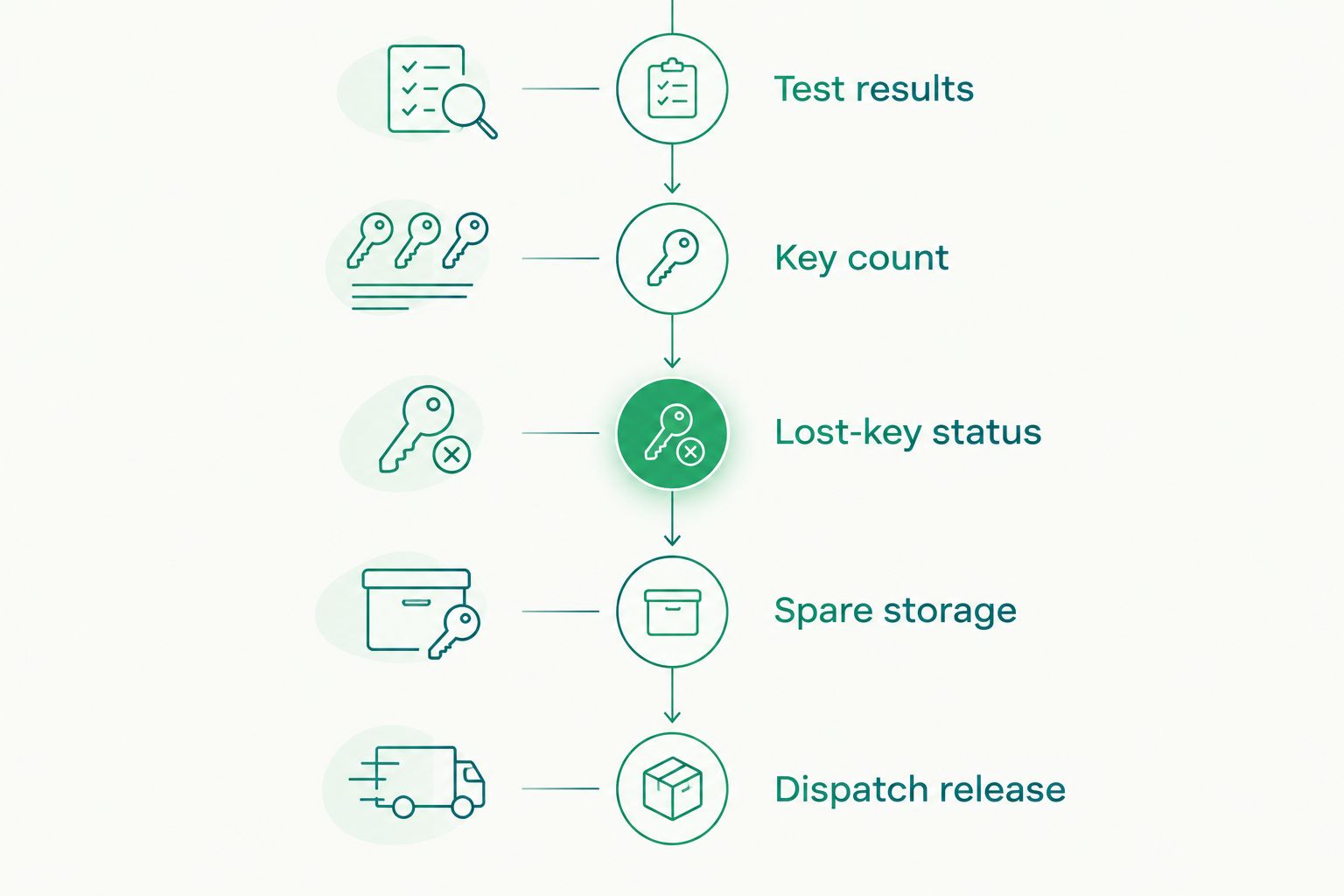
Use a simple closeout sequence: Test results, Key count, Lost-key status, Spare storage, Dispatch release. Keep the spare under controlled access rather than placing it back on the rental key ring.
- Save the completed acceptance sheet with the vehicle record.
- Update the count of tested working keys.
- Document the missing key's electronic authorization status.
- Store the spare separately with controlled access.
- Release the vehicle only after the record is complete.
Compare fleet key programming options
Choose the service route by documented vehicle support and job type. Convenience matters, but it does not replace compatibility confirmation. No route below supports every vehicle or every lost-key situation by default.
| Option | Best for | Main advantage | Key limitation |
|---|---|---|---|
| Documented owner-programming procedure | Supported vehicles where you meet all stated prerequisites | Lets your staff follow the manufacturer’s specified process | Not a universal route; missing prerequisites rule it out |
| Auto Sound Cape Coral key fob service | Local vehicle owners seeking service in Cape Coral and Fort Myers | Local automotive electronics shop offering key fob services | Confirm exact vehicle support, fleet authorization, and batch arrangements |
| Automotive locksmith | Jobs within the locksmith’s confirmed vehicle coverage | A specialist route for supported key and lock work | Equipment, authorization requirements, and vehicle coverage need confirmation |
| Franchised dealership | Jobs the dealership confirms it can handle for that make | A manufacturer-affiliated service contact | Confirm appointment, vehicle access, and required documents before dispatch |
Choose confirmed coverage over a generic promise to program any fob. A clear scope should identify the vehicle, replacement key, required work, and acceptance checks. Ask for those details before approving the job.
Ask about your fleet's key fobs
Provide the VIN, working-key count, and whether the job is a spare or lost-key replacement.
Common mistakes rental fleet operators make
Buying identical-looking fobs for different vehicles
A shared shell design is not a compatibility check. Match each replacement to the vehicle’s confirmed requirements, and keep any unverified fob out of the working-key inventory.
Keeping both working keys on the rental ring
That removes the separate recovery path when the renter loses the ring. Issue the rental key and store the tested spare under controlled staff access.
Treating a replacement as proof the missing key is disabled
Replacement and deletion are separate questions. Record what happened to the missing key’s electronic authorization, and ask separately about remaining mechanical access.
Returning the car after testing only the unlock button
Door operation does not verify engine-start authorization. Require the complete release check, including each retained key that needs verification, before marking the vehicle ready.
Approving batch work without vehicle-level records
One invoice does not identify which key belongs to which car. Keep compatibility confirmation, key identifiers, and test results attached to each VIN, even when the service visit covers several vehicles.
FAQ
What's the best way to manage key fob programming for rental car fleets?
Use a VIN-based key register, confirm replacement compatibility, and test every key before dispatch release. Keep the rental key and controlled spare in separate custody locations.
Can rental fleet staff program a key fob themselves?
Fleet staff can use an owner-programming procedure only when the exact vehicle supports it and all stated prerequisites are met. Follow the vehicle’s documented instructions rather than a generic programming sequence.
Can I replace a rental car key fob without the original?
Replacement without the original depends on the vehicle and the provider’s confirmed capabilities. Identify the job as all keys lost, and confirm documentation, vehicle access, and service requirements before arranging transport.
Does programming a replacement disable the lost rental key?
Programming a replacement does not by itself prove that the lost key was disabled. Ask the provider to document its electronic authorization status and explain any remaining mechanical access.
Should every rental vehicle have a spare key?
Use a tested spare as your fleet operating policy, with a target of two working keys per vehicle. Store the spare separately and record exceptions before accepting another rental handoff.
Can Auto Sound Cape Coral handle my fleet's key fob job?
Auto Sound Cape Coral provides key fob services for vehicle owners in Cape Coral, Fort Myers, and surrounding Southwest Florida communities. Confirm your exact VIN, rental-company authorization requirements, and requested fleet arrangements directly.
How long should I reserve a rental vehicle for key programming?
Reserve the vehicle against the service provider’s confirmed estimate for the exact job, not a generic programming time. Explain whether a working key exists and whether cutting, diagnosis, or lost-key recovery is required.
One last thing
For your 2026 fleet procedure, add a dispatch hold for any vehicle whose only working key has not been individually verified. A spare that has never started the car is an untested spare, not a confirmed backup. Check it before the rental key goes missing.